
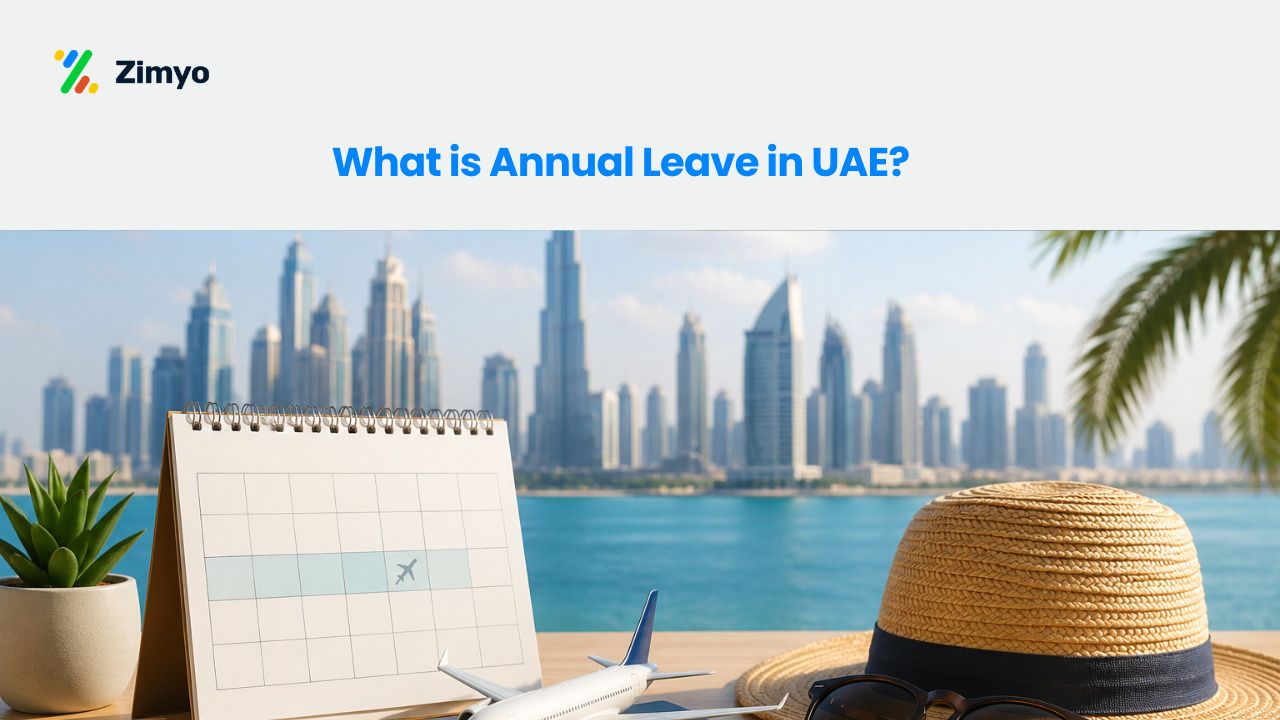
Taking time off from work isn't just a benefit; it's something every employee actually needs. In the UAE, this is covered under annual leave, which gives employees paid time off to rest, travel, or simply step away from work for a while.
If you're working in the UAE or planning to, understanding how annual leave works can save you from a lot of confusion later. The rules are clearly defined under Federal Decree-Law No. 33 of 2021 on the Regulation of Labor Relations, as amended by Federal Decree-Law No. 9 of 2024 (referred to here as UAE Labor Law). However, many people still aren't fully aware of their rights, especially when it comes to leave balance, salary, or unused leave.
In simple terms, Employee annual leave in the UAE is your earned break from work, and yes, you're paid for it.
Annual Leave in UAE at a Glance
- 30 days of paid annual leave after one year of service
- 2 days/month accrual after six months of service
- Fully paid leave, calculated on basic salary
- Leave encashment allowed on resignation or termination.
- Governed by Federal Decree-Law No. 33 of 2021 (as amended by Federal Decree-Law No. 9 of 2024)
- MOHRE regulates compliance and handles disputes
Annual Leave Entitlement Under UAE Labor Law
To better understand employee leave entitlement, it is important to look at the key rules and guidelines defined under UAE Labor Law and the broader UAE annual leave policy.
Duration of Annual Leave in UAE – As per the UAE annual leave labor law, employees are entitled to:
- 30 days of annual leave after completing one year of service
- 2 days of leave per month after completing six months of employment
This forms the basic Annual leave entitlement UAE that every employee should be aware of. Statutory leave is calculated based on calendar days, while payroll software deductions and leave salary are calculated according to UAE Labor Law provisions and the employee's employment contract.
Leave Salary & Encashment
Employees are generally entitled to receive their leave pay before the start of their approved leave, unless another arrangement has been agreed upon.
If an employee's employment ends before they have used all their accrued annual leave, the employer must compensate the employee for the unused leave based on the employee's basic wage as prescribed by UAE Labor Law. This is an important part of Employee leave rights in the UAE, and it is calculated as part of the annual leave calculation process, ensuring that employees do not lose their earned paid vacation benefits.
Where leave is not utilized within the agreed timeframe, employees may be eligible for Annual leave encashment UAE, meaning they can receive payment instead of taking the leave. This flexibility helps employees manage their time better while still benefiting from their overall statutory leave entitlement.
Carry Forward Rules
Carry forward of unused annual holiday entitlement depends on company policy, employment contracts, and employer approval. Employers should ensure employees can use their statutory leave within the legally permitted framework.
Under the UAE leave policy, employers generally determine annual leave dates in consultation with employees while considering business requirements. This helps employees plan their time off properly and ensures that business operations are not disrupted. Proper planning also supports the smooth implementation of annual vacation across teams.
Key Rules Employees Should Know
- Private sector annual leave UAE rules also apply to part-time employees.
- The number of leave days may vary depending on working hours and contract terms.
- All leave policies must align with MOHRE annual leave rules and UAE Labor Law.
- Employers have the authority to decide leave schedules, but they must remain compliant with the statutory leave framework.
Annual Leave Calculation Example
Annual leave entitlement often gets confusing when someone joins mid-year or leaves before completing a full year. Here's a simple way to look at it:
- Employee joins in July and works until year-end: Since annual leave is earned at the rate of 2 days per month after completing six months of service, someone who joins in July and is still within their first year by December would not yet have crossed the six-month mark for leave accrual. Once they pass six months of service, leave begins accruing at 2 days for every month completed from that point onward.
- Employee resigns after 8 months of service: If an employee resigns after completing 8 months, they would have accrued leave for the period after their first 6 months, in this case, 2 months of accrual at 2 days per month, giving them 4 days of accrued annual leave. This balance would then be settled as part of their final dues, calculated on their basic salary as per the Annual leave calculation UAE rules.
- Employee completes a full year: Once an employee crosses 12 months of continuous service, the entitlement shifts to the standard 30 days of paid annual leave per year, rather than the 2-day monthly accrual used in the first year. This information also plays an important role when using a UAE Gratuity Calculator, as an employee's length of service and final settlement, including unused annual leave, are key factors in calculating end-of-service benefits.
This is a simplified illustration; actual calculations can vary slightly based on the specific terms in an employment contract, so it's worth cross-checking with HR or a payroll specialist for exact figures.
Types of Leave Under UAE Labor Law
Apart from annual leave, employees are entitled to several other types of statutory leave under UAE Labor Law. Here's a quick overview before the details:
Leave Type | Entitlement / Duration |
|---|---|
Annual Leave | 30 calendar days per year (after completing 1 year of service); 2 days per month (after completing 6 months of service) |
Sick Leave | 90 days per year (15 days full pay, 30 days half pay, 45 days unpaid) |
Study Leave | 10 working days of paid leave per year |
Parental Leave | 5 working days of paid leave |
Bereavement Leave | 5 days (for the death of a spouse); 3 days (for the death of a parent, child, sibling, grandchild, or grandparent) |
Maternity Leave | 60 days (45 days at full pay + 15 days at half pay) |
Hajj Leave | Up to 30 days of unpaid leave (once during employment) |
Sabbatical Leave | 11 months to 3 years (for Emirati employees undertaking national service) |
1. Sabbatical Leave
Sabbatical leave is a special category of leave available only to Emirati employees. It is mainly provided for national service purposes. The duration of national service can range from 11 months to 3 years, depending on the requirement. This type of leave is governed under specific national policies.
2. Study Leave
Employees who wish to continue their education can apply for study leave. As per UAE Labour Law, employees who have completed at least two years of service are eligible for 10 working days of paid study leave annually. This allows them to appear for exams recognized by approved educational institutions in the UAE. Organizations using time and attendance software can efficiently track study leave requests, approvals, and employee attendance records while ensuring compliance with company policies and UAE labor regulations.
3. Bereavement Leave
Bereavement leave is granted in the unfortunate event of a family member's death. According to UAE Labor Law:
- Employees are entitled to 5 days of leave in case of the death of a spouse.
- 3 days of leave are granted for the loss of a parent, child, sibling, grandchild, or grandparent
This ensures employees have time to manage personal responsibilities during difficult situations.
4. Hajj Leave
Hajj is an important religious obligation for Muslims. Employees may be granted one unpaid Hajj leave of up to 30 days during their employment, subject to Labor Law provisions. While Hajj leave is recognized, Umrah leave depends on company policy under the broader UAE leave policy.
5. Maternity Leave
This leave is provided to female employees who are expecting a baby. According to Article 30 of the UAE Labor Law, employees are entitled to 60 days of maternity leave: 45 days at full pay and 15 days at half pay. If the birth of a child is complicated, an additional 45 days of unpaid leave may be granted where supported by medical documentation. A further extension may apply where the child has a disability or illness, as provided under the Labor Law.
6. Parental Leave
This leave is provided to fathers on the birth of their newborn. According to Article 32 of the Federal Decree-Law No. 33, five full days of paid leave will be provided as parental leave, available to both parents working in the private sector.
7. Official National Holidays
As per Article 28, employees in the UAE get paid time off during national holidays such as Eid Al Fitr, Arafah Day, New Year's Day, Eid Al Adha, Hijri New Year, Prophet Mohammed's birthday, Commemoration Day, and National Day.
If the employer requires employees to work instead of taking leave during a public holiday, the employer generally provides either another rest day or the normal wage plus an additional amount specified under Labour Law or the employment contract. For organizations using performance management software alongside HR and leave management systems, tracking public holiday work, compensatory leave, and employee records becomes more accurate and efficient while ensuring compliance with UAE labor regulations.
8. Sick Leave
Article 31 of the UAE Labor Law states that workers should be provided with 90 sick leave days annually, of which the first fifteen days are fully paid, the next thirty days are half-paid, and the remaining forty-five days are unpaid. Sick leave becomes available after completion of the probation period.
9. Compassionate Leave
Compassionate leave is largely covered under bereavement leave provisions above, allowing employees time off to manage personal and family circumstances during difficult periods.
10. Marriage Leave
Marriage leave is not a statutory entitlement under UAE Labor Law and depends on company policy.
11. Emergency Leave
Emergency leave is not specifically provided under UAE Labor Law and is generally governed by employer policy.
12. Unpaid Leave
Employees may take unpaid leave with employer approval, subject to company policy and mutual agreement.
Role of MOHRE
The Ministry of Human Resources and Emiratization (MOHRE) plays a central role in overseeing MOHRE annual leave compliance across the UAE. MOHRE handles labor disputes between employers and employees, addresses leave-related complaints, monitors employer compliance with Labor Law provisions, and safeguards overall employee leave rights. This makes MOHRE an important point of reference for anyone seeking clarity on their entitlements.
Annual Leave Rules for DIFC and ADGM Employees
Here's something many people don't realize: not everyone working in the UAE follows the same mainland leave policy. Employees based in financial free zones like the Dubai International Financial Center (DIFC) and the Abu Dhabi Global Market (ADGM) are not governed by the federal Labor Law at all when it comes to leave.
Instead, DIFC-based employees fall under DIFC Law No. 2 of 2019 (Employment Law Amendment Law), while ADGM-based employees are covered by the ADGM Employment Regulations 2019. These frameworks can set different minimum leave entitlements, notice requirements, and annual leave calculation methods compared to the mainland rules discussed above.
For example, someone employed by a bank or fund headquartered in DIFC may have their paid annual leave terms set entirely by DIFC law, even though the office physically sits inside Dubai and MOHRE rules apply just a few kilometers away on the mainland. This is a commonly overlooked nuance, and it's a good reason for both employees and HR teams to confirm which jurisdiction's rules actually apply before assuming mainland labor law leave entitlement automatically covers them.
Conclusion
Annual Leave in UAE is clearly defined under UAE Labor Law, giving employees a fixed number of days, clear guidelines around leave salary, and protection for unused leave through encashment. Employers, in turn, are expected to remain compliant with these provisions, covering everything from annual leave accrual to timely leave payments and proper handling of leave encashment at the end of employment.
Where things usually get tricky is in day-to-day handling. Tracking leave balances, remembering who has applied for what, and managing approvals manually can take up more time than expected. In some cases, details like leave salary or unused leave calculations can also get confusing if everything isn't properly recorded.
Because of this, many companies prefer using tools like Zimyo. It helps keep things in one place- leave tracking, approvals, and records- so there's less back-and-forth and fewer chances of mistakes.
In the end, the rules around employee leave entitlement don't really cause problems. It's the management part that does, and once that's sorted, things become much easier for everyone involved.
Related Reads
If you want to dig deeper into related HR and payroll topics, these guides may help: