

Attendance data may seem simple, but it plays a big role in accurate payroll and UAE compliance. In 2026, choosing the right Time and Attendance Management Software in UAE is more important than ever for HR and payroll teams.
We reviewed nine platforms to find the best time and attendance software for UAE businesses, focusing on compliance, payroll accuracy, and workforce tracking. This guide also looks at how an employee attendance management system can help businesses stay on top of changing UAE regulations.
Our Research Methodology
Rather than repeating vendor marketing copy, we structured this comparison around four evaluation criteria applied consistently across all nine platforms:
- Compliance readiness: Does the platform natively handle WPS file generation, gratuity accrual, GPSSA/DEWS contributions, and Ramadan hour adjustments, or does it require manual workarounds?
- Capture method depth: How many ways can an employee actually clock in (biometric, GPS, mobile, web, offline), and does that match how UAE workforces are structured (office, field, multi-site, shift-based)?
- Integration and payroll flow: Does attendance data flow directly into payroll, or does it sit in a separate module that still needs manual reconciliation?
- Fit by company profile: Is the platform genuinely suited to the company size and workforce type it's marketed toward, or is it over- or under-built for that segment?
We treated pricing carefully. Nearly every serious payroll attendance software, online attendance software, and workforce management time and attendance platform operating in the UAE B2B market prices by quote, usually based on headcount, module selection, and implementation scope. Where an article claims to know an exact monthly price for enterprise UAE HR software without a quote, treat that number with real skepticism. We don't publish invented figures here, and we clearly flag wherever a number is illustrative rather than vendor-confirmed.
Key Findings From Our Research
- WPS payroll deadlines are stricter than ever: With the removal of the WPS grace period, businesses must process salaries on time. Accurate time and attendance data is now essential for payroll compliance.
- Emiratization compliance is driving HR technology adoption: Companies with 50+ employees face significant penalties for failing to meet Emiratization targets, making workforce reporting and employee data management more critical.
- Manual gratuity calculations increase compliance risks: Errors in calculating end-of-service benefits remain common. HR software that automates gratuity calculations based on basic salary and service history helps reduce errors.
- Ramadan scheduling requires flexible attendance management: Businesses need attendance systems that can easily adjust working hours and shift schedules during Ramadan while staying compliant with UAE labor regulations.
- Most UAE attendance software follows custom pricing: Unlike many global HR tools, leading UAE-focused time and attendance solutions typically offer quote-based pricing due to payroll, WPS, and compliance requirements.
- Integrated HRMS platforms deliver greater value: Organizations increasingly prefer software that combines time and attendance, payroll management, leave, and HR management instead of using separate attendance tools.
Choosing the right Time and Attendance Management Software in UAE depends on your workforce, compliance requirements, and future business growth not just the number of features offered.
What Time and Attendance Software Actually Does
Attendance software records when employees work - every shift, break, overtime hour and day off, and stores it in an auditable system. That much is common to every platform. What separates them in the UAE is what happens next.
The data has to become payroll-ready hours before the 1st of the month, correctly split between basic salary and allowances so gratuity accrues accurately, adjusted automatically for the two-hour Ramadan reduction, and reportable by nationality if you employ 50 or more people. A system that captures attendance beautifully but hands you a spreadsheet to reconcile has moved the work rather than removed it.
Whether you run one retail outlet or twenty sites across the Emirates, the test is the same: can it produce final, defensible hours early enough that payroll never becomes the reason you miss a deadline?
Complete Comparison: All 10 Platforms
Ratings below are current G2 scores, verified at the time of writing. Where a platform has no aggregate G2 score, we say so rather than estimating. The compliance and capability assessments are our own, applied consistently using the methodology above.
| Software | UAE Compliance | Attendance Methods | Payroll Integration | Best For |
|---|---|---|---|---|
| Zimyo | WPS, Gratuity, GPSSA | Web, Mobile, Biometric | Native | 10–500+ Employees |
| Bayzat | WPS, SIF, Gratuity, DEWS | GPS, Face Recognition, Biometric | Native | 20–300 Employees |
| Darwinbox | Multi-country Compliance | Geofencing, Biometric, Web | Native | 200+ Employees |
| Zoho People | WPS Support (via Zoho Payroll) | Web, Mobile, Face Recognition, Biometric | Integrated | 1–250 Employees |
| ZenHR | WPS, Ramadan Rules | Web, Mobile, Biometric | Native | 50–300 Employees |
| Keka | GCC Compliance Support | Mobile, Web, Biometric | Native | 20–200 Employees |
| greytHR | GCC Statutory Compliance | GPS, Geo-tagging, Selfie, IP-based | Native | 20–250 Employees |
| Truein | Attendance-focused | AI Face Recognition, GPS, Offline Sync | Payroll Export | Field & Multi-site Teams |
| HONO | WPS, MOHRE, Emiratization | Mobile, Geofencing, Chat-based | Native | 200+ Employees |
| Jibble | Not WPS/gratuity native; export required | Face Recognition, GPS, Mobile, Kiosk, Offline | Payroll Export | Free attendance for small teams |
Detailed Reviews: The 10 Best Time and Attendance Software in the UAE
1. Zimyo
Rating: G2 4.5/5
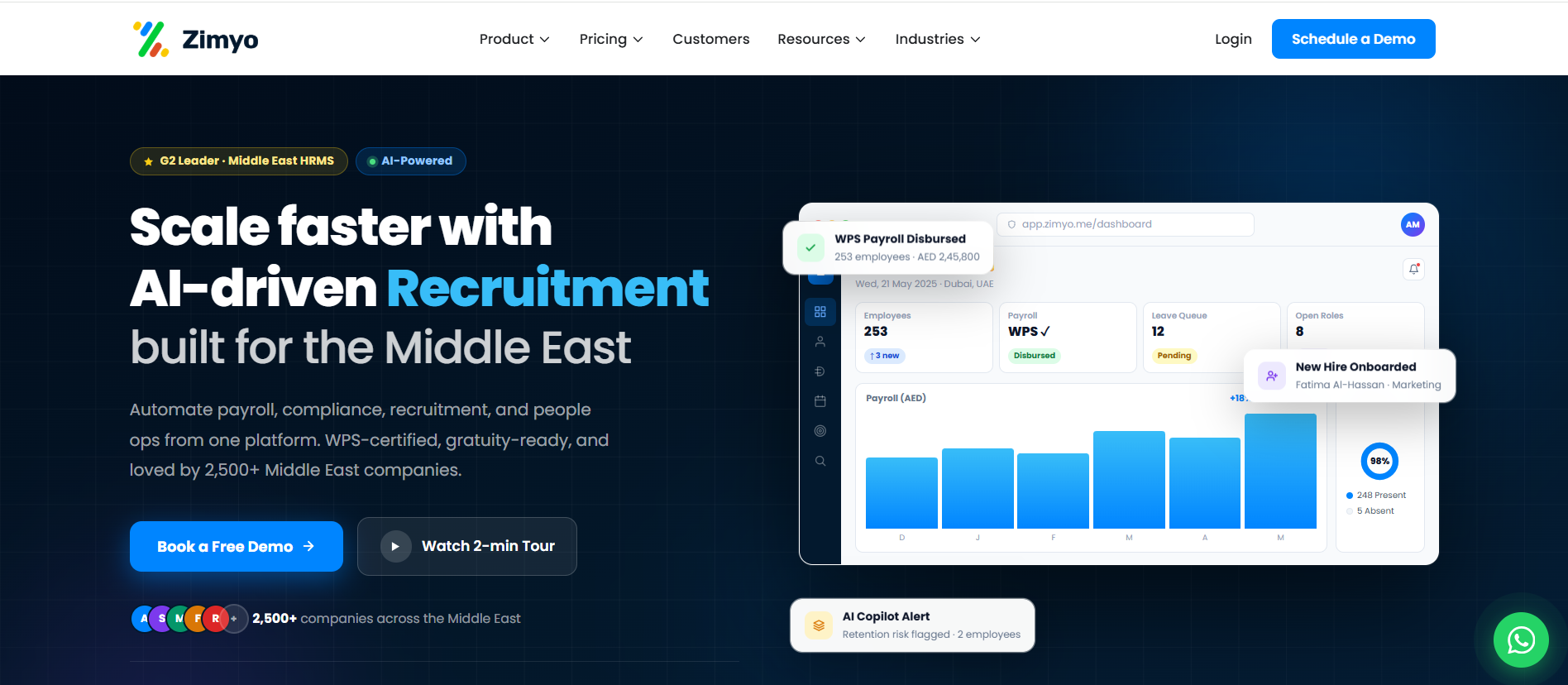
Zimyo runs attendance, payroll, leave and workforce operations from one platform, with GPS capture, geofencing, shift scheduling and overtime tracking feeding directly into WPS-ready payroll. Attendance data doesn't need exporting or reconciling, it becomes payroll hours inside the same system. Pricing is published in dirhams, which is unusual in this category and makes budgeting possible before a sales call.
Key features
- Live attendance tracking with digital timesheets
- Fully configurable leave policies with self-routing approvals
- Overtime, remote work and commute-time tracking
- Shift planning that connects directly to payroll
- Mobile app with exportable, detailed attendance reports
| Pros | Cons |
|---|---|
| Clean interface with fast onboarding for new staff | Pricing is less competitive for very small teams |
| Handles attendance and leave management in one platform | Some settings can be difficult to locate |
| Modular design that scales as your workforce grows | Reports may slow down during peak processing periods |
Verdict: The safest default choice for a company that wants one platform to still fit at 500 employees, not just 50.
2. Bayzat
Rating: Listed on G2; no aggregate score verified
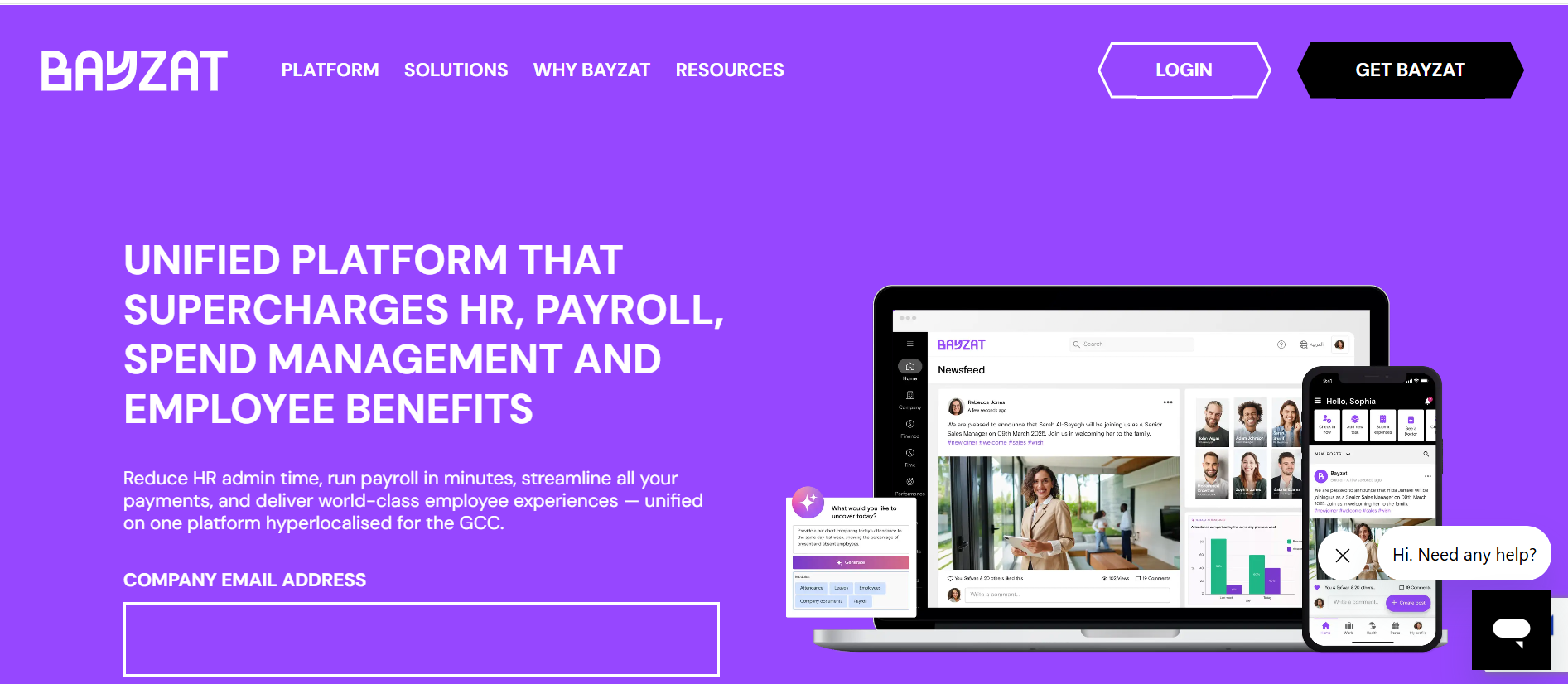
Bayzat is a Dubai-built HR and payroll platform covering attendance, leave, payroll and employee benefits. GPS and face-scan capture feed automated timesheets straight into payroll, and the platform handles WPS, SIF generation, gratuity and DEWS natively. Its distinguishing feature is the insurance marketplace sitting inside the same product.
Key features
- Clock in via phone, GPS, or face scan
- Hardware integrations that double as a biometric attendance system
- Native WPS, SIF file generation, gratuity, and DEWS handling
- Built-in insurance marketplace with 30+ local providers
| Pros | Cons |
|---|---|
| Built for Gulf compliance from day one | Quote-only pricing requires contacting sales |
| Combines HR, payroll, benefits, and insurance in one platform | Fewer third-party integrations than global competitors |
| Highly rated employee self-service mobile app | Best value comes from using the full HR suite rather than attendance alone |
Verdict: The clearest pick for SMEs that want attendance, gratuity, and insurance flowing through a single vendor relationship.
3. Darwinbox
Rating: G2 4.4/5
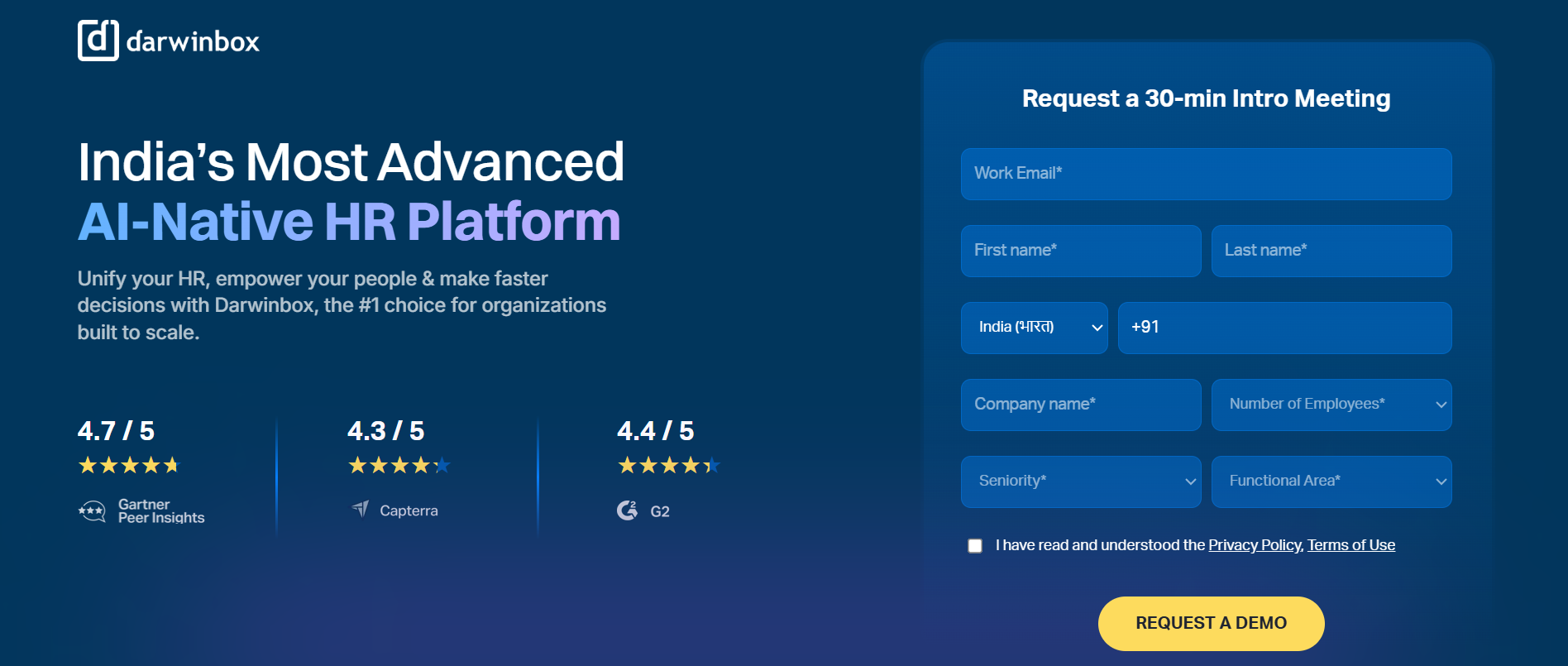
Darwinbox is an AI-powered HR platform that helps businesses manage time and attendance, payroll, shift scheduling, and workforce planning from a single dashboard. It offers features like geofencing, automated attendance tracking, real-time analytics, and seamless HR automation. Designed for growing and large enterprises, Darwinbox is a scalable solution for organizations across the UAE.
Key features
- Geofenced check-ins with live biometric and web capture
- Project-linked timesheets plus full roster planning
- Fully configurable attendance and leave rules
- Machine-learning insight into absence patterns and productivity
- Mobile-first self-service across the employee lifecycle
| Pros | Cons |
|---|---|
| Advanced analytics and SOC 2 certification | May be excessive for small businesses |
| Supports multiple entities and countries from one platform | Requires a structured implementation process |
| Modern and user-friendly mobile experience | Best suited for organizations with 200+ employees |
Verdict: Justifies its heavier setup for companies operating across several GCC entities or countries simultaneously.
4. Zoho People
Rating: G2 4.4/5
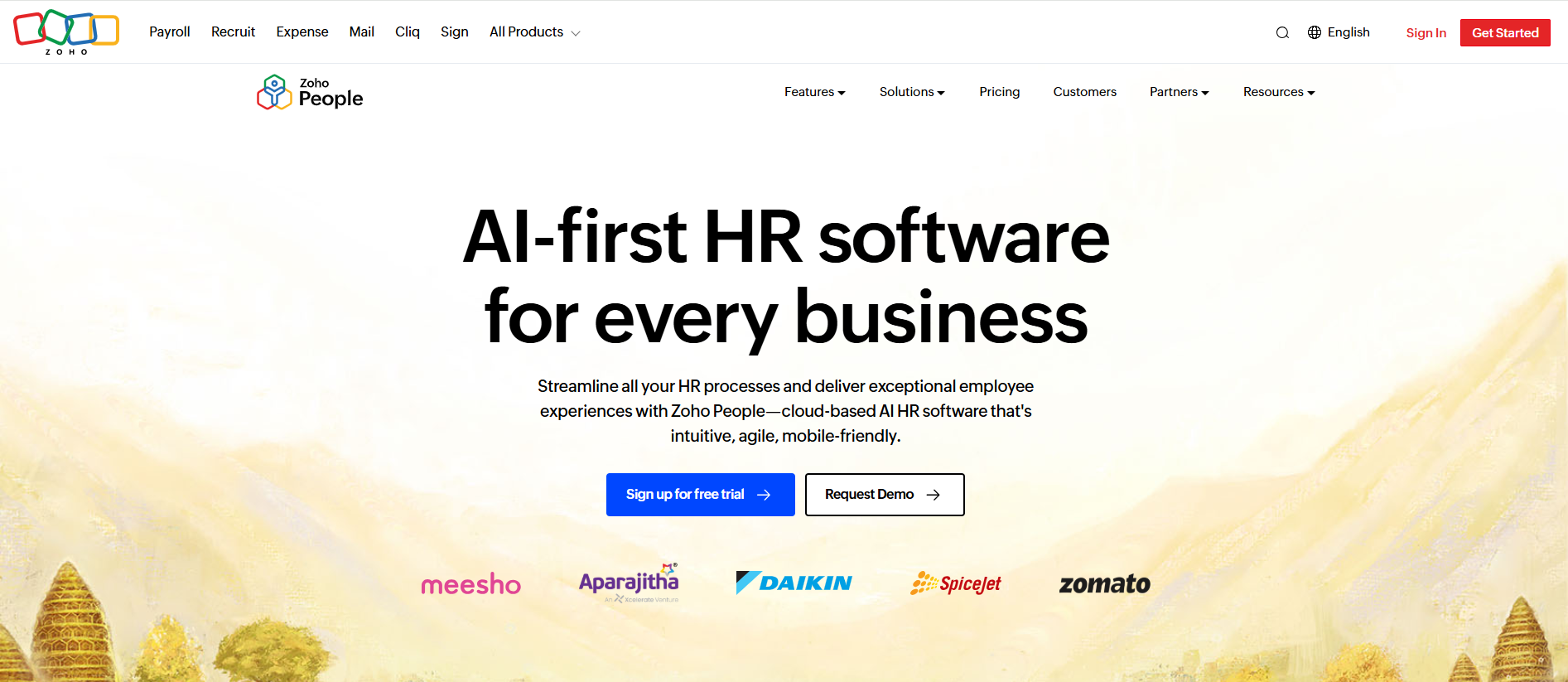
Zoho People is a cloud-based HR software that simplifies time and attendance management, leave tracking, shift scheduling, and employee self-service. It offers customizable attendance policies, biometric integrations, and mobile clock-in features, making workforce management more efficient. Its affordability and seamless integration with the Zoho ecosystem make it a popular choice for UAE SMEs.
Key features
- Real-time punches via web, app, face scan, or device
- Geofencing and IP restrictions for field-team accountability
- Adjustable attendance corrections and pay periods
- Zoho Payroll integration covering WPS, SIF, DEWS, GPSSA, and gratuity
- Reporting connected to the wider Zoho ecosystem
| Pros | Cons |
|---|---|
| Affordable with flexible per-user pricing | Payroll is offered as a separate product |
| Highly customizable workflows | Customer support response times can be slow |
| Seamless integration with the Zoho ecosystem | Less comprehensive than a full HCM suite |
Verdict: The best-value option for teams already invested in Zoho, just budget for Zoho Payroll as a separate line item.
5. ZenHR
Rating: G2 4.6/5
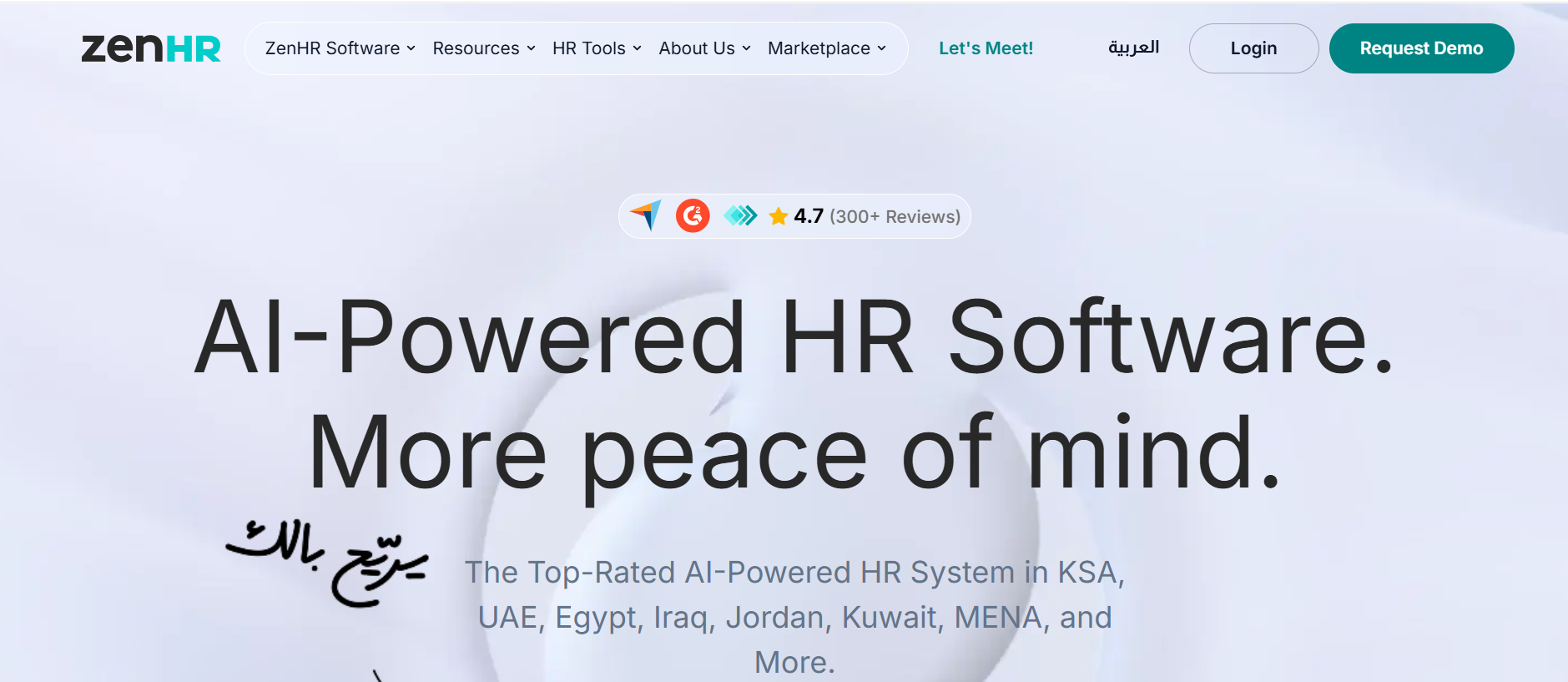
ZenHR is a MENA-built HR platform covering attendance, payroll, leave and self-service, with Arabic throughout. Its strength for UAE employers is shift logic: rotating rosters, complex overtime rules and the Ramadan two-hour reduction are handled as configured rules rather than manual monthly rebuilds.
Key features
- Attendance tracking with WPS-ready payroll output
- Statutory leave, gratuity, and GPSSA are handled natively.
- The Ramadan two-hour reduction is built in as an automatic rule
- Overtime and shift logic built for complex, rotating schedules
- A self-service portal consistently praised by users.
| Pros | Cons |
|---|---|
| Built specifically for Gulf businesses with Arabic support | Quote-only pricing |
| Strong customer support and employee self-service experience | Better suited for mid-sized businesses than very small teams |
| Well-suited for overtime and shift-based workforce management | Fewer third-party integrations than global HR platforms |
Verdict: If your workforce runs rotating shifts and you want Ramadan-hour compliance handled without manual rebuilds, this is the strongest fit reviewed here.
6. Keka
Rating: G2 4.5/5
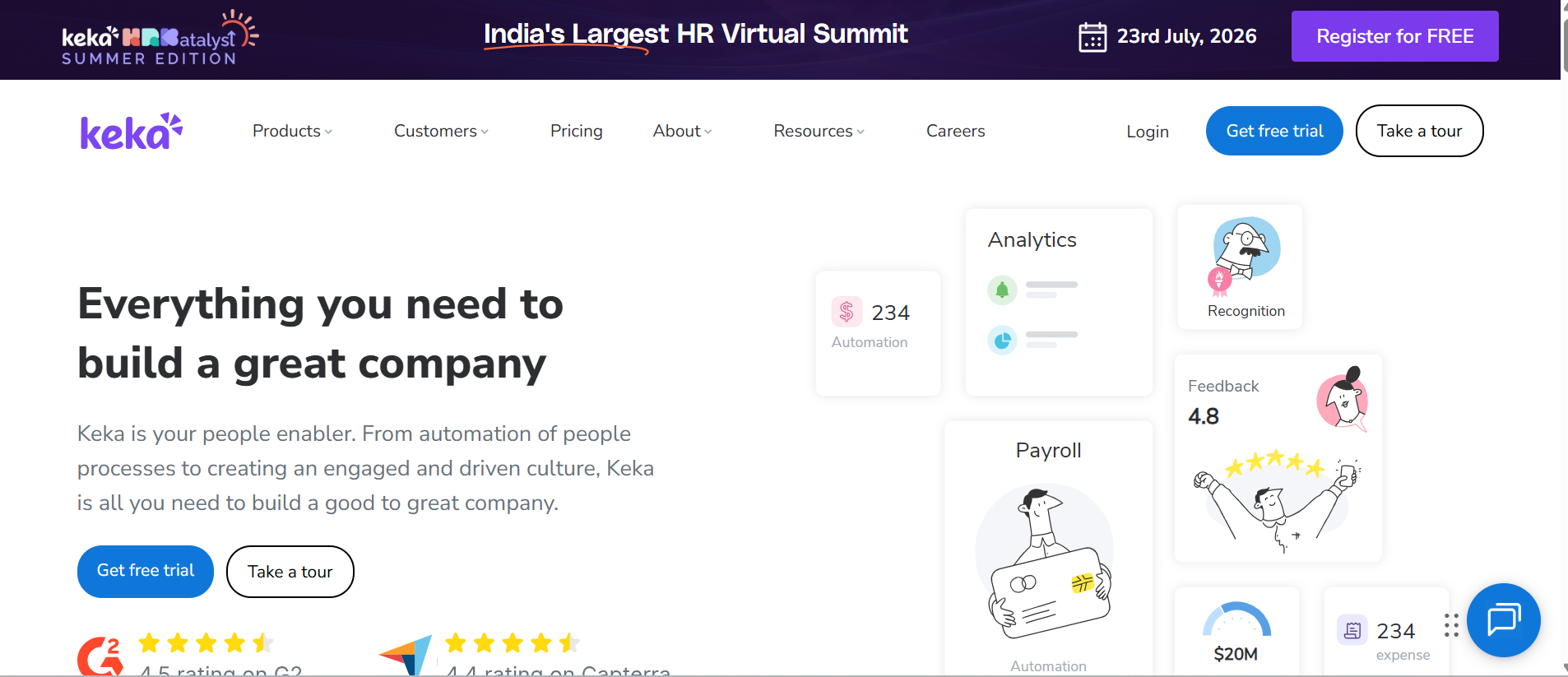
Keka is a modern HR and payroll software that streamlines time and attendance management, leave tracking, shift scheduling, and payroll processing. It offers features such as selfie attendance, biometric integration, and mobile clock-ins to simplify workforce management. Its intuitive interface and automation capabilities make it a great choice for growing businesses in the UAE.
Key features
- Attendance rules configurable per team
- Live biometric syncing
- Payroll, leave, and timesheets unified in one view.
- Modern, employee-first design
- Fast rollout with responsive support
| Pros | Cons |
|---|---|
| Modern and easy-to-use interface | Advanced features require some learning |
| Responsive customer support | Fewer local integrations than Gulf-native platforms |
| Payroll and attendance stay synchronized automatically | Best suited for small to mid-sized businesses |
Verdict: Strong when user adoption is your biggest risk, staff actually use Keka rather than avoiding it.
7. greytHR
Rating: G2 4.4/5
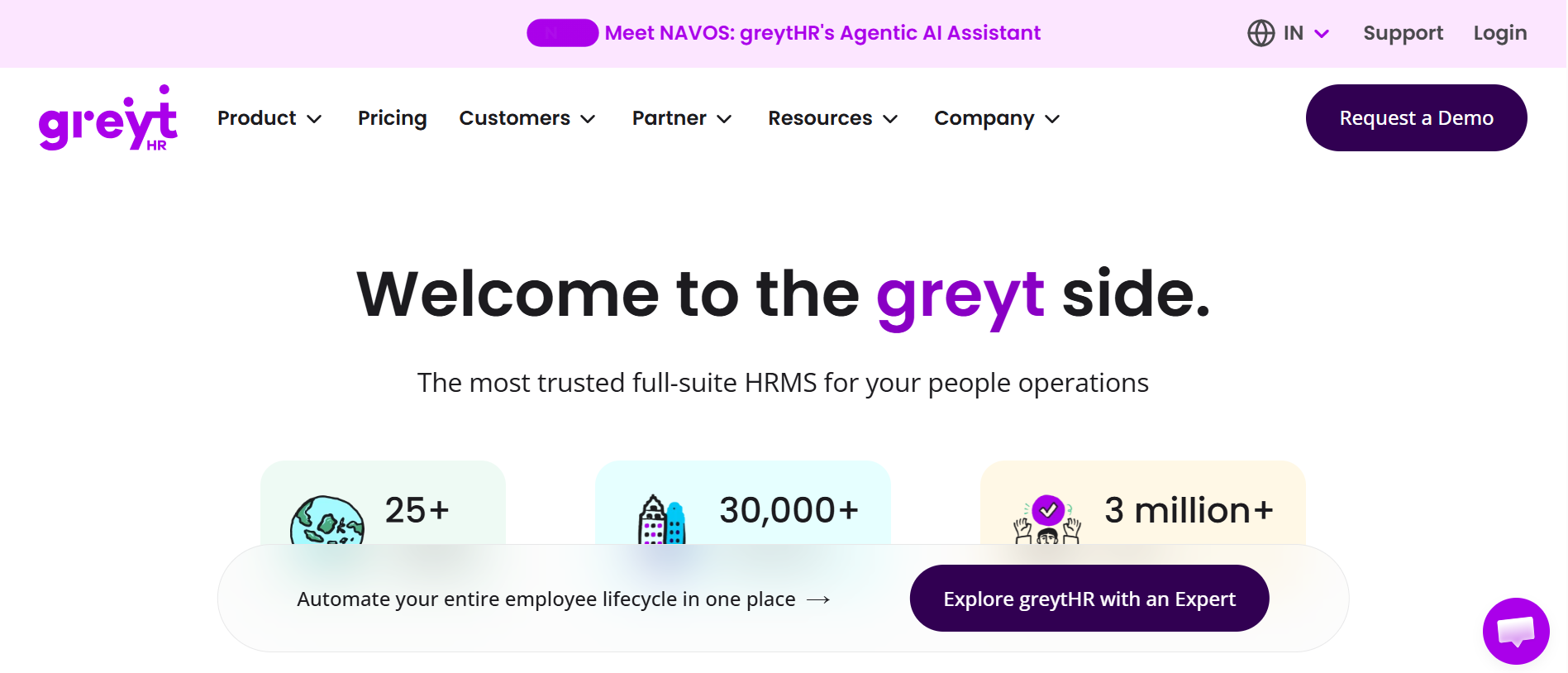
greytHR is a cloud-based HR and payroll solution that simplifies time and attendance management, leave tracking, shift scheduling, and payroll processing. It supports biometric integrations, automated attendance tracking, and employee self-service to improve workforce efficiency. Its cost-effective pricing and easy implementation make it a suitable choice for SMEs in the UAE.
Key features
- Live punch capture with geo-tagged entries
- Geofenced attendance backed by IP, GPS, and selfie verification
- Configurable shift handling
- Automated overtime permissions and corrections
- Broad statutory coverage across the Gulf
| Pros | Cons |
|---|---|
| Reliable real-time attendance tracking and reporting | Interface feels somewhat dated |
| Strong payroll and compliance capabilities | Basic analytics and reporting |
| Budget-friendly with essential HR features | Limited customization compared to premium platforms |
Verdict: For SMBs wanting dependable compliance without enterprise pricing, greytHR earns its spot.
8. Truein
Rating: No aggregate G2 score - request customer references
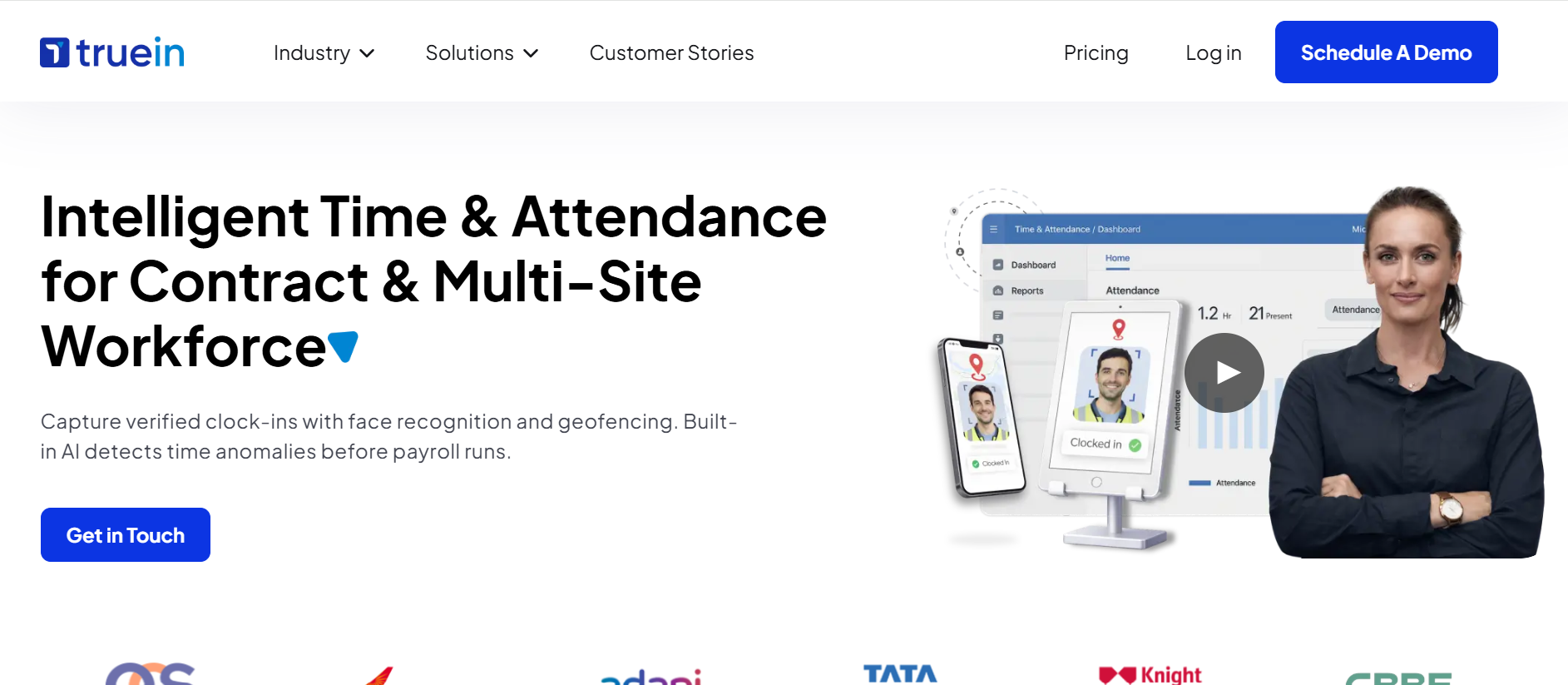
Truein is an AI-powered attendance solution that specializes in time and attendance management through touchless facial recognition technology. It offers contactless clock-ins, real-time attendance tracking, shift management, and multi-location workforce monitoring.
Key features
- AI face capture on any standard phone or tablet.
- GPS geofencing ties clock-ins to actual job sites
- Offline punches that sync automatically once the signal returns.
- Built specifically to eliminate buddy-punching and time theft
- Fully functional on both Android and iOS
| Pros | Cons |
|---|---|
| Excellent for field and multi-site workforce management | Not a complete HRMS; focuses on attendance |
| No biometric terminals or hardware required | Limited third-party integrations |
| Reliable offline attendance for remote locations | Quote-based pricing |
Verdict: Solves the one problem generalist HR suites often handle poorly: verified attendance across scattered, non-office locations.
9. HONO
Rating: G2 4.6/5 (listed as Hono HCM)
HONO is a cloud-based HRMS that helps businesses streamline time and attendance management, workforce scheduling, payroll, and employee engagement. It offers mobile attendance, shift management, AI-powered analytics, and automated HR workflows to improve productivity. Its scalable platform makes it a suitable choice for mid-sized and large businesses in the UAE.
Key features
- Conversational check-ins through everyday messaging tools
- Geofencing and geotagging on every clock-in
- Native WPS, MOHRE, and Emiratization reporting
- Predictive analytics feeding workforce dashboards
- Fourteen connected modules covering hire-to-retire
| Pros | Cons |
|---|---|
| Unique login-free employee experience | More features than most small businesses require |
| AI-powered insights with GCC compliance support | Requires a structured implementation process |
| Enterprise-grade security and scalability | Quote-based pricing |
Verdict: A strong fit for mid-size and larger enterprises wanting AI-led workforce insight without forcing employees onto a new portal.
10. Jibble
Rating: G2 4.7/5
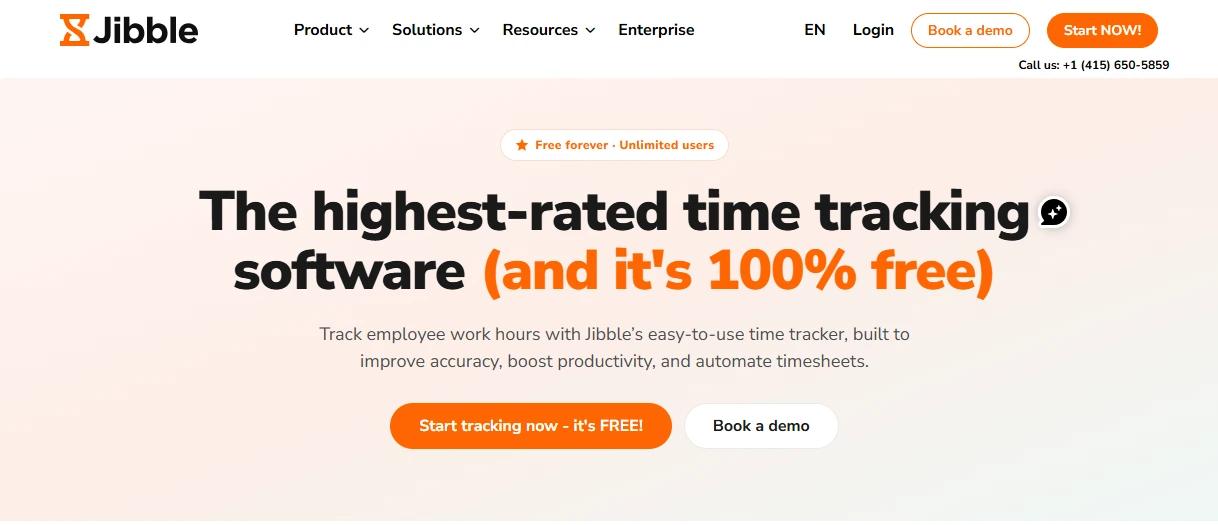
Jibble is an attendance-first platform built around verified clock-ins rather than full HR administration. AI face recognition with liveness detection, GPS geofencing and offline punching cover the capture side thoroughly, and the core product is free for unlimited users, unusual in this category and genuinely useful for small UAE teams tracking hours before they need payroll automation.
Key features
- AI face recognition with anti-spoofing verification
- GPS tracking and geofenced clock-ins
- Offline attendance that syncs when connection returns
- Shared kiosk mode plus mobile, desktop and browser capture
- Free for unlimited users on core attendance features
| Pros | Cons |
|---|---|
| Free for unlimited users on core attendance | No native WPS file generation or gratuity accrual |
| Strong verification against buddy-punching | Attendance data must be exported to payroll |
| Works offline for sites with poor connectivity | Not built for Emiratisation reporting |
Verdict: The strongest free option for capturing verified hours, but UAE compliance work — WPS, gratuity, Emiratisation, still happens outside the platform.
Compliance Obligations by Company Size
This is the section most attendance-software comparisons skip, and it's where the real financial exposure sits.
Business Size / Category | Requirement |
|---|---|
Any Size (Private Sector) | WPS salaries must be paid by the 1st of each month with at least 85% of wages transferred. |
Any Size (Private Sector) | Gratuity applies after 1 year of service and must be paid within 14 days of employment ending. |
20–49 Employees | Selected sectors must meet Emiratization hiring requirements. |
50+ Employees | Increase skilled Emirati employees by 2% annually toward the 10% target by 2026. |
50+ Employees (Non-compliant) | Penalty of AED 10,000/month for each unfilled Emirati position. |
25+ Employees (Specified Sectors) | Subject to stricter WPS enforcement and faster work permit suspension. |
Any Size (All Employees) | Employees receive a 2-hour reduction in working hours during Ramadan. |
What this means practically: if your attendance system can't produce clean, final hours several working days before the 1st of the month, can't track basic-salary-only figures for gratuity, and can't report skilled-role headcount by nationality for Emiratization, you are relying on manual reconciliation to avoid what are now some of the fastest-escalating penalty timelines in UAE labor law.
Pricing Model Reality: What to Actually Budget For
Nearly every Time and Attendance Management Software in UAE reviewed here prices by quote, tied to headcount, module selection (attendance-only vs. full HR/payroll), and implementation scope. That's a deliberate industry pattern, not vendor opacity. WPS, gratuity calculator, and Emiratization configuration require setup work; a flat self-serve price can't realistically absorb it.
Whichever vendor you evaluate, request these four numbers before signing anything. None of them appear on a pricing page, and all four move the total materially.
Cost Factor | What to Check |
|---|---|
Per-Employee Monthly Fee | Confirm pricing based on your actual employee headcount, as demo quotes are often based on fewer users. |
Implementation & Configuration Fee | Check whether one-time setup costs include WPS, GPSSA, gratuity configuration, and system customization. |
Biometric Hardware Costs | If using biometric devices, verify whether hardware and installation costs are included. Mobile/GPS-based solutions may not require additional devices. |
Support & SLA | Evaluate the level of customer support, response times, and service commitments, especially since payroll and WPS compliance issues require timely assistance. |
A simple breakeven framing: if manual attendance and payroll reconciliation currently costs your HR team roughly 4–6 hours per pay cycle at a fully loaded hourly rate, and a platform's all-in cost (subscription plus implementation, amortized) is below that monthly labor cost, the software pays for itself on time savings alone, before counting a single avoided WPS or Emiratisation penalty.
Implementation Reality: A Realistic Timeline
Vendors frequently describe setup as taking "days." For a UAE company migrating from spreadsheets or a legacy system, here's a more realistic path:
Timeline | Implementation Stage | What Happens |
|---|---|---|
Week 1–2 | Data Audit | Clean existing attendance and payroll data, remove duplicates, and identify the information that needs to be migrated. |
Week 2–4 | Configuration | Configure shift schedules, leave policies, WPS/SIF settings, overtime rules, and gratuity calculations. |
Week 3–5 | Integrations | Connect biometric devices, payroll software, and HR systems. Native integrations generally speed up deployment. |
Week 4–6 | Ramadan & Overtime Setup | Configure Ramadan working hours, overtime policies, and automated scheduling to ensure compliance with UAE labor regulations. |
Week 5–7 | Training | Train HR teams, managers, and employees on using the new time and attendance system effectively. |
Week 6–8 | Pilot Payroll Cycle | Run a complete WPS payroll cycle using the new system to validate attendance data and payroll accuracy before full implementation. |
Skipping the pilot cycle is the single most common cause of go-live problems we found referenced across implementation guides. A missed WPS deadline during a rushed cutover carries real financial consequences under the new no-grace-period rules.
Switching Checklist: If You're Replacing an Existing System
- Export all historical attendance and leave records before canceling; most platforms restrict access to old data soon after a subscription ends.
- Confirm gratuity accrual history transfers correctly, since service-length calculations depend on continuous, accurate records.
- Document current shift rules, Ramadan-hour logic, and approval workflows so they can be rebuilt precisely in the new system
- Run your new Payroll HRMS Software in UAE alongside the existing system for at least one complete WPS payroll cycle before fully switching over. This parallel run helps verify attendance, payroll calculations, and compliance while minimizing the risk of payroll errors.
- Verify the new platform's WPS/SIF file format is accepted by your bank or payment channel before go-live, not after
- Calculate the true switching cost: new subscription plus implementation plus retraining, weighed against the ongoing cost (and risk) of staying on a system that can't keep pace with 2026 rules.
Essential Features by Company Growth Stage
- Under 25 employees
- Mobile and web clock-in with basic geofencing
- Automated leave tracking against UAE statutory entitlements
- Simple WPS-ready payroll export
- Gratuity tracking from day one, even before anyone qualifies, so records are clean at the one-year mark.
2. 25–100 employees
- Shift and roster management with configurable overtime rules
- Automatic Ramadan working-hour adjustment
- Manager-level approval workflows and reporting
- Native or tightly integrated payroll connection, not a manual export/import step
3. 100+ employees, especially 50+ triggering Emiratization
- Skilled-role headcount reporting by nationality, tied to Emiratization compliance
- Multi-entity or multi-emirate roster and payroll handling
- Predictive absence and workforce analytics
- Audit-ready record retention that holds up to MOHRE scrutiny
ROI: Why This Spend Pays for Itself
1. Direct time savings: An HR team manually reconciling attendance against payroll for a mid-size UAE company commonly spends several hours per pay cycle on corrections alone. Automated attendance capture that flows straight into payroll substantially reduces reconciliation time, freeing HR capacity for higher-value work rather than chasing punch-clock discrepancies.
2. WPS penalty avoidance. With the 15-day grace period eliminated, a single late payroll cycle can trigger escalating consequences within days, starting with electronic warnings and reaching work-permit suspension by day five. A system that produces final, accurate hours well ahead of month-end removes the single most common cause of late payroll: attendance data arriving too late for payroll to process it.
3. Gratuity accuracy. Gratuity disputes remain among the most common MOHRE complaint categories, frequently caused by miscalculation of basic salary or incorrect tracking of service length. A platform that carries clean, continuous employment records forward automatically removes this error at the point of calculation rather than at the point of dispute.
4. Emiratization risk avoidance. At AED 120,000 per unfilled position annually from mid-2026 onward, accurate, real-time headcount and role reporting isn't a nice-to-have dashboard feature; it's the difference between catching a compliance gap in month one versus discovering it in an annual review, after the penalty clock has already been running for months.
Conclusion
Manually tallying clock-in times or managing payroll through spreadsheets is a habit worth leaving behind. In 2026, with stricter WPS and Emiratization regulations, inaccurate attendance records can lead to costly compliance issues. Choose a solution based on how your workforce operates, whether office-based, field-based, shift-based, or hybrid, and compare implementation costs, not just the per-user price. Also, verify how each platform manages WPS deadlines, gratuity calculations, and Emiratization reporting. If you're looking for a complete HR solution, Zimyo combines time and attendance management, recruitment management software, payroll, and HRMS capabilities on a single platform, helping businesses streamline the entire employee lifecycle. The right software enables your organization to save time, improve accuracy, stay compliant, and ensure employees are paid correctly and on time.