
If you hire, manage, or work in the UAE private sector, the UAE Labor Law shapes almost every part of your working life, from the contract you sign to the gratuity you walk away with. And it has been moving fast. The core statute, Federal Decree-Law No. 33 of 2021, came into force on 2 February 2022, but a steady stream of New UAE Labor Law Amendments, including Federal Decree-Law No. 9 of 2024 and fresh 2026 MoHRE resolutions, has reshaped what compliance actually looks like on the ground. Staying on top of the UAE Labor Law Latest Updates is no longer optional for any business operating here.
The reason behind these reforms is consistent: the UAE wants a labor market flexible enough to attract global talent, but protective enough to keep workers secure and employers accountable. That balance is exactly what the UAE Labor Law Latest Updates are engineered to deliver, and in 2026, getting it wrong carries the same-day penalties and fines of up to AED 1 million.
Key Takeaways
- The new WPS rule requires salaries by the 1st of every month.
- The stricter 85% WPS compliance threshold and penalties.
- Why employers now need written consent for contract changes.
- The new AED 6,000 minimum wage for Emiratis.
- Heavier fines and a longer window to file labor claims.
- Core rules on contracts, leave, gratuity, notice, and termination.
- What every change means for employers vs employees.
The Major 2026 UAE Labor Law Updates
Key UAE Labor Law Latest Updates for 2026 enforce stricter compliance, standardized pay dates, and heavier penalties for workplace violations across the private sector. Here are the five that matter most.
1. Unified WPS Salary Dates
This is the single biggest operational change of the year. Under MoHRE Ministerial Resolution No. 340 of 2026 (effective 1 June 2026), all private-sector companies must process employee Leave Salary Calculation through the Wage Protection System UAE (WPS) by the 1st of every month. The previous 15-day grace period has been completely removed, and the resolution repealed the older Resolution No. 598 of 2022.
- Real-world example: a Dubai trading company that used to run payroll around the 7th of the month comfortably inside the old grace window is now non-compliant the moment the 1st passes without payment. To adapt, its finance team has moved the payroll cut-off to the 20th, giving them time to finalize attendance, overtime, and leave, generate the salary file, and clear it through the bank before month-end.
Why it matters: MoHRE monitoring through the Wage Protection System in the UAE is now automated from Day 1. Warnings begin on Day 2, new work permits are frozen by Day 5, and fines and downgrades follow within two weeks. There is no longer a fortnight to catch and fix payroll errors; everything must be right before the run.
2. Stricter WPS Compliance
The Wage Protection System (WPS) compliance threshold has been raised from 80% to 85% and now applies at both the company and individual employee levels. In practice, this limits WPS-relevant deductions to approximately 15% of an employee's monthly wage. Non-compliant establishments may face immediate consequences, including work permit suspensions, administrative fines, and the automatic registration of labour disputes without the employee needing to file a complaint. Alongside payroll compliance, implementing employee engagement software helps organizations improve communication, transparency, and employee satisfaction while supporting a more compliant and productive workplace.
- Real-world example: an employer withholds 20% of a worker's salary for an internal reason. Even if a deduction were otherwise arguable, that transfer now falls below the 85% threshold and is logged as non-compliant, exposing the company to enforcement.
Why it matters: the UAE is moving from periodic checks to continuous wage compliance, and payroll accuracy is now a permanent, month-on-month discipline rather than a deadline to scramble toward.
3. Mandatory Written Consent for Contract Changes
Under the current UAE Employment Contract Rules, employers must obtain explicit written consent from employees and process any contract changes, such as salary, job title, or responsibilities, through official MoHRE digital channels. Undocumented changes are not legally binding, and any condition that reduces an employee's minimum rights is null and void.
- Real-world example: facing a slow quarter, a company decides to cut a manager's salary by 15% and quietly reissue the contract. Under the UAE Employment Contract Rules, that cut is unlawful unless the employee consents in writing, and it is registered with MoHRE. The employee can refuse, and if pressured, file a complaint.
Why it matters: it closes the grey area that once let struggling employers push costs onto staff without agreement.
4. Increased Minimum Wage for Emiratis
The minimum wage for UAE nationals employed in the private sector has been raised to AED 6,000 per month, effective January 2026. The Wage Protection System UAE now cross-references this against Emiratisation quotas, so underpaying an Emirati can trigger both a WPS violation and an Emiratisation penalty at once. (There is still no statutory minimum wage for non-Emirati workers.)
Why it matters: It supports the UAE's Emiratization goals by making private-sector roles more attractive to nationals.
5. Enhanced Penalties & Extended Claims Window
Fines for labor violations, including wage defaults, work-permit misuse, and breaches of the UAE Termination Rules through unlawful dismissal, now range from AED 100,000 to AED 1,000,000, and can multiply by the number of workers in fraud cases. In addition, both employees and employers now have up to two years to file a labor claim (extended from one year), and MoHRE decisions on disputes up to AED 50,000 carry the force of a court order.
Why it matters: stronger deterrents target fictitious employment and exploitation, while the longer claim window gives both sides a fairer chance to seek redress.
Core Rules Every Business Should Know
Beyond the 2026 headlines, the everyday framework of the UAE Employment Contract Rules remains essential to understand. These UAE Labor Law Latest Updates sit on top of a foundation of contract, leave, working hours, and end-of-service standards that every business must get right.
Employment Contracts
Unlimited-term contracts have been abolished, requiring all employees to be employed under fixed-term contracts that are digitally registered with MOHRE. If both parties continue the employment relationship after the contract expires, it automatically renews under the same terms. The UAE Employment Contract Rules also require every material employment term to be documented, meaning verbal side agreements have no legal standing. Businesses can further strengthen compliance by using a comprehensive performance management software to align employee records, contract management, goal tracking, and performance reviews within a single HR platform.
Leave Entitlements
The UAE's statutory leave framework combines the UAE Annual Leave Law, the UAE Sick Leave Rules, and the UAE Maternity Leave Rules into a clear set of minimum entitlements.
Leave type | Duration | Pay structure |
|---|---|---|
Annual leave | 30 days after 1 year | Full pay |
Sick leave | Up to 90 days/year | 15 full, 30 half, 45 unpaid |
Maternity leave | 60 days from day one | 45 full, 15 half |
Parental leave | 5 days, both parents | Full pay |
Under the UAE Annual Leave Law, unused days must generally be settled on exit, so accurate leave tracking protects both sides. The UAE Sick Leave Rules require a valid medical certificate, and the UAE Maternity Leave Rules apply from an employee's very first day of service with no qualifying period.
Why parental leave was added: the UAE became the first Gulf country to give paid leave to both parents, supporting family life and female workforce participation. Alongside the UAE Annual Leave Law, the UAE Sick Leave Rules, and the UAE Maternity Leave Rules, it reflects a broader push toward a modern, family-friendly workplace.
Working Hours & Overtime
The UAE Working Hours Law caps working hours at 8 hours per day or 48 hours per week, with a 2-hour reduction per day during Ramadan. Under the UAE Overtime Rules, up to two extra hours a day are allowed, paid at 125% of the basic hourly wage (150% on weekends and public holidays).
The UAE Working Hours Law also requires rest breaks and daily rest periods, while the UAE Overtime Rules ensure that any additional hours are properly authorized and compensated. Employers who track attendance carefully find it far easier to demonstrate compliance with both the UAE Working Hours Law and the UAE Overtime Rules during an MoHRE review.
Notice, Termination, Probation & Resignation
The UAE Notice Period Law, UAE Probation Period Rules, UAE Termination Rules, and UAE Resignation Rules collectively govern how the working relationship begins, evolves, and ends.
Topic | Rule |
|---|---|
UAE Probation Period Rules | Max 6 months, no extension |
Probation notice (employer) | 14 days |
Probation notice (employee | 30 days |
UAE Notice Period Law | 30 days minimum; typically 30–90 |
UAE Termination Rules | Due process required before dismissal |
UAE Resignation Rules | Gratuity protected after 1 year, regardless of who ends the contract |
The UAE Probation Period Rules set a firm six-month ceiling that cannot be extended, so employers must confirm a hire's suitability within that window. Once probation ends, the Notice Period UAE Law governs the minimum warning period each party must give, and a longer contractual notice period is enforceable if agreed. The UAE Termination Rules require a documented, fair process before any dismissal, while the UAE Resignation Rules protect an employee's accrued gratuity upon reaching one year of service. Understanding the UAE Notice Period Law, the UAE Probation Period Rules, the UAE Termination Rules, and the UAE Resignation Rules together helps both parties exit cleanly and lawfully.
Gratuity & End of Service Benefits
A common myth is that the UAE Gratuity Law now includes allowances. Under the UAE Gratuity Law, UAE End of Service Benefits are calculated on basic salary only:
Service length | Entitlement |
|---|---|
First 5 years | 21 days' basic pay per year |
Beyond 5 years | 30 days' basic pay per year |
Maximum | 2 years' total remuneration |
Employees qualify for UAE End of Service Benefits after one year, and all dues must be settled within 14 days of the last working day. Because the UAE Gratuity Law ties the calculation strictly to basic salary, employers who inflate allowances gain no reduction in their liability. Accurate accrual of UAE End of Service Benefits throughout the year prevents disputes at exit, and the UAE Gratuity Law applies equally whether the employee resigns or is dismissed.
Unemployment Insurance (ILOE)
The mandatory Involuntary Loss of Employment scheme pays 60% of basic salary for up to three months if you lose your job involuntarily (capped at AED 10,000 or AED 20,000/month). Premiums are just AED 5–10 a month.
Why it was created: to give workers a financial cushion during job transitions, so they aren't forced to accept the first available role out of desperation.
Why UAE Payroll Compliance Is Now Business-Critical
With Resolution 340 of 2026 anchoring salaries to the 1st of the month, an 85% threshold applied per employee, and directly enforceable MoHRE decisions backed by million-dirham fines, UAE Payroll Compliance has moved from a back-office task to a board-level priority. Strong UAE Payroll Compliance now depends on aligning your pay dates, contracts, and Wage Protection System UAE transfers into a single, disciplined process.
The practical fix is a disciplined process: move your payroll cut-off earlier, automate salary file generation, and keep contracts, notice periods, leave approvals, gratuity calculator accruals, and WPS transfers accurate and up to date. Businesses that treat UAE Payroll Compliance as a continuous routine, rather than a monthly scramble, are the ones best placed to absorb the UAE Labor Law Latest Updates without penalty.
Conclusion
The 2026 amendments mark a decisive shift toward faster, fairer, and firmer enforcement. Fixed pay dates, stricter Wage Protection System UAE checks, mandatory consent, a higher Emirati minimum wage, and heavier penalties all send one message: compliance is now a continuous discipline. Staying current with the latest updates to the UAE Labor Law keeps both sides protected.
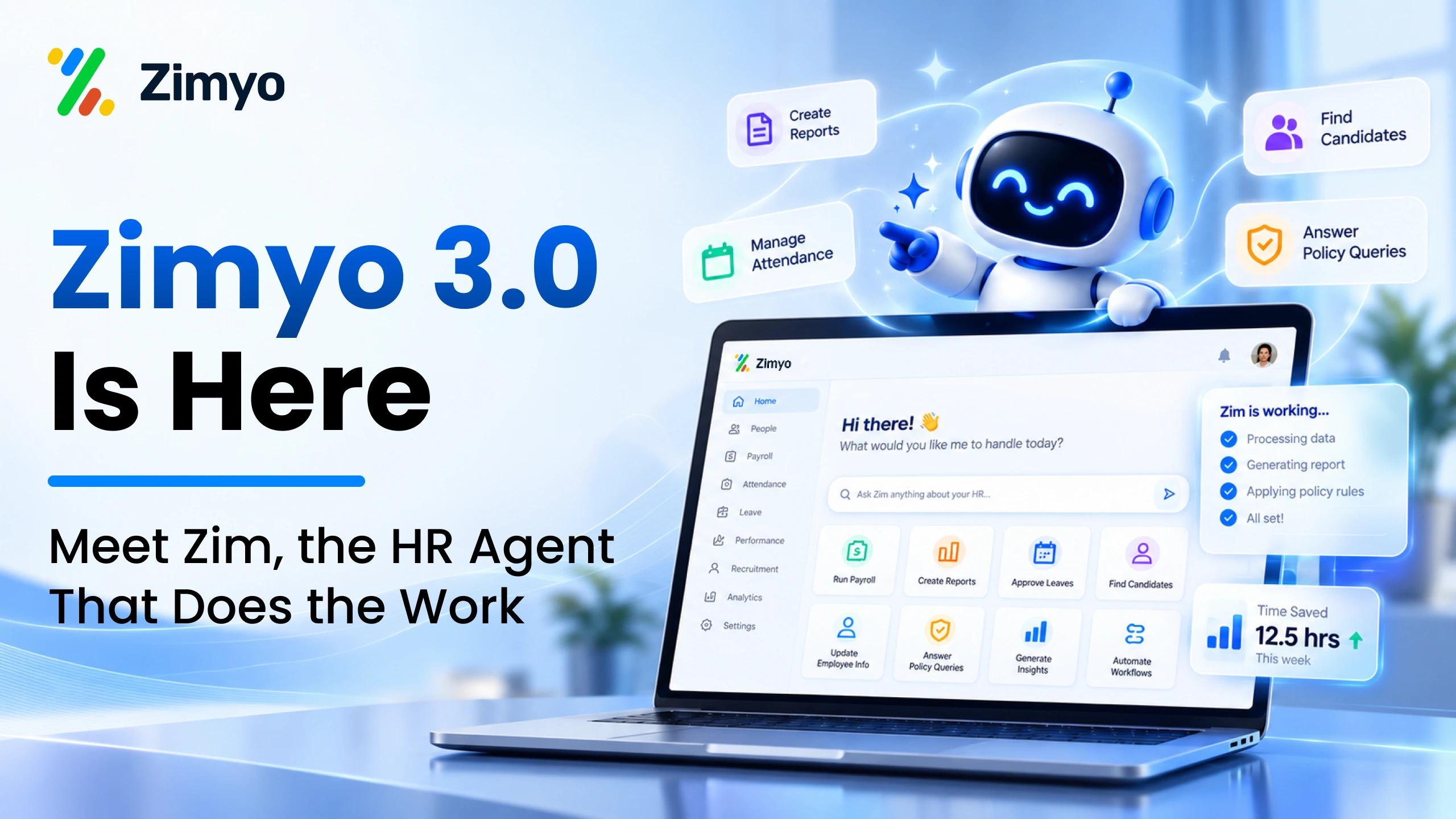
To stay ahead, organizations can rely on Zimyo Payroll Software, an end-to-end HR platform whose Payroll module runs swift, error-free payroll, supports WPS-aligned processing, and strengthens UAE Payroll Compliance by automating gratuity, leave, and end-of-service tracking, so the records MoHRE now audits are always in order.
Explore more in our related reads on the UAE Labor Law Latest Updates and UAE Payroll Compliance Essentials.
This article is for general information only and does not constitute legal advice. Labor regulations and MoHRE guidance are updated periodically, so verify details against official sources or a qualified UAE employment lawyer before acting.