
There was a time when paying people on time was the whole job. Money went out on payday, everyone was happy, and HR moved on. That world is gone. Walk into any office in Dubai, Riyadh, Doha, Muscat, Manama, or Kuwait City today, and you'll find employees quietly comparing full packages, regulators watching salary transfers as they happen, and good people slipping out the door the second pay starts to feel unfair.
So it's no surprise that compensation management benefits have become such a talking point this year. Handled well, pay stops being the thing you dread every month and turns into something you can actually lead with. This guide unpacks what compensation management really means, the benefits your business gets from doing it properly, and why the best HR software has made the whole process so much easier for companies across the Gulf.
Key Takeaways
- What compensation management actually is
- Why compensation management benefits matter more in 2026
- The seven biggest benefits for your business
- What it all means for businesses in the UAE, Saudi Arabia, and the wider GCC
- Best practices to put in place this year
- Common challenges and how to fix them
- How HR technology makes the whole thing easier
- Answers to the questions people ask most
What Is Compensation Management?
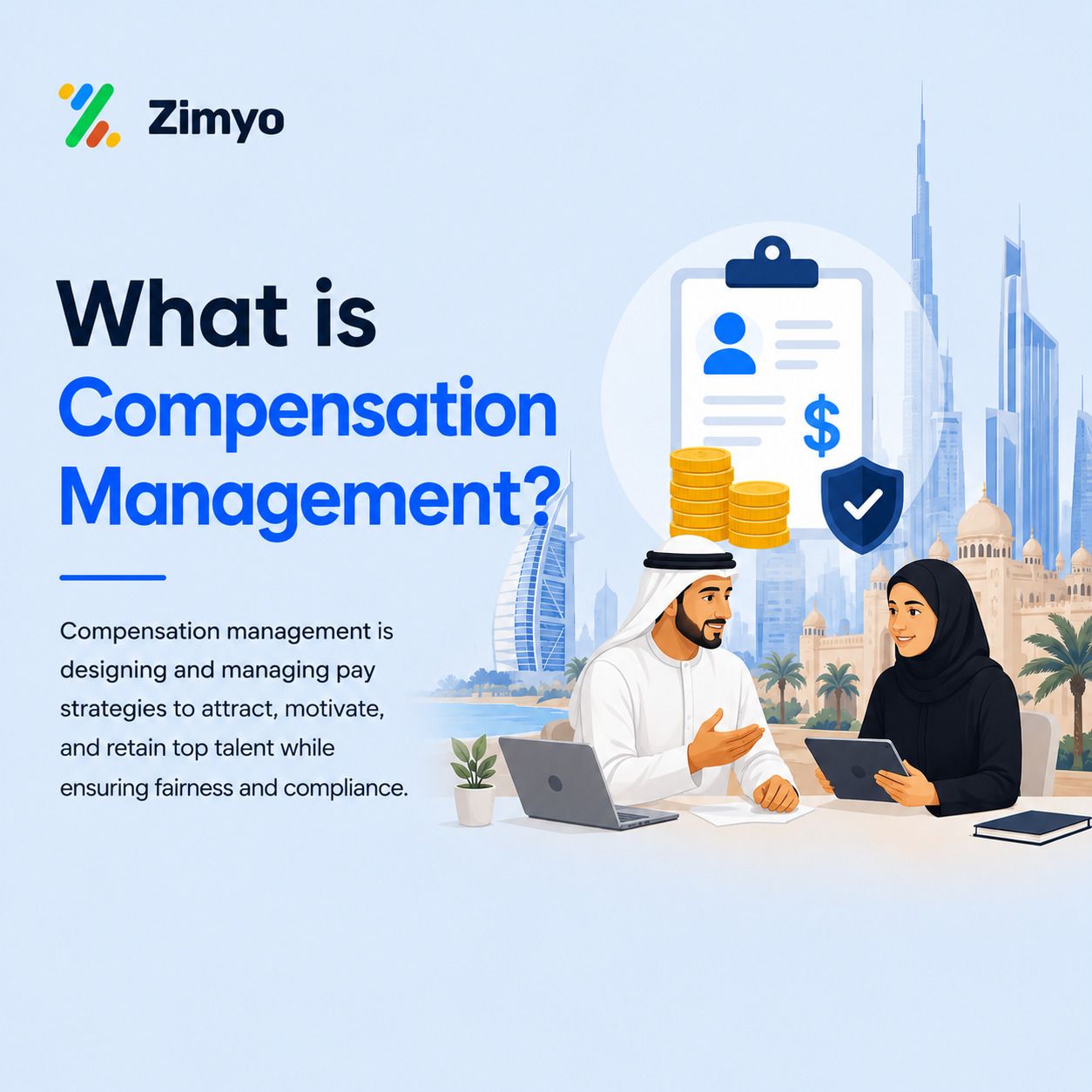
At its simplest, compensation management is how you plan, decide, deliver, and review everything your employees get paid. Base salary. Allowances. Bonuses. Incentives. Benefits. The long-term rewards, too.
Think of it as answering four questions clearly and consistently, every single time:
- What do we pay each role?
- Why that number and not another?
- How does pay grow as people grow?
- And how do we stay fair, competitive, and compliant while we do it?
Do it right, and a lot of moving parts start pulling in the same direction: salary administration, compensation planning, salary benchmarking, pay equity, incentive management, and that dreaded annual compensation review process. Instead of paying living in ten different spreadsheets and someone's gut feeling, you get a clear compensation structure that finance, HR software, and leadership can all actually trust.
For a GCC business, this goes deeper than most people realize. Pay here is rarely just "salary." A typical Gulf package is roughly 60 to 70 percent base pay and 30 to 40 percent allowances, think housing, transport, schooling. Get that mix right and talent shows up. Get it wrong and, well, they'll find the door on their own.
Why Compensation Management Benefits Matter More in 2026
Three major shifts have made compensation management a strategic business priority across the GCC. Pay growth is moderating, with salary increase budgets ranging from 4.1% to 4.6% across the UAE, Saudi Arabia, Qatar, and Oman, making effective compensation planning more important than ever. At the same time, payroll compliance has become stricter, with regulations such as the UAE's updated Wage Protection System and Saudi Arabia's Mudad integration requiring timely and accurate salary processing. To stay competitive, many organizations are also investing in technologies like a learning management system alongside modern HR and compensation tools to improve employee development, retention, and overall workforce performance.
Third, expectations have changed: Around 78 percent of GCC professionals expect a raise, many feel underpaid for what they actually do, and that gap is now a top reason people quit, while AI is pushing 20 to 30 percent premiums for scarce skills in cybersecurity and fintech. The market simply moves too fast for gut-feel pay, which is exactly why compensation management benefits stopped being a "nice to have" around last year.
The Top Compensation Management Benefits for Your Business
Here's where it gets practical. These are the benefits that actually move the needle, with real examples of what they look like on the ground.
1. Stronger Employee Retention and Engagement
Replacing employees is costly, making fair compensation a key part of successful employee retention strategies. Clear salary bands, transparent increments, and competitive pay improve employee engagement, reduce turnover, and help retain top talent. Businesses with global teams should also understand employment practices across different markets to build stronger and more effective compensation strategies.
2. Genuine Pay Equity and Fairness
Fair pay is no longer just a best practice, it's an expectation across the GCC. The UAE and Saudi Arabia continue to strengthen equal pay standards, making pay equity an important part of compensation management. Regular salary reviews help businesses identify pay gaps, ensure compliance, build employee trust, and strengthen their reputation as a fair employer in a competitive talent market.
3. Reliable Payroll and Regulatory Compliance
Late or inaccurate payroll can lead to serious compliance risks across the GCC. With stricter WPS requirements in the UAE and enforcement through Mudad and Qiwa in Saudi Arabia, businesses need accurate and timely payroll processing. Using a Payroll HRMS Software helps automate payroll schedules, reduce errors, avoid penalties, and ensure compliance while giving HR teams and business owners greater peace of mind.
4. Smarter Salary Benchmarking and Budgeting
When increases are tightening toward 4 percent, you simply can't afford to overpay your generalists while starving the specialists who actually drive results. Salary benchmarking tells you where you really stand against the market before you set or adjust a single number. Take the Qatar tech company that assumed it paid well, right up until benchmarking showed its cloud and cybersecurity roles sitting 15 percent below market. The exact roles it kept losing, funnily enough. A few targeted adjustments plugged the leak without inflating the entire payroll. That's the whole point: put your salary budget where it counts, and make your pay competitive where competition is actually fierce.
5. Performance-Based and Variable Pay Alignment
Gulf employers are steadily shifting away from fixed salary increases toward variable pay and richer benefits, and there's good logic to it. Performance-based compensation lets you reward your strongest performers without permanently increasing your fixed costs. A Bahrain sales team swapped flat annual raises for a transparent incentive-management scheme tied to clear targets. Top performers took home more. The company kept its cost base predictable. Everyone understood the deal. That's the sweet spot where employee performance management software and rewards finally connect, rather than drifting along as two separate conversations.
6. Faster, Error-Free Salary Administration
Manual salary administration is slow and, worse, fragile. One wrong figure can ripple through gratuity, WPS compliance, and employee trust all at once, and that matters even more when end-of-service UAE Gratuity Calculator has to be settled within 14 days. An Oman retailer used to lose two full weeks every year to its salary increment process. After standardizing it, the whole thing wrapped up in days, and the calculation errors that used to spark disputes just stopped happening. Time back, fewer mistakes, and a compensation review process HR no longer dreads on the calendar.
7. Transparency That Strengthens Employer Branding
Many employees don't fully understand the value of their total compensation beyond their base salary. Along with accurate timesheet management, sharing total-reward statements helps employees see the complete value of their pay, benefits, and overtime. Even without salary increases, this simple step can improve pay satisfaction, strengthen employee recognition, and boost retention.
How Compensation Management Helps Businesses in the Middle East
The GCC has unique workforce regulations, and effective compensation management helps businesses stay compliant while attracting and retaining top talent. In the UAE, it supports compliance with the updated Wage Protection System, the AED 6,000 minimum wage for Emiratis, and Emiratization requirements by enabling fair and competitive pay structures. In Saudi Arabia, compensation planning plays a key role in meeting national workforce localization requirements, where Saudi employees generally need to earn at least SAR 4,000 per month (or more in certain sectors) to be counted toward localization targets. A well-structured compensation strategy helps organizations remain compliant, maintain recruitment flexibility, and avoid disruptions to hiring and business operations.
Across the wider Gulf, in Qatar, Oman, Bahrain, and Kuwait, the same themes keep coming back, tighter payroll compliance, nationalization goals, a scramble for specialist talent, and employees who expect fairness and want to see it. Good compensation management ties directly into workforce planning, employee retention, and HR automation, turning a messy patchwork of local rules into a single, manageable system.
Best Practices for Compensation Management in 2026
Treat this as your working checklist:
- Build clear salary bands. Define ranges for every role so decisions stay consistent instead of personal.
- Benchmark yearly, and every six months for hot roles. AI, cybersecurity, and fintech move fast; an annual review alone leaves gaps you'll pay for later.
- Split national and expatriate pay tracks where it makes sense. Emiratization and Saudization often call for distinct, genuinely competitive structures for national talent.
- Tie a real chunk of pay to performance. Use variable pay and incentives to reward impact without ballooning fixed costs.
- Run a pay-equity check every cycle. Catch the unexplained gaps before they turn into disputes or legal headaches.
- Match your payroll calendar to the rules. In the UAE, aim to land salaries on or before the first, and in Saudi Arabia, keep your Mudad and Qiwa data clean. Using an Overtime Pay Calculator alongside your payroll process also helps ensure accurate overtime calculations and better payroll compliance.
- Communicate total rewards. Show people what their whole package is worth, not just the baseline.
- Document everything. With regulators enforcing in real time and longer claim windows in play, clear records are your best defense.
Common Compensation Management Challenges (and How to Overcome Them)
Most of the trouble comes down to a handful of familiar culprits:
- Pay data scattered across spreadsheets and email threads. It breeds errors, version chaos, and no audit trail. Fix: pull everything into one system so every number has a single source of truth.
- GCC labor laws that keep shifting. Wages, minimum pay, and nationalization rules change fast, and tracking them by hand is a losing game. Fix: Lean on recruitment management software along with tools and partners that follow UAE labour law, Saudi payroll rules, and the wider GCC labour laws and update automatically.
- Pay that feels unfair even when it isn't. Without transparency, people assume the worst. Fix: publish salary bands, explain how increments work, and share total-reward statements.
- Overpaying some roles while underpaying others. Flat, across-the-board raises waste money and lose specialists. Fix: benchmark by role and steer increases toward where the market actually demands them.
- An annual review that swallows entire weeks. That's a process problem, not a people problem. Fix: automate the calculations, approvals, and letters, and a fortnight turns into a few days.
How Technology Makes Compensation Management Easier
Let's be honest about something. You can run compensation management on spreadsheets. In 2026, you probably shouldn't. The pace of regulatory change, the real-time nature of payroll compliance, and the sheer speed of the Gulf talent market have quietly made manual methods both risky and slow.
This is exactly where the best HR software starts paying for itself. A solid compensation management software setup, or a proper HRMS built for the Middle East, brings everything together in one connected place. Whether you think of it as the payroll software UAE teams rely on, the HR software UAE businesses trust, or simply a modern HRMS, the idea is the same: one connected system instead of a drawer full of spreadsheets. In practice, that means:
- Payroll software for the UAE and GCC that lines up with WPS timelines and produces compliant, on-time payments.
- Salary benchmarking and compensation planning tools that let you model increases and budgets before you commit to anything.
- Automated increment and review workflows that turn a two-week annual scramble into a few clean days.
- Built-in compliance for UAE labor law, Saudi payroll rules, GOSI, gratuity, and nationalization targets.
- Analytics and total-reward dashboards that surface pay gaps and show employees exactly what their packages are worth.
The best HR software doesn't just push pay out the door. For a lot of Gulf teams, the hunt literally starts with a search for "HR software UAE" or "payroll software UAE," and the tools worth shortlisting all share the same DNA: automation, compliance, and clean data in one place. It turns compensation into an advantage: fewer errors, faster calls, cleaner compliance, and people who feel fairly treated. That's HR automation working for the whole business, not just lightening the payroll team's load.
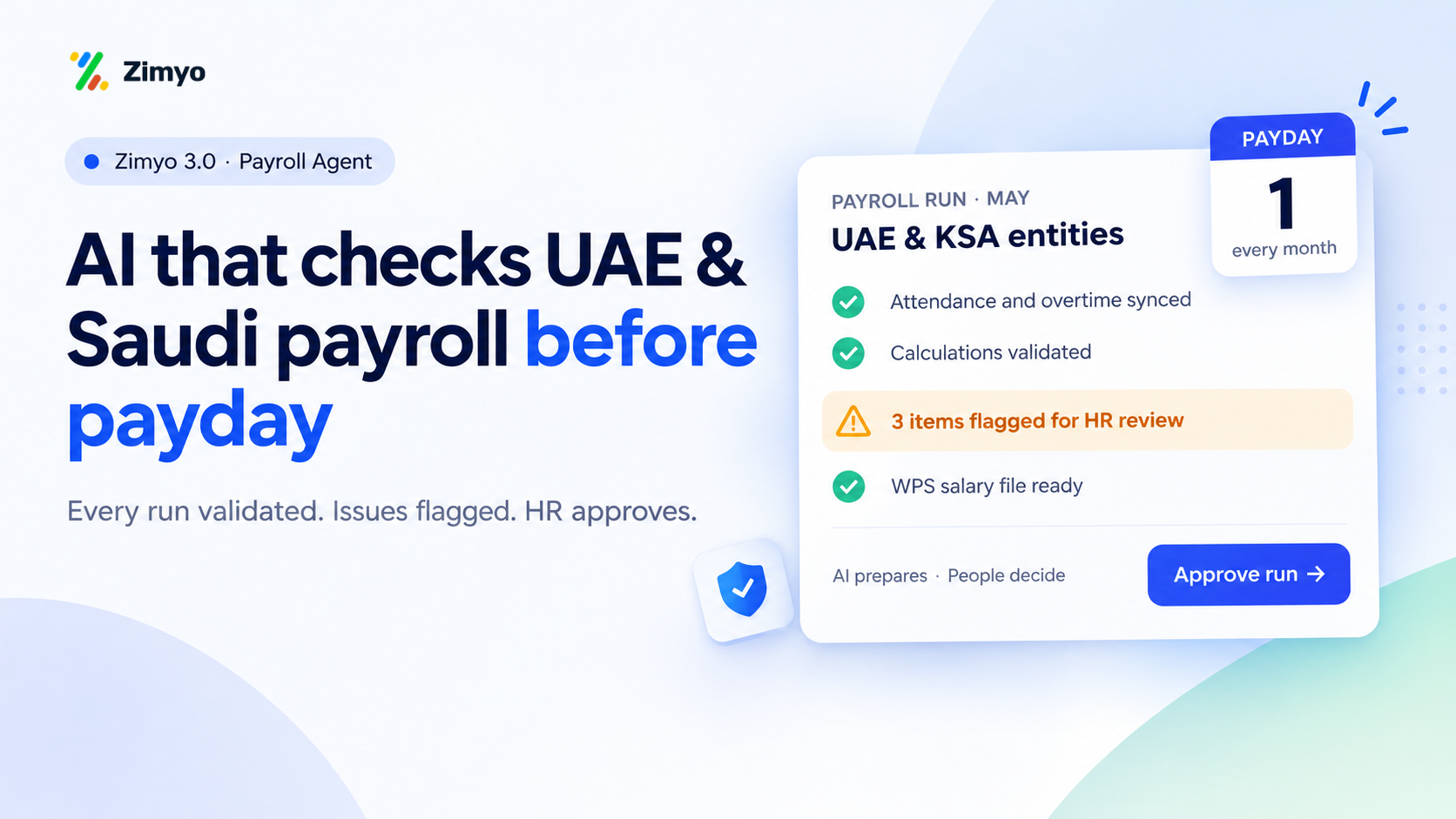
Zimyo is an HR and payroll platform built specifically for the realities of the Gulf, and it shows in the detail, one-click WPS salary files for the UAE and Mudad files for Saudi Arabia, gratuity and end-of-service calculators tuned to each country's law, and real-time dashboards that track Nitaqat, Emiratization, and Romanization quotas and warn you before you slip a band. Contracts and pay slips are issued in Arabic and English side by side, and payroll is processed in AED, SAR, and other GCC currencies. More than 2,500 companies across the Middle East already run their people operations on it. Instead of chasing spreadsheets and regulatory updates, you get one place to plan pay, run payroll, and stay compliant, which is really what the best HR software should be doing for you in the first place.
Conclusion
Compensation isn't just a line on the budget anymore. In 2026, across the UAE, Saudi Arabia, and the wider GCC, it sits right at the crossroads of compliance, retention, fairness, and growth. And the compensation management benefits are real and measurable: you hold on to your best people, you pay fairly, you stay on the right side of labor laws that keep changing, and you spend your salary budget where it genuinely drives results.
The businesses that treat compensation management as a strategy, not a chore, will have a real edge over the ones still winging it. And with the best HR software behind you, pulling that off is far less painful than it used to be.
If you're ready to turn compensation into a competitive advantage, take a look at how Zimyo's HR and payroll software can help you plan pay, run payroll, and stay compliant across the GCC, all from one platform. Book a free demo today.