

Zimyo time and attendance software in Saudi Arabia is the top solution in 2026 for growing organizations, as it brings together geo-tagged attendance, overtime, and WPS payroll all in one package starting at SAR 10 per user per month. The Jisr platform is ideal for companies based only in Saudi Arabia that would like to develop HR processes using the automation of Saudi government portals, while ZenHR is suitable for organizations operating HR processes in several MENA countries.
Below each product is evaluated on criteria that matter most in Saudi Arabia: the connection between attendance tracking and GOSI and Mudad payroll, clock-in verification process, and the actual cost in SAR. Prices and rating information have been verified on vendor websites, G2, and Capterra in September 2026.
Time And Attendance Software in Saudi Arabia: Quick Comparison
| Software | Best for | Clock-in methods | Starting price | Rating |
|---|---|---|---|---|
| Zimyo | SMEs and mid-market wanting HR, payroll and attendance in one | Geo-tagged, geo-fenced and selfie mobile; biometric punch-in | SAR 10/user/month (min. 25 users) | G2 4.5 |
| Jisr | Saudi-only firms prioritising Mudad, GOSI, Muqeem and Qiwa automation | Biometric devices, geo-fenced mobile | Quote | Too few public reviews |
| ZenHR | Multi-country MENA teams | GPS mobile, attendance machines | Quote (two bundles) | Capterra 4.7 |
| Menaitech (MenaTA) | Large and multi-entity organisations | GPS mobile clock-in, rosters | Quote | Too few public reviews |
| Bayzat | SMEs wanting HR, benefits and attendance together | Biometric integration, mobile check-in | Quote (per employee/month) | Too few public reviews |
| Zoho People + Zoho Payroll | Small teams already using Zoho | Web and mobile check-in with geofencing | SAR 75/org/month incl. 5 employees | Capterra 4.4 (Zoho People) |
| Truein | Contract and multi-site workforces | Face recognition + geofence, offline | Quote (per user/year + base fee) | Capterra 4.8 |
| Daftra | Micro and small businesses wanting ERP + HR | ESS app, fingerprint log import | 14-day free trial | Too few public reviews |
| Odoo Attendances | Companies already running Odoo | Kiosk (badge, RFID or PIN), web check-in | Free as a single app | Not rated separately |
| ZKTeco (ZKBio Time) | Fixed sites needing biometric terminals | Fingerprint, face, palm, RFID terminals; mobile app | Via local distributors | Not rated separately |
The 10 Best Time And Attendance Software in Saudi Arabia
1. Zimyo
Zimyo is a cloud HRMS used by 2,500+ organisations across 40+ countries, with a Middle East edition built for Saudi Arabia. Attendance sits on the same platform as payroll, so worked hours, overtime and absences reach the pay run without exports or spreadsheets.
- Geo-tagged mobile attendance on every plan, with geo-fenced and selfie attendance plus roster and time-zone management on the Standard plan
- Biometric punch-in alongside GPS clock-in, according to Zimyo's product listing on G2
- Overtime and incentives calculated inside payroll, with GOSI contribution calculations and Mudad-ready salary files for WPS
- Full Arabic interface with right-to-left support alongside English, so Saudi and expat staff can each use their own language
- Optional Timesheets add-on for billable project hours, project budgets, and client invoicing
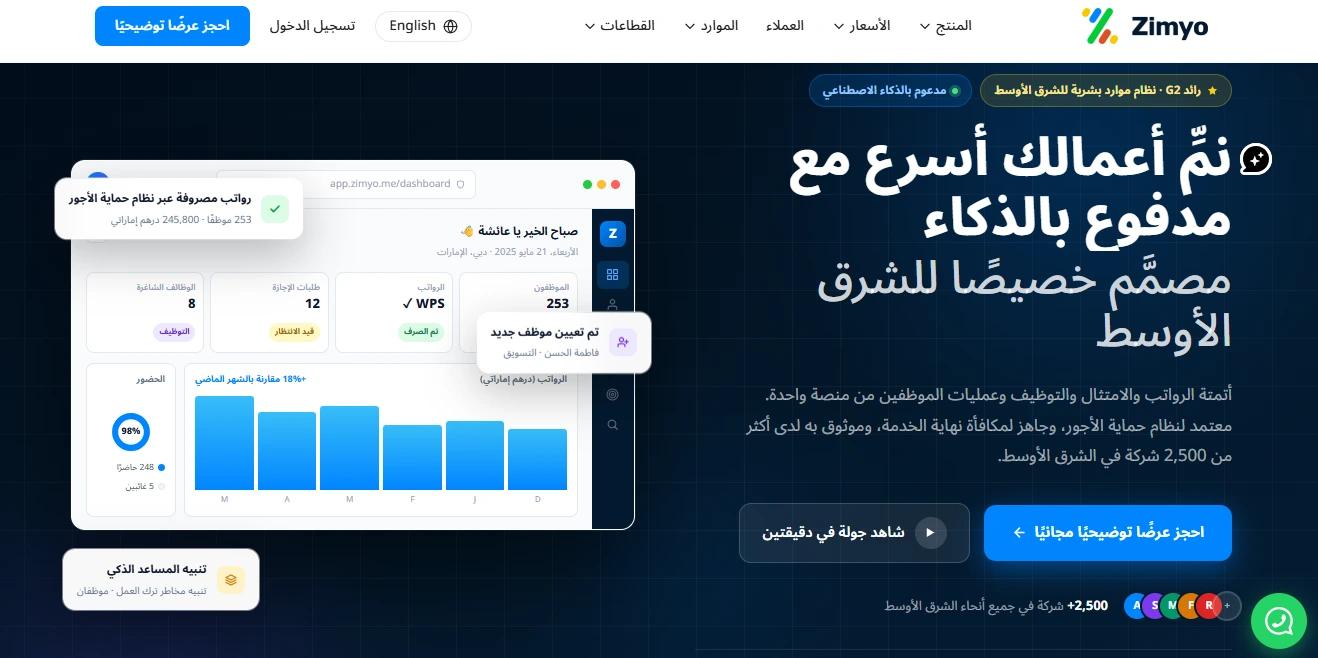
Pricing: Basic SAR 10, Standard SAR 20, and Enterprise SAR 30 per user per month, billed monthly with a 25-user minimum. Timesheets are an add-on at SAR 3 per user per month. A 14-day free trial is available, and full plan details are on the KSA pricing page.
Ratings: 4.5/5 on G2 (92 reviews) and 4.4/5 on Capterra (33 reviews).
Best for: SMEs and mid-sized Saudi companies that want attendance, payroll, and core HR in one system at published SAR pricing.
Watch-out: Zimyo does not offer native Qiwa contract integration, so contract workflows still run on the Qiwa portal.
2. Jisr
Jisr was founded in Riyadh in 2016 and says it serves more than 5,000 businesses. It positions itself as a compliance layer for Saudi government systems, built to automate work across Mudad, GOSI, Muqeem, and Qiwa, and targets companies with 50 to 3,000 employees.
- Pulls in biometric device logs and routes overtime approval requests to managers
- Geo-fenced clock-ins and multi-branch attendance tracking from a central dashboard
- Shift scheduling that accounts for work hours and breaks, aimed at retail and F&B rosters
- Option to compensate overtime with leave instead of pay, configured per policy
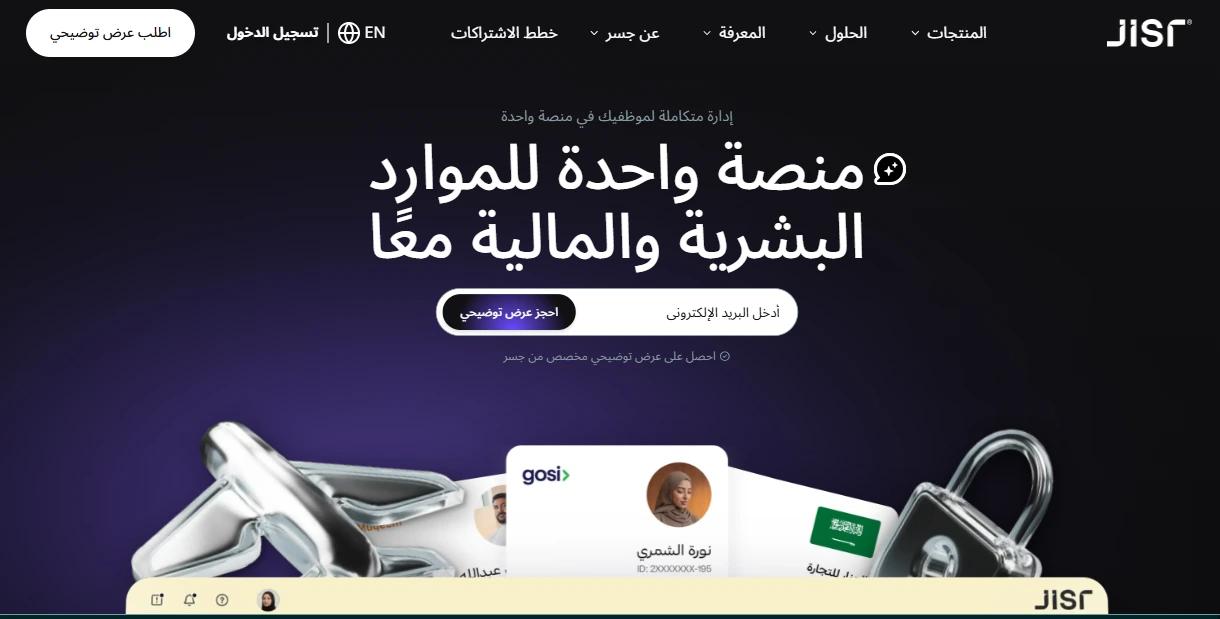
Pricing: Quote-based. Jisr's pricing page no longer lists per-employee prices, so request a quote for your headcount.
Ratings: Only 5 reviews on Capterra, too few for a meaningful comparison.
Best for: Saudi-only companies where automating government-portal work is the top priority.
Watch-out: With no published pricing and a small public review base, ask for references from companies in your industry and size band.
3. ZenHR
ZenHR is a cloud HR and payroll platform localised for 11 MENA countries, including Saudi Arabia. It sells two bundles, Value and Advanced, and both include attendance, multi-country payroll, and employee self-service.
- Time tracking with geolocation, attendance machine integration, and work scheduling in both bundles
- Missing-punch requests through the self-service app, so employees fix gaps before payroll closes
- Arabic and English interfaces with Saudi weekends and public holidays built in
- Native integrations with NetSuite, Odoo, Xero and Slack
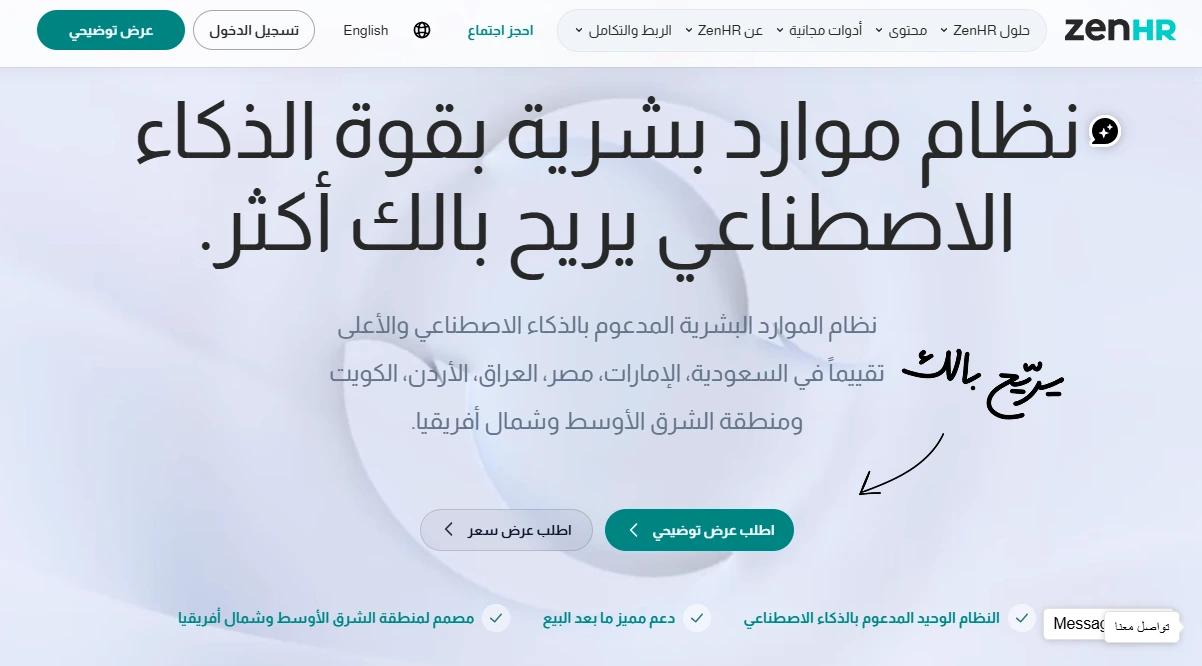
Pricing: Custom quote per organisation, based on headcount, number of countries, and bundle.
Ratings: 4.7/5 on Capterra (161 reviews).
Best for: Companies running HR in Saudi Arabia and at least one other MENA country from a single system.
Watch-out: Native integrations are cloud-only, so that an on-premises ERP will need a custom connection.
4. Menaitech (MenaTA)
Menaitech is a regional HR software house with offices in Riyadh and Jeddah. Its MenaTA attendance product works alongside CURIO (HR), MenaPAY (payroll) and MenaME (self-service), so buyers can assemble the modules they need.
- Flexible and split work schedules, team rosters and attendance-trend analysis
- Mobile clock-in with integrated GPS and map services
- MenaPAY integrates with Mudad, and the suite connects to GOSI, Muqeem and Masdar
- Saudization dashboard for tracking Nitaqat standing in real time
Pricing: On request.
Best for: Large or multi-entity organisations that want a modular suite with deep Saudi payroll localisation.
Watch-out: Implementation scope grows with each module you add, so agree the rollout plan and budget before you sign.
5. Bayzat
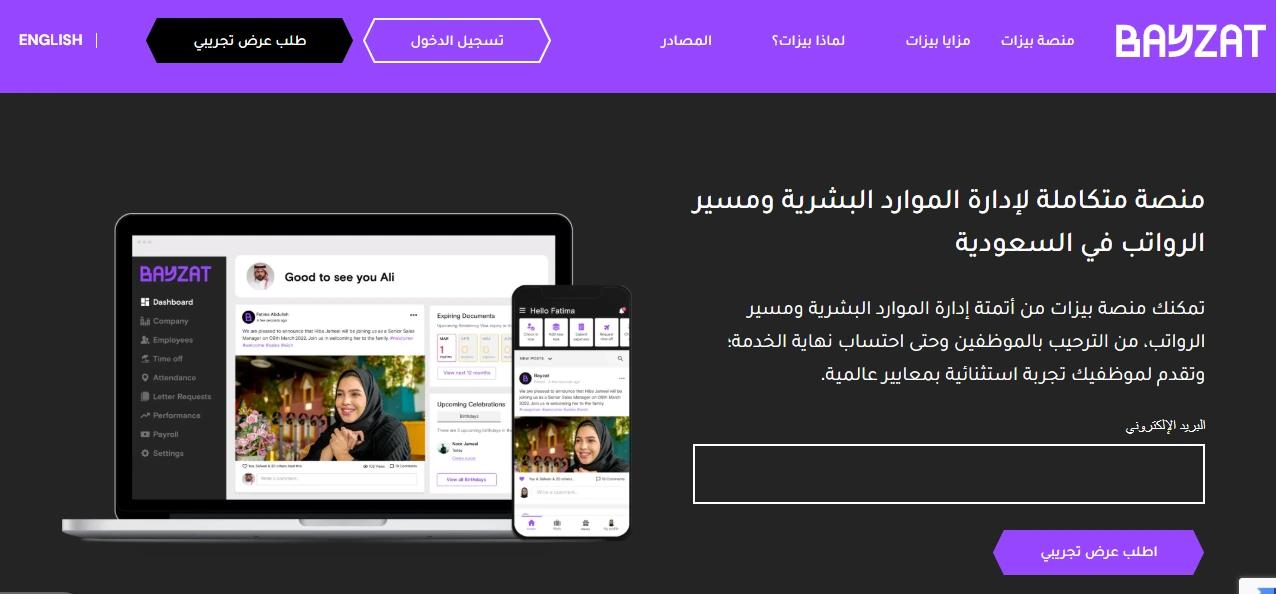
Bayzat started in the UAE and now runs a Riyadh office and a dedicated KSA product. It combines HR, payroll, insurance benefits, and attendance in one mobile-first app.
- Connect existing biometric devices or use mobile check-in
- Payroll calculates salary from actual hours worked, applies overtime under Saudi labour law, and deducts unpaid absences
- Shift scheduler linked to attendance and time off, so managers see who is working where
- Payroll can be segmented by commercial registration (CR) for groups running several entities, with Mudad uploads
Pricing: Per employee per month, quoted by module.
Best for: SMEs that want HR, payroll, health insurance, and attendance handled by one vendor.
Watch-out: Attendance is one module in a broad suite, so test your most complex shift pattern during the demo.
6. Zoho People + Zoho Payroll
Zoho sells a Saudi edition of Zoho Payroll that pairs with Zoho People for HR records. It is a low-cost starting point for very small teams, with published SAR pricing and a free trial.
- The Premium payroll plan includes leave and attendance management, and Zoho People adds geofencing and IP-based check-in restrictions
- WPS, pension (GOSI), and gratuity compliance built into the KSA edition
- Native links to Zoho People, Zoho Books and Zoho Expense
- 14-day free trial with no card required
Pricing: Zoho Payroll Premium costs SAR 75 per organisation per month billed annually (SAR 90 monthly), including 5 employees, plus SAR 15 per additional employee (SAR 18 monthly). Prices exclude VAT.
Ratings: Zoho People holds 4.4/5 on Capterra (300+ reviews).
Best for: Small businesses that already run their accounts on Zoho Books.
Watch-out: Each legal entity needs its own payroll subscription.
7. Truein
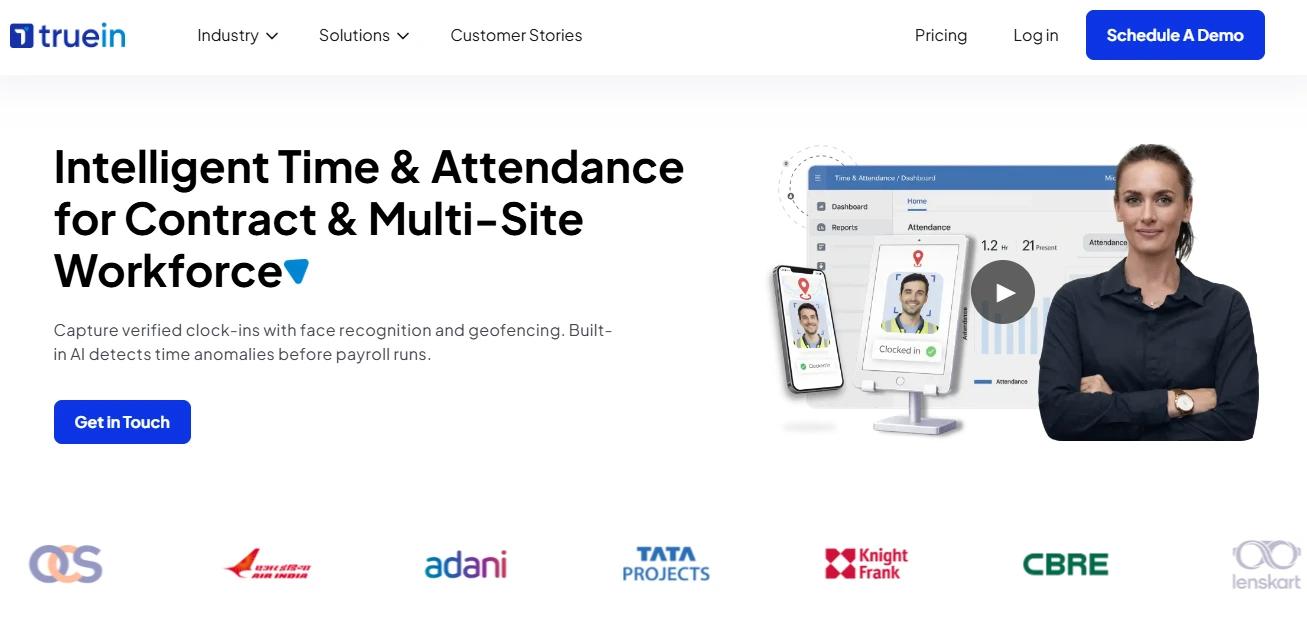
Truein is a dedicated attendance tool built for contract and multi-site workforces. It turns any Android or iOS phone or tablet into a face-recognition time clock, so there is no terminal hardware to buy.
- Face recognition combined with geofencing, in kiosk or selfie mode
- Offline attendance that syncs when the device reconnects
- 70+ policies configurable by location or staff category, covering shifts, overtime and late marks
- Contractor-company management and payroll-ready exports into your HRMS
Pricing: Truein's published model is an annual fee per active user plus a fixed annual base fee; request Saudi pricing.
Ratings: 4.8/5 on Capterra (42 reviews).
Best for: Construction, facility management and manufacturing firms with crews rotating across sites.
Watch-out: Truein covers attendance only, so payroll, GOSI, and WPS stay in your HR or payroll system.
8. Daftra
Daftra is a cloud ERP whose HR module covers attendance, payroll, contracts, and leave. It suits businesses that want accounting and HR in one login.
- Employee self-service app for on-site or remote clock-in
- Calculates attendance days from fingerprint device records
- Shift rules with grace periods, delay rules, and secondary shifts per employee
- Attendance results feed payroll deductions and bonuses; Daftra states compatibility with Mudad
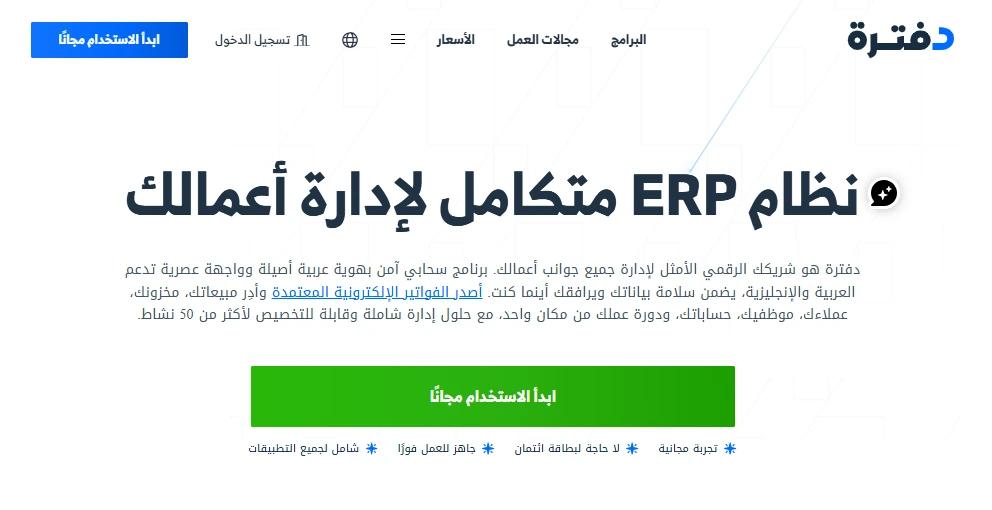
Pricing: 14-day free trial with no card; current plans are listed on Daftra's site.
Best for: Micro and small businesses that want accounting, invoicing, and basic HR together.
Watch-out: It is ERP-first, so check rostering depth if you run complex rotating shifts.
9. Odoo Attendances
Odoo Attendances is part of the Odoo ERP suite, which Saudi companies usually deploy through a local Odoo partner.
- Kiosk mode on a PC, tablet, or phone, where employees check in by scanning a badge or RFID token, or by entering a PIN
- Check-in and check-out from the web interface
- Attendance data feeds timesheets and other Odoo apps in the same database
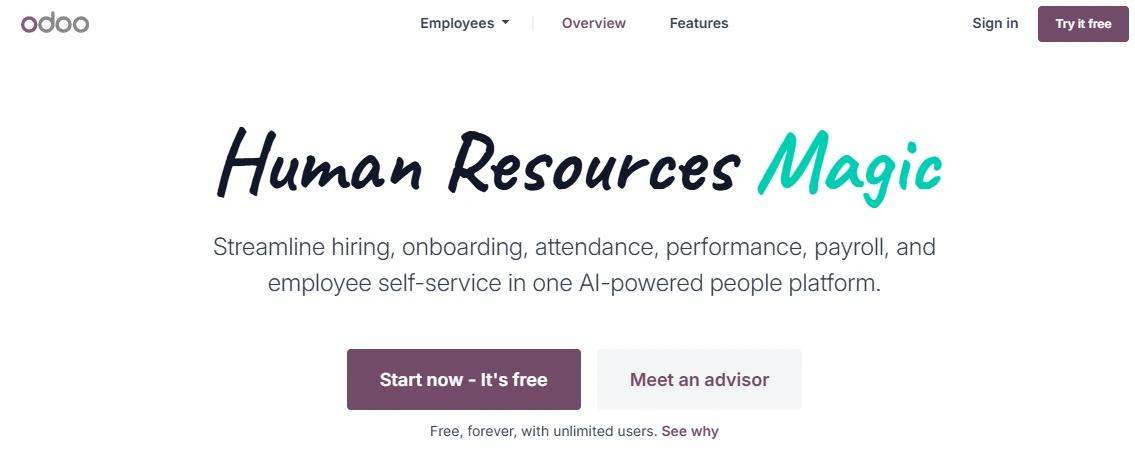
Pricing: Odoo's One App Free plan lets you run a single app, such as Attendances, for unlimited users. Paid plans that unlock all apps are priced per user and vary by region.
Best for: Companies already running Odoo for accounting, inventory, or sales.
Watch-out: Confirm the scope of Saudi payroll localisation with your implementation partner before you commit.
10. ZKTeco (ZKBio Time)
ZKTeco makes biometric time clocks and ZKBio Time, a web-based attendance application that you host on your own Windows server. It is sold in Saudi Arabia through local distributors and often sits underneath a cloud HRMS.
- Terminals that verify by fingerprint, face, palm, RFID card, or PIN
- Shift scheduling, overtime calculation, and attendance reports in ZKBio Time, plus a mobile app for location-tagged clock-ins
- API for pushing attendance into HR platforms (ZenHR, for example, advertises a native ZKTeco integration)
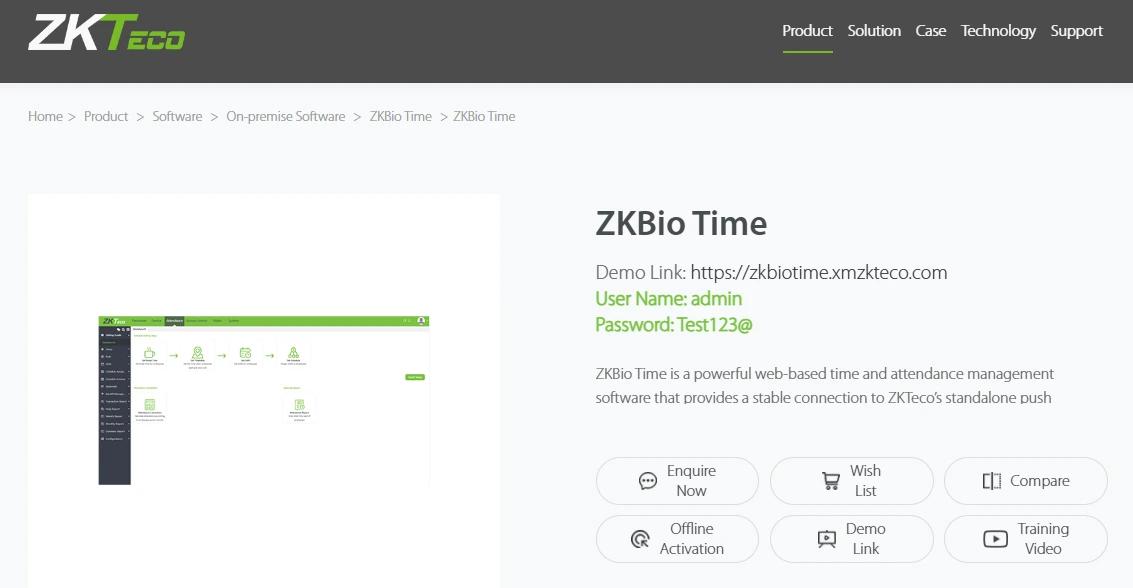
Pricing: Hardware and software quoted by local distributors.
Best for: Head offices, factories and warehouses that want physical terminals at the door and can run their own server.
Watch-out: Fingerprint and face templates count as sensitive personal data, so set clear consent and retention rules (see the data protection point below).
Saudi Labour Law Rules Your Attendance System Must Handle
Attendance software earns its cost in Saudi Arabia when it applies the Labour Law automatically instead of leaving HR to check every timesheet. These are the rules that matter most, as amended by the reforms that came into force on 19 February 2025.
Working hours (Article 98). Employees may not actually work more than 8 hours a day if the employer uses a daily standard, or 48 hours a week if it uses a weekly standard. Your system should let you set the standard and flag any schedule that breaches it before it is published.
Ramadan hours. Article 98 reduces actual working hours for Muslim employees during Ramadan to a maximum of 6 hours a day or 36 hours a week. Because the statutory reduction applies to Muslim employees, the system needs a Ramadan schedule you can assign to the right group rather than a single company-wide switch.
Breaks and time on site (Articles 101 and 102). No employee may work more than five consecutive hours without a break of at least 30 minutes for rest, prayer, and meals, and no one should remain at the workplace for more than 12 hours a day. Breaks do not count as working hours, so the software must deduct them before it calculates overtime.
Weekly rest. Friday is the standard weekly rest day, at full pay and lasting at least 24 consecutive hours. An employer may substitute another day for some workers after notifying the labour office, so your system should support different rest days by team.
Overtime (Article 107). Every hour beyond the adopted standard is overtime, paid at the hourly wage plus 50% of the basic wage. Since the 2025 amendments, employers may instead grant paid compensatory leave, but only with the employee's consent.
Here is how that works for an employee with a basic salary of SAR 6,000 and a total wage of SAR 8,000 (including housing and transport allowances), calculated on a 30-day, 8-hour basis:
| Step | Calculation | Result |
|---|---|---|
| Full hourly wage | SAR 8,000 ÷ 30 ÷ 8 | SAR 33.33 |
| Basic hourly wage | SAR 6,000 ÷ 30 ÷ 8 | SAR 25.00 |
| Overtime rate per hour | SAR 33.33 + (50% × SAR 25.00) | SAR 45.83 |
| 10 overtime hours in a month | 10 × SAR 45.83 | SAR 458.30 |
The divisor your company uses (30 days, 26 days, or a monthly hour count) should follow your contracts and payroll policy, and good software lets you set it once rather than per employee.
How To Choose Time And Attendance Software for Your Saudi Business
Start with payroll, not the clock. The costliest attendance errors show up in the pay run. Check that approved hours, overtime, and absence deductions flow into payroll automatically, and that payroll produces Mudad-ready WPS files and GOSI calculations.
Match clock-in methods to your sites. Office teams do well with geo-fenced mobile check-in. Warehouses and factories often need fixed biometric terminals. Construction and facility crews moving between sites need face recognition on a shared device with offline support.
Test your hardest schedule. Ask each vendor to configure your most complex pattern in the demo, whether that is split shifts, rotating nights, Friday coverage, or Ramadan hours for part of the team.
Check Arabic and multi-entity support. Employees should be able to use the app in Arabic, and groups with several commercial registrations should be able to run attendance and payroll per entity.
Handle biometric and location data properly. Saudi Arabia's Personal Data Protection Law (PDPL) has been fully enforceable by SDAIA since 14 September 2024, and it classes both biometric data and location data as sensitive. Collect only what attendance needs, tell employees how the data is used, and set retention periods. Ask vendors where data is hosted and how deletion works.
Compare total cost, not the headline rate. Add implementation fees, hardware, minimum user counts, and add-ons. A per-user price with a 25-user minimum, a per-organisation plan, and a base fee plus per-user charge can land far apart for the same headcount.
How we evaluated these tools
We shortlisted tools that sell a time and attendance product to Saudi businesses today, then compared them on four things: depth of Saudi payroll and government-system integration (GOSI, Mudad, Muqeem, Qiwa), clock-in verification options, published or quotable SAR pricing, and independent user ratings on G2 and Capterra. Where a vendor has fewer than about 20 public reviews on these sites, we say so rather than quote a score that could mislead. Zimyo is our own product; its details come from our published KSA pricing and product pages.
Conclusion
Zimyo is the best-rounded choice for most growing companies in Saudi Arabia for employees' time tracking and attendance. The software connects geo-fenced, selfie, and biometric clock-ins straight to payroll, calculates GOSI contributions, creates WPS files ready for Mudad, and works in Arabic and English. All of this is available at the listed SAR pricing starting from SAR 10 per user per month, which makes it possible to know the price without any sales calls.
The other applications on this list are suitable for specific needs. Jisr will be useful for Saudi Arabia-only companies looking for an HR automation based on government portals; ZenHR will be suitable for teams managing payroll in a few MENA countries; Truein will be good for contract workforces switching between different locations, together with a payroll application.
Frequently Asked Questions
What is the difference between time tracking and time and attendance software?
Time and Attendance Software: Tracks when employees begin and end their shifts, calculates time in terms of the shift, break, and overtime policies, and then passes the information to the Payroll Module. Time Tracking Software: Calculates how much time a person spends working on particular projects.
Is attendance tracking mandatory for companies in Saudi Arabia?
The Labour Law does not prescribe a specific attendance system, but employers must stay within the working-hour limits in Article 98 and pay overtime correctly under Article 107. In practice, that requires reliable records of hours worked, which also protect the company in wage disputes.
How much does time and attendance software cost in Saudi Arabia?
The lowest published prices available begin at SAR 10 per user per month for the Zimyo Basic plan (minimum of 25 users) and SAR 75 per organization per month for the Zoho Payroll Premium package with 5 employees covered. Prices for Jisr, ZenHR, Menaitech, Bayzat, and Truein are on quotation only.
Which attendance software integrates with GOSI and Mudad?
Zimyo, Jisr, Menaitech, and Bayzat are integrated with their attendance and payroll systems that deal with GOSI and Mudad WPS documents, while Zoho Payroll Saudi version deals with WPS and GOSI Pension requirements. Independent solutions like Truein and ZKTeco will send your attendance information to your payroll.
Can one system manage attendance for Saudi and UAE teams?
Yes. Zimyo, ZenHR, Bayzat, and Menaitech all work in more than one country in the Gulf region. Make sure that the work hours in each country are defined independently of those in other countries.
How long does it take to implement attendance software in Saudi Arabia?
This is dependent on headcount, data migration, and device configuration. According to Zimyo, most organizations become operational within three weeks. Configuring modular suites or an ERP system will take longer; thus, ensure you ask for an implementation plan from all vendors.