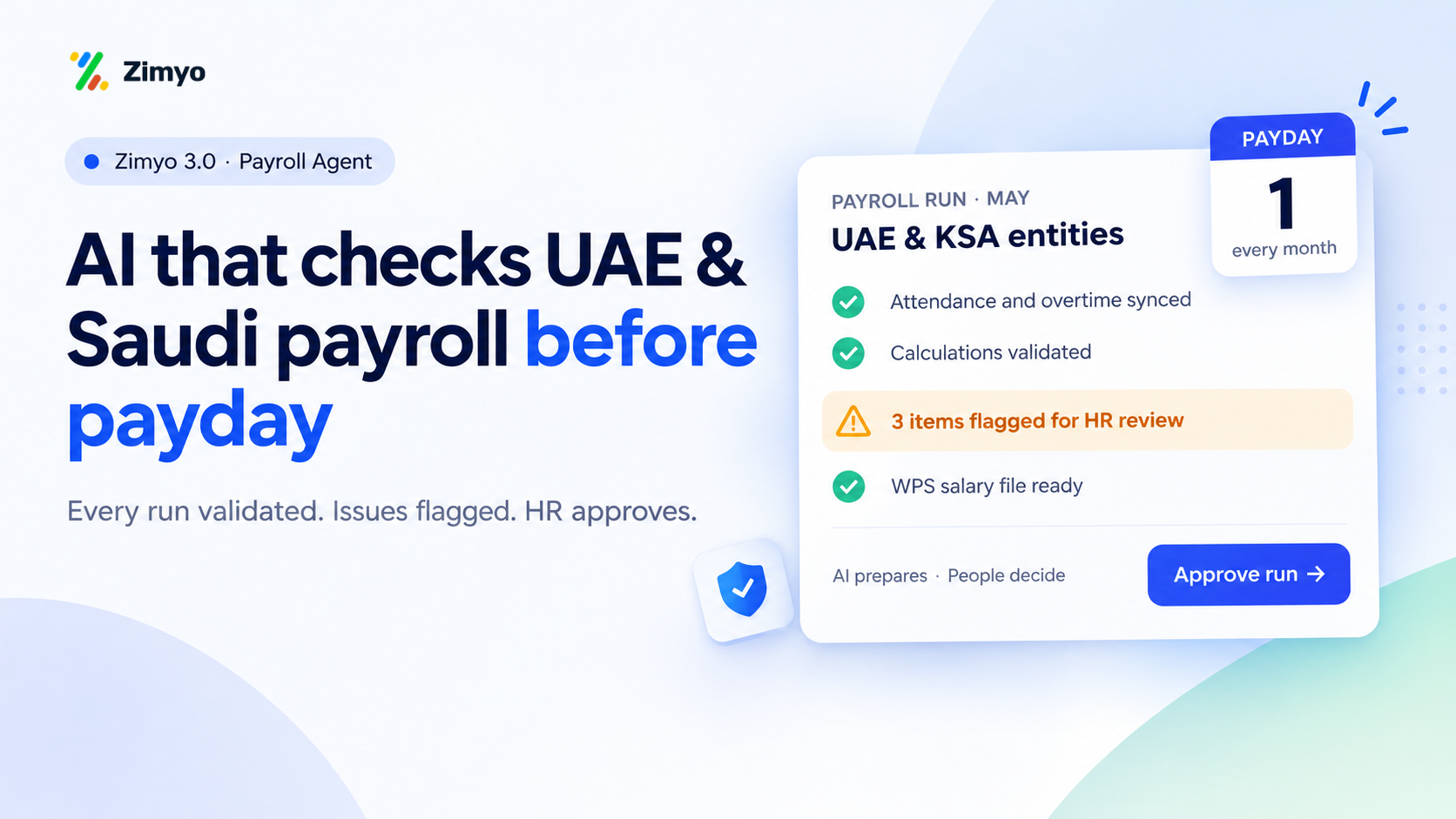


The UAE's job market keeps growing every year, and with it, payroll expectations have gotten stricter. Whether you run a small business in Dubai or manage HR for a large group in Abu Dhabi, having a compliant salary slip format in the UAE is no longer just good practice; it's quickly becoming a core part of doing business the right way in 2026. This guide breaks down what a proper employee salary slip UAE should include, the latest 2026 rules you need to know, and how a modern
payroll setup can save your HR team hours every month.
What Is a Salary Slip in the UAE?
A salary slip, or pay slip, is the document your company issues each pay cycle showing exactly what an employee earned and what was deducted. It typically covers basic salary, housing and transport allowances, overtime, bonuses, and any deductions, ending in the net amount transferred to the employee's bank account.
In the UAE specifically, an employee salary slip UAE carries extra weight because of the Wage Protection System (WPS). Any UAE salary slip must show a net figure that matches, to the dirham, what the employer actually transfers through WPS-approved banks and exchange houses. Employees also rely on this document for visa renewals, mortgage applications, and personal loans. Hence, a clean, professional pay slip format UAE genuinely matters to people's daily lives, not just to compliance officers.
Why the Salary Slip Format in UAE Matters More in 2026
A few regulatory shifts this year have raised the stakes around payroll documentation:
- Emiratization-linked salary benchmark. Since January 1, 2026, a minimum total salary benchmark of AED 6,000 has applied to UAE national employees under the Emiratization framework, with existing contracts expected to be brought in line by June 30, 2026. This figure is tied to Emiratization support policy rather than a universal minimum wage for every employee, so it's worth confirming the current applicable threshold with MOHRE or a labor law advisor before updating contracts. Where it applies, salary slips for Emirati staff should clearly reflect it.
- Faster WPS enforcement. The updated WPS framework flags underpayments and mismatched figures much sooner than before, and repeated violations can trigger a block on new work permit applications along with fines per affected employee, a strong reason to keep your salary slip format in the UAE accurate every single cycle.
- Stricter SIF file matching. Payroll teams submit a Salary Information File (SIF) to their WPS agent bank each cycle, and the net pay on the payslip must match this file exactly. Naming and formatting errors in the SIF are now one of the most common causes of rejected submissions.
- Digital signatures are more common. Many organizations now issue payslips and salary certificates digitally signed through UAE Pass or an authorized corporate e-signature system. These are commonly accepted for various banking and administrative purposes, though acceptance still depends on the specific requirements of the receiving bank or authority.
- Bilingual documentation as best practice. Providing payslips in both English and Arabic is considered good practice, particularly for businesses employing multilingual workforces; it isn't a documented blanket legal requirement. Still, it reduces friction when a slip needs to be understood or verified by different parties.
Key Elements of an Employee Salary Slip UAE
A properly built salary slip format in the UAE should always include:
- Employee details – full name, job title, department, Emirates ID, and Work Permit Number (where applicable)
- Employer details – company name, MOHRE establishment number, and registered address
- Pay period – the exact month and date of issue
- Attendance summary – working days, leave taken, and any loss-of-pay days.
- Earnings breakdown
- Basic salary (kept separate from allowances, since it's the base typically used for gratuity and leave calculations)
- Housing allowance
- Transport allowance
- Medical or other allowances
- Overtime, calculated at the correct multiplier
- Bonus or commission, where applicable
- Gross salary total
- Deductions – pension contributions for eligible UAE nationals in accordance with applicable pension regulations, loan or advance repayments, and any other deduction authorized under UAE labor law, each with a clear reason
- Net salary – the amount that must match the WPS transfer
- Bank account details used for the WPS credit
- Authorization – payroll signatory or a digital signature/stamp
UAE Labor Law Requirements for Salary Slips
A few points from UAE labor law are worth keeping in mind when you design or review your salary slip process:
- Deductions need a legal basis. Any deduction from an employee's salary must comply with the applicable provisions of UAE labor law and be authorized where required, either by law, by the employment contract, or by the employee's written consent. Deductions without a clear basis are among the most common issues raised in labor disputes.
- Gratuity isn't a monthly line item. End-of-service gratuity is not shown on the regular salary slip. It's calculated separately, based on basic salary and length of service, when the employment relationship ends.
- Pay periods can vary. Most UAE employers run payroll monthly, but pay periods may also be structured bi-weekly or on another agreed cycle, depending on what's set out in the employment contract.
- Records should be retained. Employers are expected to keep payroll records, including issued salary slips, for a reasonable retention period to support compliance checks, audits, or any future labor dispute.
Sample Salary Slip Template UAE
Here's a simple salary slip sample UAE businesses can adapt for their own payroll. Use it as your base salary slip template UAE and adjust the line items to match your company's actual allowance structure:
Salary Slip Details | Information / Amount (AED) |
|---|---|
Company Name | [Company LLC] |
MOHRE Establishment No. | [XXXXXXXXXXXXX] |
Employee Name | [Full Name] |
Emirates ID / Work Permit No. | [XXXXXXX] |
Department / Designation | [Department, Title] |
Pay Period | [Month, Year] |
EARNINGS | Amount (AED) |
Basic Salary | XX,XXX |
Housing Allowance | XX,XXX |
Transport Allowance | XX,XXX |
Other Allowances | XX,XXX |
Overtime | XX,XXX |
Gross Salary | XX,XXX |
DEDUCTIONS | Amount (AED) |
Pension / Social Security (Eligible UAE Nationals) | XXX |
Loan / Advance Repayment | XXX |
Other Deductions | XXX |
Total Deductions | XXX |
Net Salary (WPS Transfer Amount) | XX,XXX |
For most companies operating across Dubai, Abu Dhabi, Sharjah, and the other emirates, issuing this UAE salary slip in both English and Arabic is good practice. It can smooth verification with different banks or authorities, even though it isn't a documented blanket requirement. If you're issuing an employee pay slip UAE at scale, save this layout as a locked template so every department uses the same pay slip format UAE month after month.
How to Calculate Net Salary
The formula stays simple no matter the company size:
Net Salary = Gross Salary − Total Deductions
Where gross salary is basic pay plus all allowances, overtime, and bonuses, and total deductions cover pension contributions for eligible UAE nationals, repayments, and any other deduction authorized under UAE labor law.
Step-by-Step: How to Create a Salary Slip Format in the UAE
- Build or choose a compliant template with clearly separated sections for basic salary, allowances, and deductions.
- Pull figures directly from the employment contract so basic salary and allowance amounts always match what was agreed.
- Add attendance and leave data for the pay period, including any loss-of-pay days.
- Calculate gross salary, then apply all deductions with a documented reason for each.
- Confirm net salary matches the WPS transfer before the slip is finalized; this single check prevents most compliance issues.
- Issue the pay slip in both languages, ideally through a digital, self-service channel employees can access anytime.
- Store a copy for your own records, since pay slips are frequently requested during audits or labor disputes.
Common Mistakes to Avoid
- Combining basic salary and allowances into one figure
- Net salary not matching the WPS/SIF submission.
- Deductions with no clear legal basis or written authorization
- Missing Emirates ID or Work Permit Number
- Inconsistent formatting from one month to the next
- Overlooking the applicable Emiratization salary benchmark for eligible national employees
- Showing gratuity as a monthly line item; it isn't a monthly salary component and is calculated separately at the end of employment.
- Failing to retain payroll records for the period required for compliance and audit purposes
Why UAE Businesses Are Moving to Payroll Software in 2026
Manually preparing an employee pay slip UAE in a spreadsheet works for a handful of staff, but it quickly becomes risky as headcount grows and WPS enforcement tightens. This is why more companies across the UAE are shifting to dedicated payroll software UAE platforms that generate compliant, bilingual pay slips automatically and keep every WPS submission accurate.
Most complete HRMS software in the UAE bundles salary slip generation with the rest of the employee lifecycle. Here's what each piece typically covers:
Payroll Management Software
Good payroll management software auto-calculates gross pay, deductions, gratuity, and generates WPS-ready SIF files, so your payroll processing UAE cycle finishes in minutes instead of days. This is usually the core module any HR software UAE buyer starts with.
Attendance Management Software
Attendance management software feeds accurate working hours and overtime straight into payroll, cutting the manual entry errors that show up on pay slips as incorrect overtime or attendance figures.
Leave Management Software
Leave management software automatically adjusts unpaid leave and loss-of-pay days, so your salary slip reflects the correct deduction without HR having to recalculate it by hand each month.
Performance Management Software
Performance management software ties bonuses, increments, and appraisal outcomes back into the same payroll cycle, keeping compensation changes reflected on the very next pay slip.
Human Resource Software UAE
A complete human resource software UAE platform centralizes employee records, contracts, documents, and compliance tracking in one place, alongside payroll.
Bringing payroll processing UAE into a single connected system instead of managing spreadsheets, attendance sheets, and leave trackers separately is quickly becoming the standard for companies that want to stay compliant without adding extra headcount to HR.
Quick Recap
If you're setting this up for the first time, here's the short version:
- Every salary slip format in UAE should separate basic salary from allowances and end in a net figure that matches WPS.
- Keep a standard salary slip template UAE on file so payroll doesn't rebuild the layout from scratch each month.
- Issue every employee pay slip UAE in both English and Arabic wherever possible.
- If you're scaling past a handful of staff, dedicated payroll software UAE and broader HR software UAE tools remove most of the manual risk from payroll management software for salary calculations, to attendance management software and leave management software for accurate deductions, to performance management software for bonuses and increments.
- A connected human resource software UAE system turns payroll processing UAE from a monthly scramble into a routine, auditable process.
Conclusion
A well-built salary slip format in the UAE protects both sides of the employment relationship: employees get a transparent, verifiable record of their earnings, and employers stay ready for MOHRE checks and WPS audits. With 2026's tighter WPS enforcement and the Emiratization-linked salary benchmark now in effect, getting this document right and, increasingly, automating it through proper HR software in the UAE matters more than ever for businesses operating anywhere in the UAE.
As the UAE continues tightening WPS enforcement and rolling out new Emiratization requirements, payroll is no longer a once-a-month admin task you can afford to treat casually. The businesses that stay ahead in 2026 are the ones treating their employee salary slip UAE process as part of their compliance strategy, not an afterthought, reviewing formats regularly, keeping pace with MOHRE updates, and moving away from manual spreadsheets before an audit forces the issue. Whether you're a startup issuing your first few pay slips or an enterprise managing payroll across Dubai, Abu Dhabi, and beyond, investing a little time now in getting your salary slip format in the UAE right will save far more time and risk down the road.