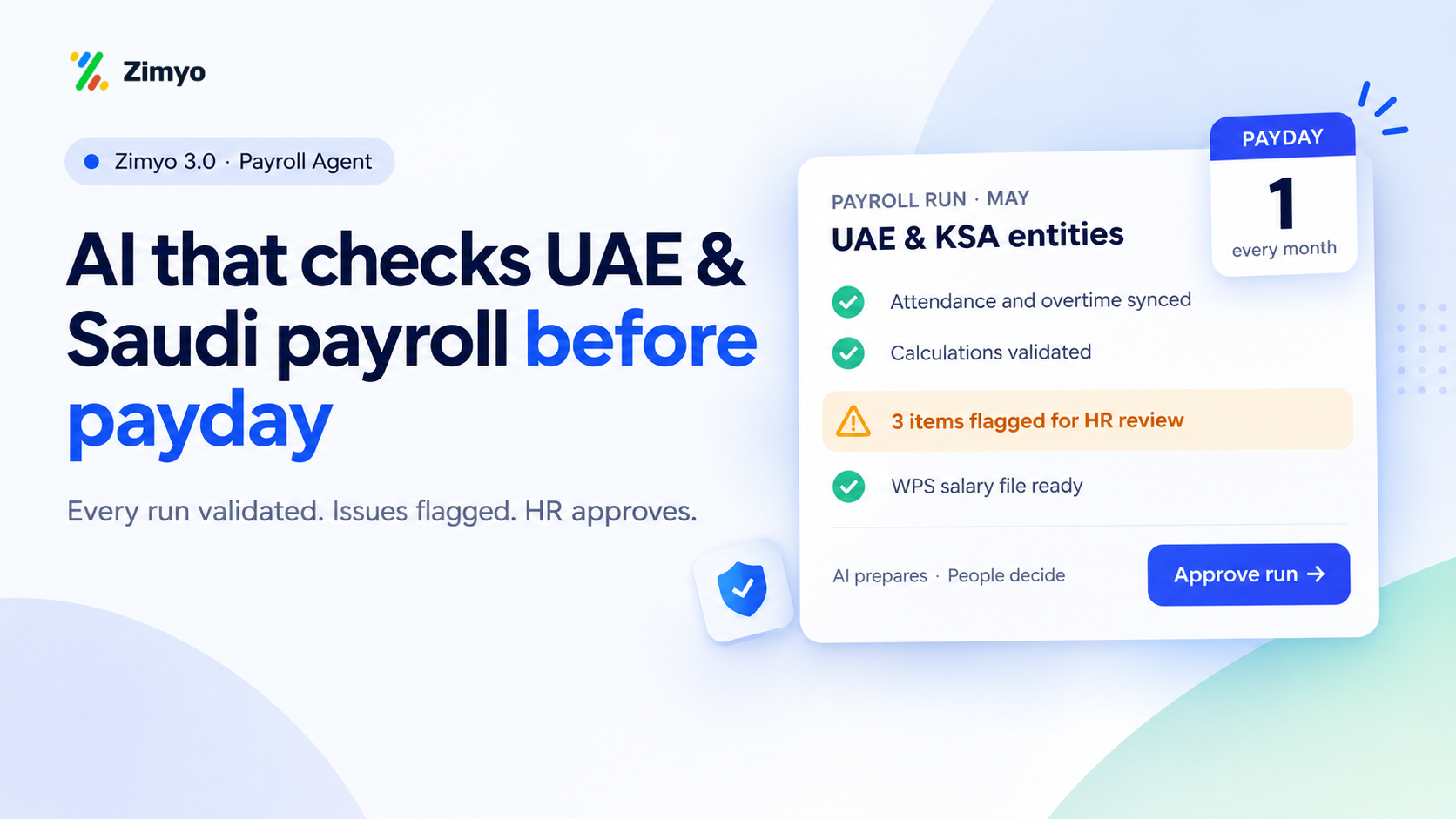

UAE payroll changed on 1 June 2026, and most comparison guides haven't caught up.
Ministerial Resolution No. 340 of 2026 replaced the old wage rules. The 15-day grace period is gone, salaries are now due on the 1st of the Gregorian month. The compliance threshold rose from 80% to 85% of your workforce. New hires are in scope from their first payroll cycle rather than after 30 days. And the penalties escalate automatically, starting with electronic warnings on Day 2 and reaching work-permit suspension by Day 5.
Those changes are why payroll software selection in the UAE is no longer a question of convenience. This guide compares eight platforms on whether they can actually close a payroll and file a compliant SIF before the deadline, with published AED pricing where it exists.
What UAE Payroll Software Has to Handle in 2026
The new WPS rules
| What changed | Old rule | From 1 June 2026 |
|---|---|---|
| Payment deadline | 15-day grace period after due date | 1st of the Gregorian month, no grace |
| Compliance threshold | 80% of workforce paid on time | 85% |
| New employees | 30-day grace before inclusion | Included from the first cycle |
| Enforcement | Manual inspection | Automatic escalation |
The escalation ladder runs: electronic warnings from Day 2, work-permit suspension at Day 5, administrative fines and Third Category reclassification at Day 11, automatic labour dispute registration at Day 16 for establishments with 25 or more workers, and travel bans or Public Prosecutor referral at Day 21.
In practice this means your payroll cycle now has to finish earlier than it used to. If your software takes three days to close a month and you start on the 30th, you are already non-compliant.
End-of-service gratuity
Under Article 51 of Federal Decree-Law No. 33 of 2021, gratuity accrues at 21 days of basic pay per year for the first five years of service and 30 days per year thereafter, capped at two years' basic salary. The calculation uses basic salary only - housing, transport and other allowances are excluded. Software that calculates on gross pay overstates your liability, sometimes substantially.
Emiratisation
Companies with 50 or more employees must raise Emiratisation of skilled roles by two percentage points a year, reaching 10% by 31 December 2026. Progress is assessed in two checkpoints of one point each, on 30 June and 31 December. Missing a target triggers a monthly financial contribution for every unfilled Emirati position. Separately, all Emiratis in the private sector must earn at least AED 6,000 per month as of 1 January 2026 - and after 30 June 2026, Emiratis paid below that are excluded from your Emiratisation headcount entirely.
If your system can't report your Emirati skilled-workforce percentage on demand, you're discovering shortfalls at the checkpoint rather than before it.
Jurisdiction matters more than most guides admit
Mainland companies and most free zones - DMCC, JAFZA, IFZA, RAKEZ - issue MoHRE work permits and follow the federal rules above. But DIFC and ADGM operate their own employment law entirely and do not use MoHRE's WPS.
DIFC replaced end-of-service gratuity with the DIFC Employee Workplace Savings plan (DEWS) on 1 February 2020. Employers contribute monthly at 5.83% of basic salary for employees under five years of service and 8.33% thereafter. UAE and GCC nationals are excluded, since they're covered by GPSSA.
A platform that only knows the mainland formula will produce wrong end-of-service figures for every DIFC employee and won't generate the DEWS contribution at all. If you run a mainland entity alongside a DIFC one, ask about this before anything else.
Verify before configuring. The Emirati minimum wage took effect in January 2026 and the WPS rules changed in June 2026. Confirm current thresholds and contribution rates with MoHRE or your legal adviser before setting up payroll.
Top Payroll Software's in UAE: Comparison Table
| Platform | Best suited to | Published pricing | Rating | UAE compliance depth |
|---|---|---|---|---|
| Zimyo | 25–500 employees, UAE + GCC | AED 10 / 20 / 30 per employee per month | G2 4.5, Capterra 4.4 | SIF generation, WPS, Article 51 gratuity, multi-country |
| Bayzat | UAE SMEs wanting HR, payroll and insurance together | Quote only | G2 4.6, Capterra - low reviews | WPS, benefits and insurance administration |
| Zoho Payroll | Small teams, existing Zoho users | AED 35 / 55 / 75 per org per month | 4.5 G2, 3.7 Capterra | WPS, pension, gratuity, auto-generated SIF |
| gulfHR | Middle East mid-market | Quote only | 4 G2, 4.4 Capterra | Regional compliance, Arabic interface |
| ZenHR | Multi-country MENA operations | Quote only | G2 4.6, Capterra 4.7 | Regional labour law, bilingual |
| Yomly | Enterprise, multinational | Quote only | Listed on G2 | WPS, multi-currency, 50+ countries |
| Connect HR | UAE SMEs needing visa and document tracking | Quote only | 5 G2, minimal review volume | WPS files, MoHRE and free zone rules |
| Mercans | No local entity, or global payroll | Quote only | G2 4.8 | Managed payroll and Employer of Record |
Best Payroll Software in UAE: In Detail
1. Zimyo
Zimyo Payroll generates WPS-compliant SIF files, calculates Article 51 gratuity and full-and-final settlement, and runs payroll across seven Middle East markets from one system, with pricing published in dirhams.
The case for Zimyo is strongest when the UAE isn't your only market. A Dubai entity sits alongside Riyadh or Doha operations on one employee record rather than in parallel systems, which removes the month-end reconciliation that eats HR time in multi-entity groups. Coverage spans core HR, payroll, attendance, performance, recruitment, engagement, timesheets and learning.
Security is ISO 27001 certified, with AES-256 at rest, TLS 1.3 in transit, role-based access, audit logs, two-factor authentication and full tenancy isolation. Support runs in UAE hours from a Dubai team.
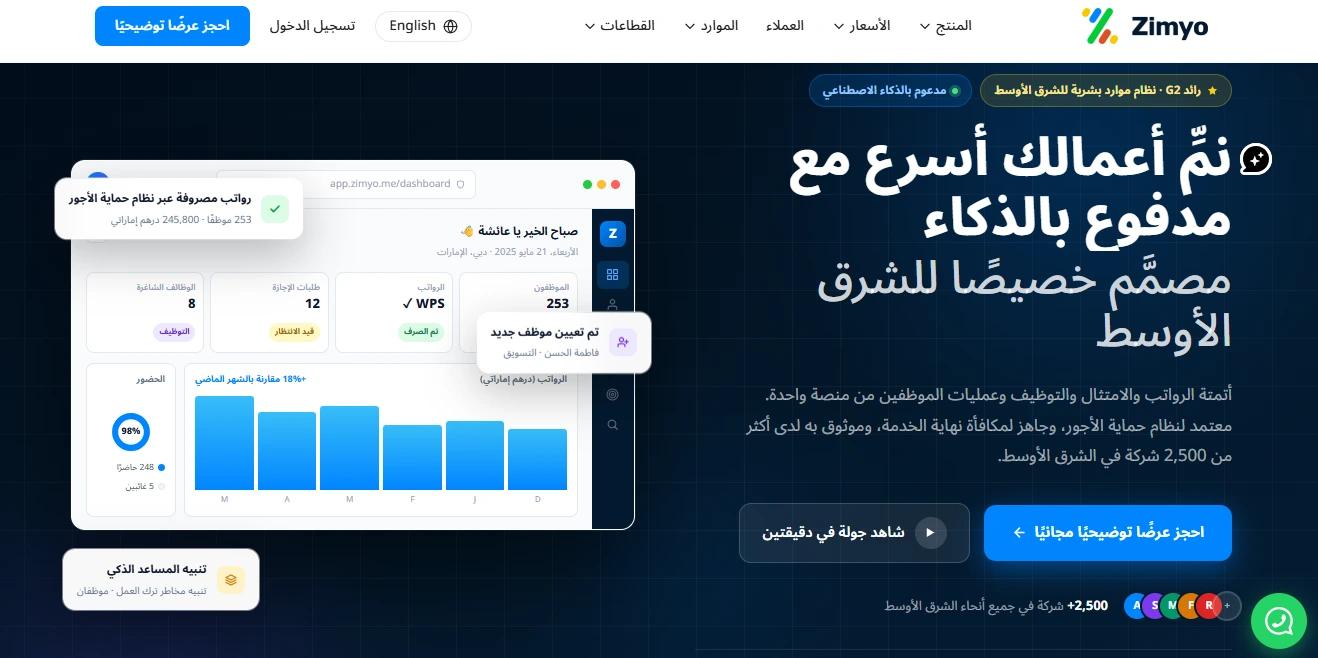
Pricing: Published on the UAE pricing page - Basic at AED 10, Standard at AED 20 and Enterprise at AED 30 per employee per month, billed monthly in AED with a 25-user minimum. Add-on modules for recruitment, timesheets, learning, digital signature and field tracking are priced separately. Enterprise supports multi-entity payroll across all seven Middle East countries.
Rating: 4.5 on G2, 4.4 on Capterra.
Pros
- Published AED pricing, which most vendors in this category don't offer
- One system across seven Middle East markets removes cross-entity reconciliation
- SIF generation and Article 51 gratuity handled natively rather than as a bolt-on
- Modular add-ons mean you pay for recruitment or learning only if you use them
Cons
- A 25-user minimum rules out businesses below that headcount
- Built for multi-country Middle East operations, so a UAE-only business is buying reach it won't use
Best for: 25–500 employees, particularly groups operating in the UAE alongside other GCC markets.
2. Bayzat
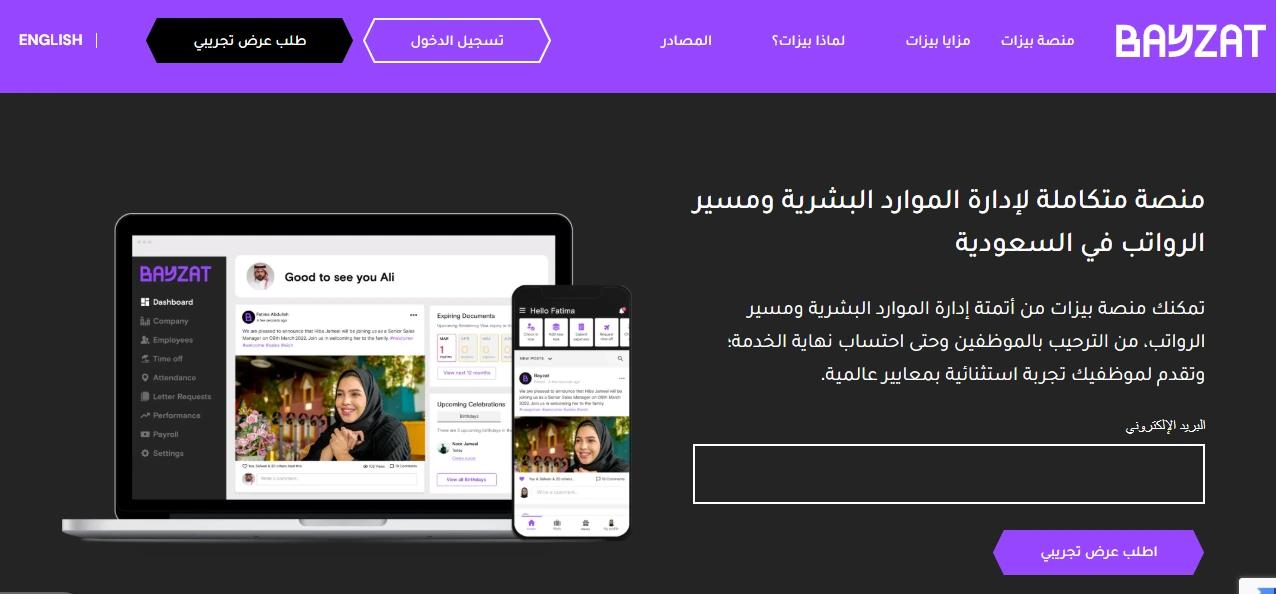
Bayzat is a Dubai-built platform that combines HR, payroll and employee medical insurance in one product, with WPS support and AI-assisted payroll processing.
Bayzat's distinguishing feature isn't payroll itself; it's everything attached to payroll. Health insurance administration, expenses, accounts payable, and corporate cards sit inside the same system, which matters in the UAE where insurance is mandatory and usually managed separately. The platform holds ISO 27001:2022 and SOC 2 Type 2 certification and reports serving 4,000+ companies.
Leave policies configure local labour law automatically, and the mobile self-service app is well regarded.
Pricing: No published rate card.
Rating: Holds a G2 profile.
Pros
- Insurance administration built in, which no pure payroll platform here offers
- Built in Dubai for the UAE market rather than adapted from elsewhere
- Finance features including expenses and cross-border payments
Cons
- No published pricing, and reviewers note cost can be high for smaller teams
- Broad scope means paying for insurance and finance modules you may not need
- Advanced customisation is more limited than in enterprise platforms
- Strongest in the UAE specifically; verify depth if you also operate in Saudi
Best for: UAE SMEs and mid-market companies that want payroll and employee insurance in one place.
3. Zoho Payroll
Zoho Payroll UAE publishes its full rate card in dirhams and covers WPS, pension, gratuity and automatic SIF file generation, the most transparent pricing of any platform here.
Zoho Payroll is built for the small end of the market and priced accordingly, charging per organisation with a bundled employee allowance rather than purely per head. Standard covers automatic payroll calculation, payslip generation, WPS and gratuity compliance across the UAE, auto-generated SIF files, salary revisions and arrears, loans and advances, employee self-service, and document expiry notifications. Professional adds off-cycle pay runs, approvals and formula-based salary components.
The obvious caveat: the value multiplies if you already run Zoho Books, Zoho People or Zoho Expense, since those integrate natively. Standalone, you are buying a payroll tool rather than an HR platform.
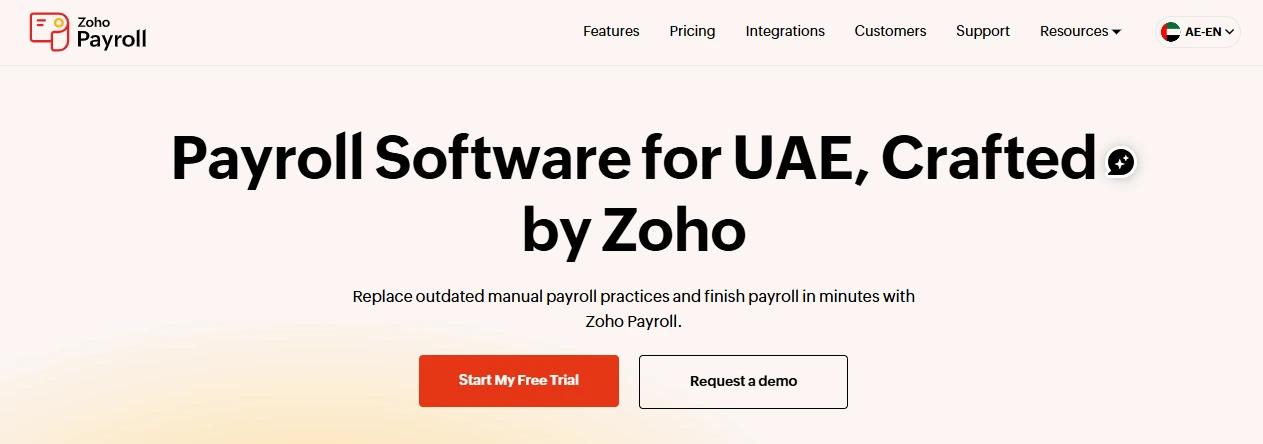
Pricing: Standard at AED 45 per organisation per month (AED 35 billed annually), including five employees, then AED 9 per additional employee. Professional at AED 65 (AED 55 annual), AED 13 per additional. Premium at AED 90 (AED 75 annual), AED 18 per additional.
Rating: Verify the current Zoho Payroll score before publishing, scores for Zoho People are a different product.
Pros
- Fully published AED pricing including annual discounts and per-employee increments
- Lowest entry cost here for teams of five to fifteen
- Explicit WPS, pension, gratuity and SIF coverage in the base plan
- Deep integration if you already run the Zoho suite
Cons
- Payroll-only - no recruitment, performance or engagement modules
- Localisation is narrower than the regional specialists for anything beyond payroll
- Scope, not price, is the constraint as you grow, you will need a separate HR system alongside it
- Limited advantage if you aren't already in the Zoho ecosystem
Best for: Companies under about 25 employees, and existing Zoho customers of any size.
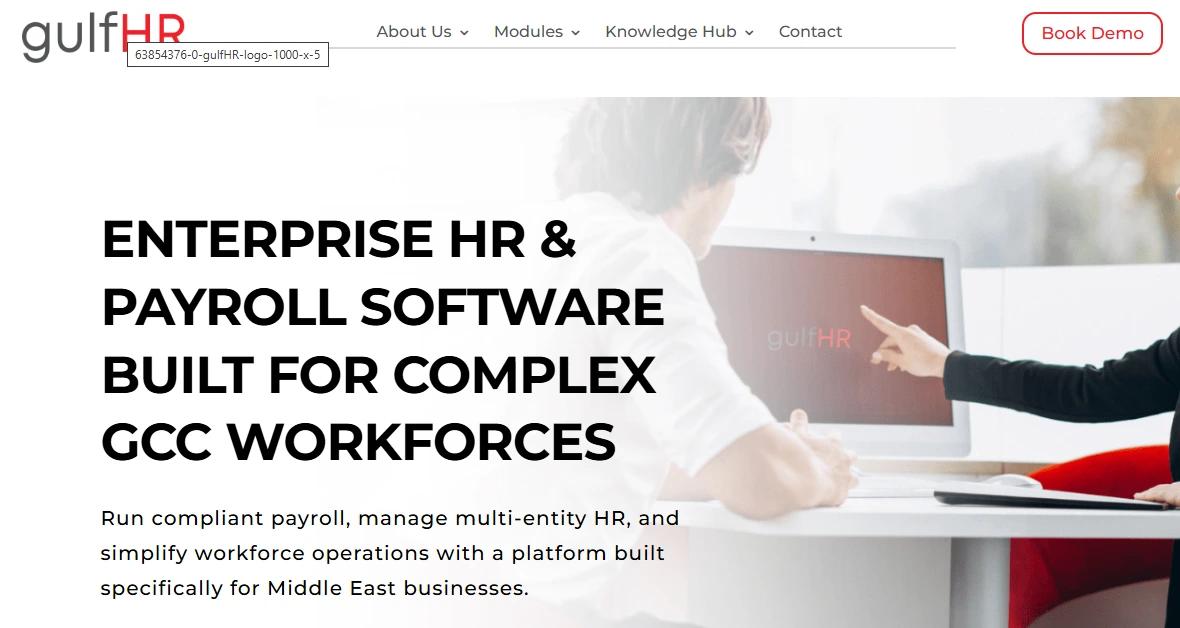
4. gulfHR
gulfHR is a long-established Middle East payroll and HR system with an Arabic interface, cloud, hosted and on-premise deployment, and configurable payroll rules.
gulfHR has built its position on longevity and configurability. It handles payroll report generation, salary advances, password-protected payslips, automatic compliance updates and multi-language support, with payroll rules that can be tailored per organisation, useful for companies with unusual allowance structures or multi-entity setups.
Pricing: No published rate card.
Rating: Listed on Capterra; no aggregate score published at the time of writing.
Pros
- Two decades of Middle East operation and an established regional client base
- Arabic language interface, not a translation layer
- Cloud, hosted or on-premise to suit data residency requirements
- Highly configurable payroll rules for complex organisations
Cons
- No published pricing or aggregate third-party rating
- Reviewers report setup can be time-consuming
- Limited third-party integrations compared with newer platforms
- Public documentation on the 2026 WPS changes is thinner than the newer platforms, verify in a demo
Best for: Middle East mid-market organisations that value configurability and regional longevity.
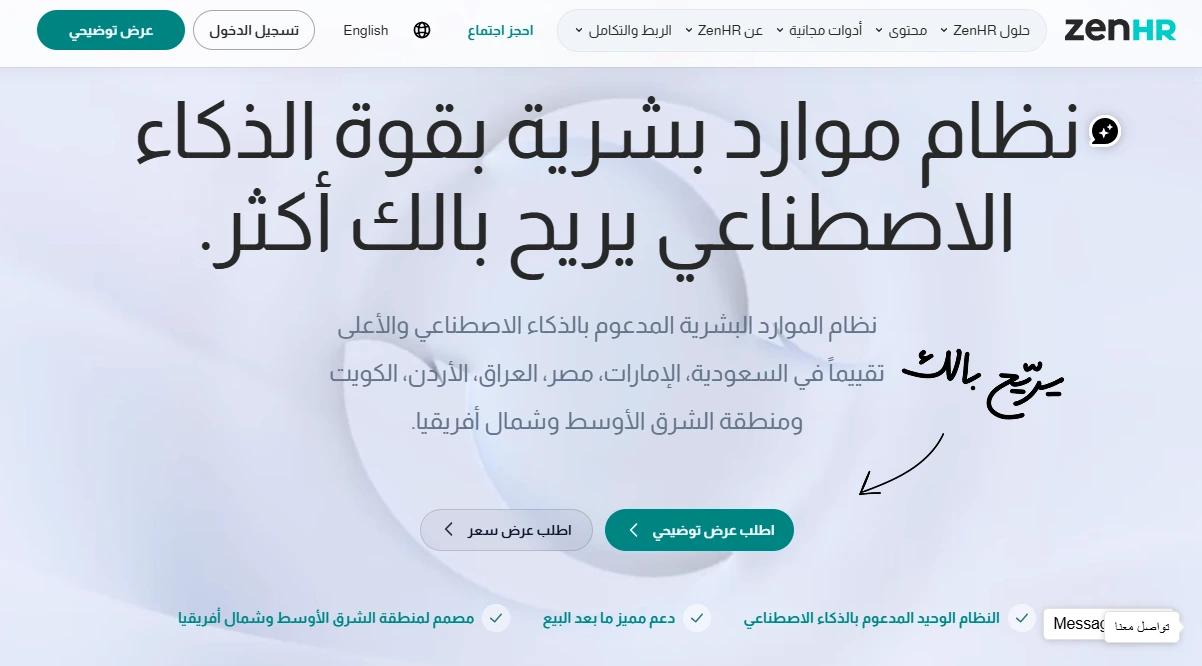
5. ZenHR
ZenHR is a MENA-native platform with localised payroll across the UAE and five other regional markets, bilingual throughout, and SOC 2 Type II certified.
ZenHR handles UAE payroll alongside Saudi Arabia, Jordan, Iraq, Kuwait and Egypt with country-specific compliance logic, which makes it a genuine option if your footprint extends beyond the Gulf. Attendance captures via GPS, QR or biometric and feeds payroll directly. Multi-currency and exchange rate handling are built in.
Pricing: No published rate card.
Rating: 4.6 on G2, 4.7 on Capterra.
Pros
- Genuine multi-country MENA coverage including the Levant and North Africa
- The highest verified scores of any regional HR platform here, on both G2 and Capterra
- SOC 2 Type II, relevant for regulated sectors
- Bilingual interface and mobile apps
Cons
- No published pricing
- Reviewers report limited third-party integrations
- Report and workflow customisation is narrower than enterprise platforms
- Mobile app less feature-complete than the web version
Best for: 20–500 employees running the UAE alongside Levant or North Africa operations.
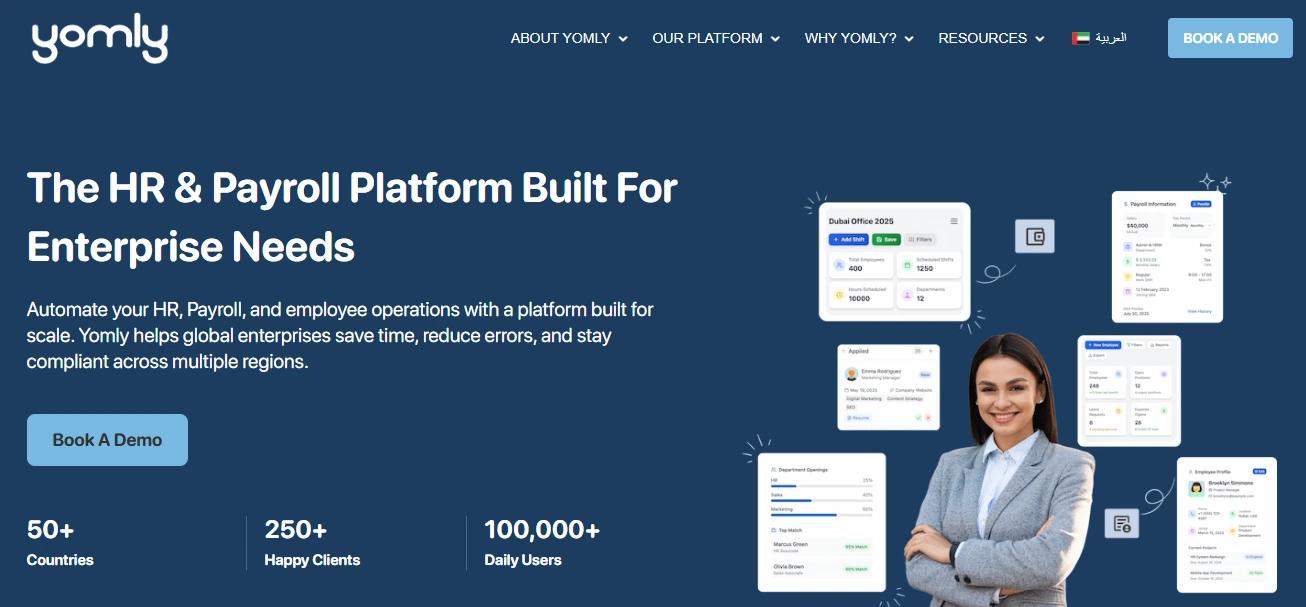
6. Yomly
Yomly is a Dubai-based enterprise HR and payroll platform, formerly EmiratesHR, serving over 200 enterprise clients across 50+ countries with more than 60,000 daily users.
Founded in 2018 in Dubai by Mark JP Nutter and rebranded from EmiratesHR, Yomly raised $5 million in seed funding and has grown to a team of 80-plus. The platform is modular - core HR, payroll, performance, recruitment, shift scheduling and expense tracking, with WPS support, Arabic and English interfaces, multi-currency payroll, API integrations and enterprise-grade security. Its client base includes multinationals, educational institutions and government entities.
Pricing: No published rate card.
Rating: Holds a G2 profile.
Pros
- Genuinely enterprise-scale, with government and multinational deployments
- Multi-currency payroll across 50+ countries from a UAE base
- Modular, so you can deploy payroll first and add modules later
- API integrations and mobile-first access
Cons
- No published pricing
- Implementation is likely complex for small teams
- Enterprise feature set will be over-specified for most SMEs
- Advanced integrations may need technical resource
Best for: Enterprise and multinational organisations headquartered in or operating from the UAE.
7. Connect HR
Connect HR is a Dubai-based cloud HRMS built specifically for UAE compliance, generating WPS-compliant payroll files and tracking MoHRE, free zone and GCC rule changes.
Connect HR has served UAE customers since 2020 and focuses tightly on the operational realities of running a UAE business: WPS file generation, visa process management, document expiry tracking, face-recognition attendance and a multilingual employee self-service portal. It explicitly maintains free zone rules alongside mainland MoHRE requirements, which matters if you hold a free zone licence.
Pricing: No published rate card.
Rating: Minimal public review volume, request customer references instead.
Pros
- Explicitly maintains both mainland MoHRE and free zone rule sets
- Visa process and document expiry tracking built in, not bolted on
- Face-recognition attendance options
- UAE-only focus means no competing country roadmaps
Cons
- Very limited independent review evidence to verify claims against
- UAE-only, so regional expansion means a second system
- Smaller engineering base than the funded regional platforms
- No published pricing
Best for: UAE SMEs where visa administration and document compliance are as much of a burden as payroll itself.
8. Mercans
Mercans provides managed UAE payroll and Employer of Record services, aligned to MoHRE and WPS requirements, for companies without a local entity or with multi-country obligations.
Mercans is a service, not self-serve software. It operates across more than 160 countries with over 500 HR and payroll specialists, has been recognised as a leader in payroll business process transformation by Avasant and in payroll services by ISG, and holds approved Binding Corporate Rules for data privacy. Its EOR offering lets you employ people in the UAE without setting up an entity.
Pricing: No published rate card. Enterprise pricing with implementation costs.
Rating: 4.8 on G2 - the highest here, from an enterprise-weighted sample.
Pros
- Employer of Record lets you hire in the UAE without a local entity
- The UAE becomes one node in a unified global payroll rather than a standalone system
- Approved Binding Corporate Rules, a meaningful data privacy credential
- Compliance liability shifts substantially to the provider
Cons
- Substantial overkill for a single UAE entity under 200 people
- Service-led model rather than software your team operates
- Enterprise pricing and implementation timelines
- Little day-to-day HR functionality compared with the HRMS platforms here
Best for: Companies entering the UAE without an entity, and multinationals running the UAE as one of many payroll jurisdictions.
Is There Free Payroll Software in The UAE?
Short answer: not for anything you can actually file with.
Free HR tools exist, and several platforms offer free tiers for very small teams. But the features that matter for UAE compliance, SIF file generation in the correct bank format, WPS submission, Article 51 gratuity accrual, Emiratisation reporting - sit behind paid plans in every platform we reviewed. A free tool that tracks leave and stores documents is useful; it will not keep you compliant on the 1st of the month.
Two realistic routes if budget is the constraint:
- Free trials. Most vendors offer 14 to 30 days with full functionality. Run a real payroll cycle during the trial, not a demo dataset.
- Low entry-cost platforms with published pricing. Zoho Payroll starts at AED 45 per organisation per month including five employees. Zimyo starts at AED 10 per employee per month with a 25-user minimum. Both publish rates openly, which is unusual in this category.
What is no longer viable is spreadsheets. Under the post-June rules, a manual process that slips two days triggers automatic warnings, and five days triggers permit suspension. The cost of software is now lower than the cost of one bad month.
Choosing By Situation
Under 25 employees. Check minimum seat counts before shortlisting - Zimyo, for instance, starts at 25 users. Zoho Payroll is the practical option at this size, at AED 45 per month including five employees.
25–200 employees, UAE only. Zimyo, Bayzat and Connect HR are the shortlist. Bayzat if insurance administration matters, Connect HR if visa and document tracking is the pain point, Zimyo if you want published pricing and expect to expand regionally.
25–500 employees, UAE plus other GCC markets. Zimyo and ZenHR both run multiple countries on one system. Zimyo covers seven markets, the six GCC countries plus Egypt; ZenHR extends further into the Levant.
Enterprise, or no local entity. Yomly for large in-house deployments, Mercans for managed payroll and EOR.
Any DIFC entity. Ask about DEWS handling first, regardless of company size. Platforms built solely around the mainland gratuity formula will not handle it.
Six Questions to Ask Every Vendor
- How many days does a full payroll cycle take to close? Under the 1st-of-month deadline, a three-day close starting on the 30th is already late.
- Show me a SIF file. Generated, in the correct bank format, not described in a slide.
- Is gratuity calculated on basic salary or gross? Article 51 uses basic only. Gross overstates your liability.
- Can it report Emirati skilled-workforce percentage on demand? Not at month end - on demand, before a checkpoint.
- Does it handle DIFC DEWS contributions? If you hold or plan to hold a DIFC licence, a platform that can't calculate DEWS should come off your shortlist.
- What does this cost per month in AED for my headcount? Ask before the demo.
Frequently Asked Questions
How much does payroll software cost in the UAE?
Zoho Payroll publishes AED 45, 65 and 90 per organisation per month including five employees. Zimyo publishes AED 10, 20 and 30 per employee per month with a 25-user minimum. The rest quote on request.
Is there free payroll software in the UAE?
Not for WPS compliance. Free tiers exist for basic HR record-keeping, but SIF generation, WPS filing and gratuity accrual sit behind paid plans everywhere. Use a full-function free trial instead, and run a real payroll cycle during it.
What is the best payroll software for small businesses in the UAE?
Under 25 employees, Zoho Payroll is the cheapest route with published pricing. Above 25, Zimyo publishes AED pricing and covers payroll alongside HR, attendance and performance on one platform.
When do salaries have to be paid in the UAE now?
By the 1st of the Gregorian month, following Ministerial Resolution No. 340 of 2026 which took effect on 1 June 2026. The previous 15-day grace period no longer applies, and at least 85% of your workforce must be paid on time.