
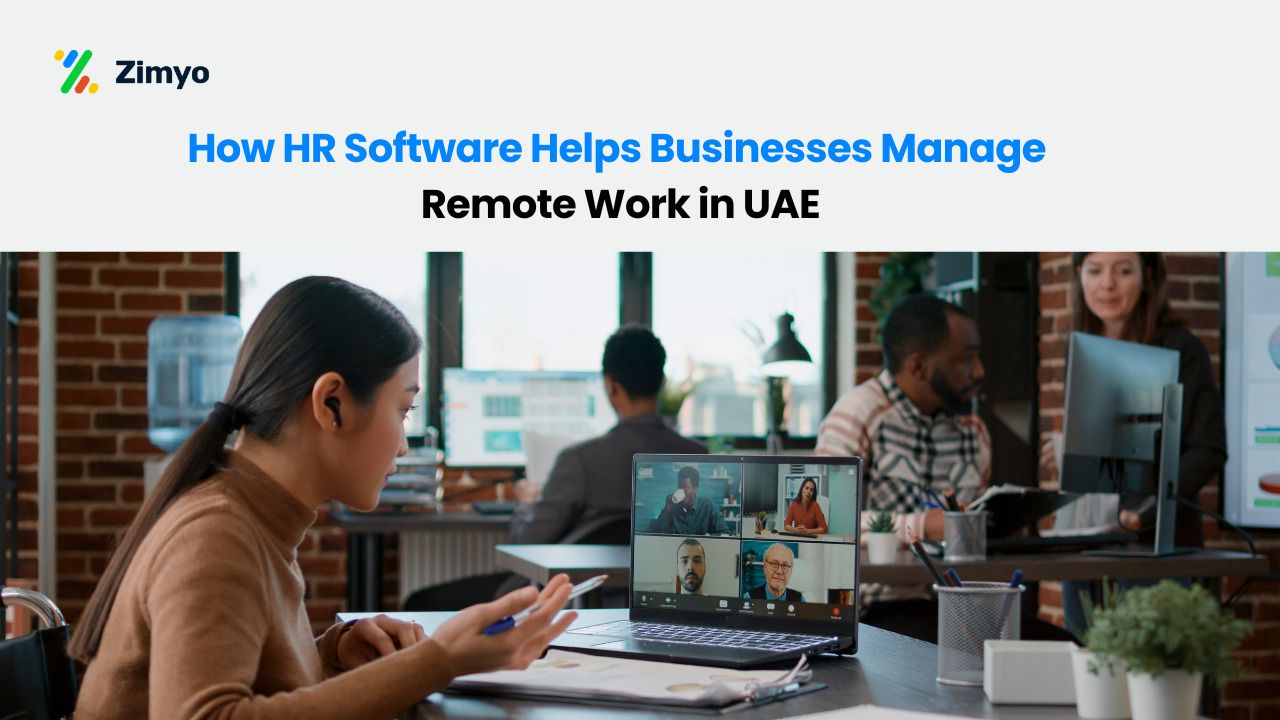
Work in the UAE doesn't look the way it did five years ago. The office isn't the default anymore, and for a lot of companies in Dubai, Abu Dhabi and Sharjah, HR software for remote work has gone from something on a wishlist to something they genuinely can't run payroll without. Teams are scattered now, across living rooms, across emirates, sometimes across borders, and that has pushed businesses toward proper Workforce Management Software UAE tools just to keep salaries correct, attendance honest and the labor authorities happy.
Quick definition first, because people still use the term loosely.
What is remote work? It's working from somewhere that isn't a company office, usually home, while staying connected to your team through digital tools. That's really all it is. The appeal is obvious: flexibility for the employee, output for the business, and in the UAE, both have caught on faster than almost anywhere else in the region.
So why does this matter more in 2026 than it did before? Because the rulebook got rewritten. New Wage Protection System regulations kicked in on 1 June 2026, MOHRE published fresh remote-work guidance, and running a distributed team off a couple of spreadsheets is now a genuine liability rather than just a messy habit. That gap is what good HR software for remote work is there to fill.
Why Remote Work in the UAE Keeps Growing in 2026
None of this happened by accident. The UAE created the conditions for it on purpose: fast internet, a steady flow of international talent, and government policy that leans into flexible work rather than fighting it. So you'll find companies here offering:
- Remote and hybrid roles in pretty much every sector
- Cross-border hiring
- Virtual-working visas that let people live in the UAE while their employer sits abroad
Which leaves employers managing a fairly chaotic mix. Someone working from home in Jumeirah. Someone in another emirate. Someone logging on from a different country altogether. Sorting that out is why Remote Workforce Management stopped being an HR side task and started appearing in boardroom conversations.
The law has caught up, too. The UAE Labor Law, Federal Decree-Law No. 33 of 2021, and the amendments that followed it now recognize remote and hybrid setups outright, as long as they're set out in the contract or in a formal amendment. MOHRE's 2026 guidance is even stricter: the contract must specify salary, hours, the nature of the job, and whether the role is fully remote or hybrid. Decent Remote Workforce Management, the kind backed by real software rather than goodwill, is how compliant firms actually meet that bar.
The 2026 Compliance Shift Every UAE Employer Should Know
If anything should make you re-examine your HR setup this year, it's this.
On 1 June 2026, the UAE overhauled its Wage Protection System under Ministerial Resolution No. 340 of 2026. The big one: salaries are now due on the first day of each Gregorian month, and that old 15-day cushion employers used to lean on is gone. They also tightened the threshold. You're only considered compliant once 85% of total wages are paid on time, up from 80%. Slip below that, and the penalties climb quickly, starting with MOHRE warnings and worsening from there.
For teams spread across locations, this is exactly the moment WPS-Compliant Payroll Software stops being optional. Try tracking salary cycles for remote staff across five different places by hand,, and you'll eventually miss a deadline. It's just math's. Good WPS-Compliant Payroll Software builds the Salary Information Files the banks and exchange houses need, warns you about payments at risk before the cutoff, and keeps the paper trail MOHRE expects. The rules got harder this year, so WPS-Compliant Payroll Software is less a convenience now and more a safety net.
Leave is the same story. A proper Leave Management System in the UAE calculates annual leave, sick days, and public holidays as required by UAE Labor Law, wherever the employee happens to be. Since remote staff can't wander over to the HR desk, a self-service Leave Management System in the UAE lets them book time off, check what they've got left, and get sign-off without anyone having to print a form. And because a solid Leave Management System in the UAE feeds straight into payroll, the accruals and deductions stay right where they belong.
The Core Challenges of Managing Remote Teams
There's no point pretending otherwise: Managing Remote Employees in the UAE is harder than managing people sitting ten feet away. Remote work gives you real freedom, then quietly hands you a list of problems the office used to hide. The usual suspects:
- You can't see anything. When nobody is in the room, it's genuinely hard to tell whether work is moving or stalling.
- The tools don't talk to each other. Spreadsheets here, email there, a chat app somewhere else, and the gaps between them are where mistakes breed.
- Payroll and compliance get risky. Salaries, benefits, and labor-law duties across multiple locations are fiddly at the best of times, and 2026's WPS changes turned up the pressure.
- Conversations fall through the cracks. Lose the corridor chats, and alignment quietly drifts.
- People feel forgotten. Staff who never see a colleague may wonder whether anyone notices they exist.
Every one of those traces back to the same root issue. Managing Remote Employees in the UAE effectively at any scale requires a single connected system, not a drawer full of half-working tools. The companies that treat Managing Remote Employees in the UAE as something to be designed deliberately, rather than winging it, tend to run circles around those that don't. Put bluntly, Managing Remote Employees in the UAE well is mostly a tooling decision dressed up as a people one. And that design, real Remote Workforce Management rather than improvisation, starts with software built for the job.
What Is HR Software for Remote Work?
Strip it back, and HR Software UAE platforms are digital systems that automate the HR grind: hiring, payroll, performance, the lot. Remote work just raises the stakes, which is why plenty of UAE firms now treat HR Software UAE as core infrastructure rather than a back-office nicety.
Picture HR Software UAE as one reliable record of truth. Employee files, attendance, payroll, performance, and communication all sit in one place instead of being scattered across a dozen logins. A modern HRMS UAE, that's Human Resource Management System if you haven't met the acronym, knits those pieces into a single flow, so you enter something once, and it turns up everywhere it's needed.
The better HRMS UAE products are cloud-based and built for phones first, which counts for a lot when your people aren't in one building. Call it HR Software UAE, an HRMS UAE, or Employee Management Software UAE; the aim doesn't change: swap messy manual processes for a single system that mostly runs itself. And the right Employee Management Software in the UAE doesn't just hold records; it shepherds the entire employee journey, which is precisely what a remote-first business is missing.
How HR Software Helps You Manage a Remote Workforce
This is where it gets concrete. Here's what the right platform actually changes day-to-day, and where good Workforce Management Software in the UAE quietly proves its worth.
1. Centralized Employee Information
Start with the basics. Good Employee Management Software UAE gives every employee record a secure home, and when your staff is scattered, that alone is worth a lot. HR can keep contracts, visa details, and personal records in one spot, pull them up in seconds, lock them down securely, and get a nudge before a visa or document lapses. Less scrambling, less admin, which is the whole reason you'd buy Employee Management Software UAE to begin with.
2. Real-Time Attendance and Time Tracking
The nagging question with remote work is always the same: how do we know people are working? The answer isn't to spy on them. Decent Time Tracking Software for Remote Teams sorts this out with automatic clock-ins and clock-outs, live dashboards, and productivity figures that don't treat grown adults like suspects. Good Time Tracking Software for Remote Teams isn't there to catch people out, it just gives everyone an honest record to point at.
Getting Remote Employee Attendance right is a compliance matter too, since the UAE Labor Law has things to say about working hours, and those rules don't pause just because someone is at home. Clean Remote Employee Attendance records let you prove compliance, work out overtime fairly, and catch someone heading for burnout before they crash. The best Time Tracking Software for Remote Teams wires straight into payroll, so the hours logged decide the pay, with no retyping and no arguments. For any scattered team, dependable Time Tracking Software for Remote Teams and tidy Remote Employee Attendance numbers are what keep things fair.
3. Streamlined Payroll and WPS Compliance
Payroll turns thorny fast once people are spread across regions, and this year's rules left no slack. This is WPS-Compliant Payroll Software territory: accurate salary runs, WPS files generated for you, payslips staff can download, and overtime, leave, and deductions all tracked against that new first-of-the-month deadline. One compliance slip in the UAE can cost real money, so WPS-Compliant Payroll Software is the kind of thing you don't notice until it saves you.
4. Smart Leave and Absence Handling
A connected Leave Management System in the UAE kills the endless email chain dead. Staff request leave in a few taps, the system checks it against UAE Labor Law entitlements, sends it to the right manager, and updates payroll on its own. For teams split across time zones, a digital Leave Management System in the UAE keeps everyone on the same page without needing them to be in the same room, or even the same country.
5. Employee Self-Service Portals
For remote staff, nothing beats being able to sort things out on their own. An Employee Self-Service Portal hands them payslips, leave requests, attendance records, personal detail updates, and task management, all without firing off an email to HR. With no office to drop into, the Employee Self-Service Portal basically becomes their HR department. A good Employee Self-Service Portal lightens HR's repetitive load and gives staff a bit of ownership at the same time, and that quietly does more for morale than most perks.
6. Performance Management and Analytics
If you can't watch people work, you measure what they produce instead of how long they sit. Modern Employee Performance Tracking lets you set goals you can actually measure, watch progress as it happens, and give feedback all year, rather than once in an awkward December review. Built around KPIs, KRAs, and OKRs, Employee Performance Tracking moves the question from "are they at their desk?" to "are they getting it done?", which is the only question that makes sense for remote work anyway. Handled well, Employee Performance Tracking also flags your stars and your stuck projects long before either becomes obvious. None of that requires anyone to hover over a desk, which is, rather, the point of Employee Performance Tracking in a remote setup.
7. Automation and Digital Transformation
Underneath all of this sits automation. The current crop of HR Automation Tools takes the boring, mistake-prone jobs off your hands: document workflows, approval chains, reminders, payroll runs, so HR can spend its time thinking instead of typing. Bringing in HR Automation Tools is rarely just a new bit of software; it's usually one piece of a wider Digital HR Transformation that changes how the whole place works.
That Digital HR Transformation is roughly what separates the companies merely surviving remote work from the ones genuinely enjoying it. The right HR Automation Tools cut down on errors, speed up onboarding, and free your sharpest people for work that matters, while a real commitment to Digital HR Transformation ensures every system actually talks to the next one. In a market as dynamic as the UAE's, Digital HR Transformation has become an edge, not just an IT line item.
8. Better Communication and Engagement
Last one, and it tackles the loneliness problem head-on. Company-wide announcements, feedback channels, recognition features,, and group tools help remote employees feel connected to the company and to each other, wherever they log in from.
Supporting the Hybrid Work Model in the UAE
Plenty of companies never went fully remote, and most never will. The Hybrid Work Model UAE firms have settled on, some days in, some days at home, is quietly becoming the norm, and it carries its own little headaches: who's in today, how do you handle desks, how do you stop home workers feeling like second-class staff?
Flexible software is what smooths it over. A platform built for the Hybrid Work Model UAE lets people flag where they're working, helps managers plan who covers what, and keeps attendance management and payroll accurate, whether the day was spent at home or at a desk. As more UAE businesses lock in a Hybrid Work Model, the UAE, handling both worlds inside one system instead of two, saves a surprising amount of grief. The firms that build their tools around the Hybrid Work Model in the UAE from day one dodge the messy patchwork that trips up everyone who left it as an afterthought. Plan for the Hybrid Work Model in the UAE early, and the rest tends to fall into place.
The Real Benefits of HR Software for Remote Teams
So what does a UAE business actually walk away with when it gets this right?
- More gets done. Automation clears the manual busywork and lets HR focus on people.
- Fewer mistakes. Payroll, attendance, and leave errors drop off sharply.
- Tighter compliance. Your processes line up with the UAE Labor Law and the 2026 WPS rules.
- Happier staff. People get quick, easy access to whatever HR thing they need.
- Room to grow. You can add headcount and countries, without your systems buckling.
How to Choose the Best HR Software in the UAE
There's no shortage of options, so picking the Best HR Software in the UAE really comes down to a handful of honest questions. What you want is:
- Cloud access, so anyone can log in from anywhere
- A mobile app worth using, since your team isn't glued to a laptop
- Full UAE Labor Law and WPS compliance, 2026 updates included
- Integrations with whatever you already run
- Real support for remote and hybrid, not an office tool wearing a costume
The Best HR Software in UAE for one company won't be it for the next; a ten-person startup and a thousand-person enterprise want very different things. But the rule holds. The Best HR Software in the UAE is the one that fits how your team actually works, grows with you, and keeps you compliant without someone babysitting it. When you're weighing up the Best HRMS Software in UAE, lean toward platforms built for distributed teams rather than old office systems bolted onto remote work after the fact. Get that call right, and the Best HR Software in the UAE more or less pays for itself.
Conclusion
A remote workforce with no proper tools gets overwhelming fast. With the right ones, it turns into an actual advantage. Good HR software for remote work keeps your people organized , your payroll software clean, your performance measurable, and your team connected, wherever they all happen to be.
And in 2026, with WPS rules tighter and MOHRE clearer about what it expects, there's more riding on it than there used to be. For UAE businesses, putting solid Workforce Management Software in place isn't really a strategic maybe anymore. It's the floor you build on. Get it right, and remote work stops being a thing you manage and starts being a reason you're ahead.