

The best recruitment software in Saudi Arabia would be the platform that can move a candidate from application to a Qiwa contract, in which the information is not lost along the way. However, from 15 April 2026, this will not be merely a convenient task. Any Saudi employee whose contract was not registered electronically via Qiwa would not contribute to your Saudization rate at all and registering them with GOSI is not enough anymore.
In this article, we are going to review eight different platforms that are used by Saudi organizations, listing their strength separately for each of them, and not naming the champion among them.
Quick Answers
| If you are… | Start with |
|---|---|
| Hiring across Saudi, UAE and other GCC markets from one HR team | Zimyo |
| A Saudi-only company that wants government portal work automated | Jisr |
| Running high-volume, Arabic-first enterprise hiring | Talentera |
| Screening at volume and want AI video assessment | Elevatus |
| A small Saudi business on a tight budget | PalmHR |
| A UAE-anchored business with a Saudi entity | Bayzat |
| A Saudi SME that wants a locally built ATS | Hailaman |
| Hiring across MENA in Arabic and English | ZenHR |
What Changed in April 2026, and Why It Belongs in a Recruitment Decision
Two changes from the current Nitaqat cycle land at the hiring stage rather than in payroll.
Qiwa documentation now decides whether a Saudi hire counts.
From 15 April 2026, the Ministry of Human Resources and Social Development calculates Saudization rates from Saudi employees whose employment contracts are electronically documented and authenticated on the Qiwa platform. Registering an employee with GOSI is still required but is no longer enough on its own. An employer whose contracts have not been documented on Qiwa can be running a materially lower Saudization percentage than its own headcount suggests.
For recruitment specifically, this means the offer stage now has a compliance output. The Qiwa contract needs the employee's border number, occupation classification, education level, IBAN, and agreed salary, most of which is either captured or lost while the offer is being made. Recruitment software that stores those fields in structured form turns contract documentation into a data transfer. Software that does not turns it into chasing a new hire for paperwork after they have started.
The salary threshold for Saudization credit went up.
The minimum monthly salary for a Saudi national to count toward quota rose from SAR 3,000 to SAR 4,000, and several professions carry higher floors, reported at SAR 8,000 for engineering, SAR 9,000 for dentistry, and SAR 5,500 for marketing roles. Saudi employees paid below the applicable threshold are counted at half a person.
That is a decision made when the offer is built, not when payroll runs. If your hiring team cannot see the threshold while setting a salary band, you can fill a role and gain nothing on your Nitaqat position.
How to Evaluate Recruitment Software for the Saudi Market
Feature lists look identical across vendors. These are the questions that separate them.
- Is contract handoff to Qiwa native, or manual? Ask directly, and ask for a demo of it. Some platforms post to Qiwa through a direct integration; others export a file that somebody uploads. Both can work, but the manual route needs an owner and a deadline, and the cost of missing it is now measured in Saudization percentage rather than admin time.
- Does the system capture Qiwa contract fields at the offer stage, or after joining? Border number, occupation classification, education level, and IBAN are far easier to collect while the candidate still wants the job.
- Can you see the Saudi-national ratio inside the hiring pipeline? Knowing your band after the fact is reporting. Seeing the effect of a shortlist before you make the offer is planning.
- Does it handle Arabic properly, or is it translated? Arabic-first platforms parse Arabic CVs and names reliably. Translation layers usually do not.
- Is it PDPL-compliant, and where is candidate data hosted? Some Saudi buyers, particularly in government-adjacent sectors, require in-Kingdom hosting.
- Does it work outside Saudi Arabia? If you hire in the UAE, Qatar, or Egypt too, a KSA-only platform means a second system and a second data set.
- Hijri and Gregorian calendars side by side. Contract dates, probation, and notice periods all break quietly when a system only handles one.
Comparison Table
| Platform | Best for | Type | G2 rating | Pricing model |
|---|---|---|---|---|
| Zimyo | Multi-country GCC hiring | Full HR suite with ATS | 4.5 / 5 | SAR 149 / recruiter / mo |
| Jisr | KSA-only compliance automation | HCM with ATS | No rating, profile has no reviews | Quote-based |
| Talentera | Enterprise Arabic-first volume hiring | Specialist ATS | No rating - too few reviews | Quote-based |
| Elevatus | AI screening and video assessment | Specialist ATS + assessment | No G2 rating | Tiered |
| PalmHR | Small Saudi businesses | HRMS with ATS | No G2 profile | Quote-based |
| Bayzat | UAE-first with a KSA entity | HR suite | 4.6 / 5 (low reviews) | Quote-based |
| Hailaman | Saudi SMEs | Specialist ATS | No G2 profile | Published entry tier |
| ZenHR | MENA-wide bilingual hiring | HR suite with ATS module | 4.6 / 5 (low reviews) | Quote-based |
The 8 Best Recruitment Software Platforms in Saudi Arabia
1. Zimyo - Best overall for companies hiring across multiple GCC markets
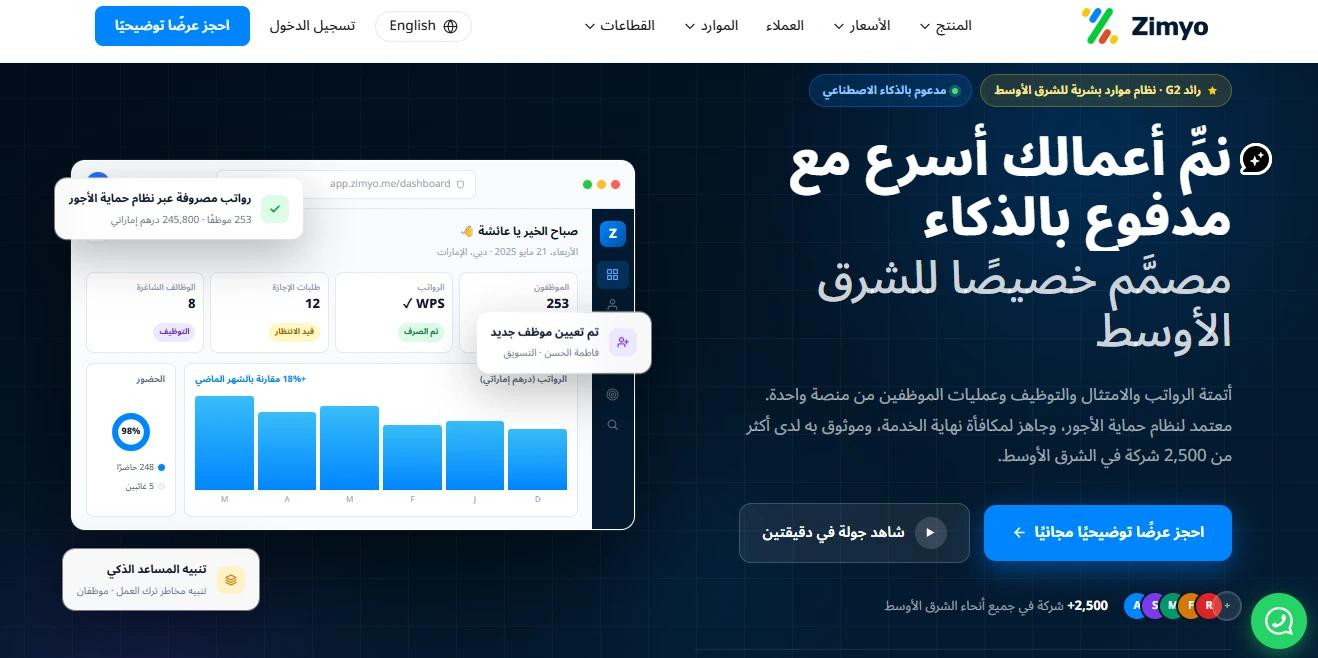
Zimyo recruit is an HR suite with recruitment built into it rather than a standalone ATS, which changes what the product is good at. Candidate data does not stop at the offer; it becomes the employee record that payroll, attendance, and performance run on. For a company hiring in Saudi Arabia alongside the UAE, Qatar, or Egypt, that is one system and one dataset rather than a KSA point solution plus everything else.
That is the trade-off stated plainly: platforms built only for Saudi Arabia go deeper on Saudi government portals. Zimyo goes wider. If your entire workforce is in the Kingdom and government portal automation is your main problem, one of the KSA-native platforms below will serve you better on that specific axis.
Best for: multi-country GCC employers who want recruitment, payroll, and performance in one platform.
Pricing: quote-based.
2. Jisr - Best for Saudi-only companies that want government work automated
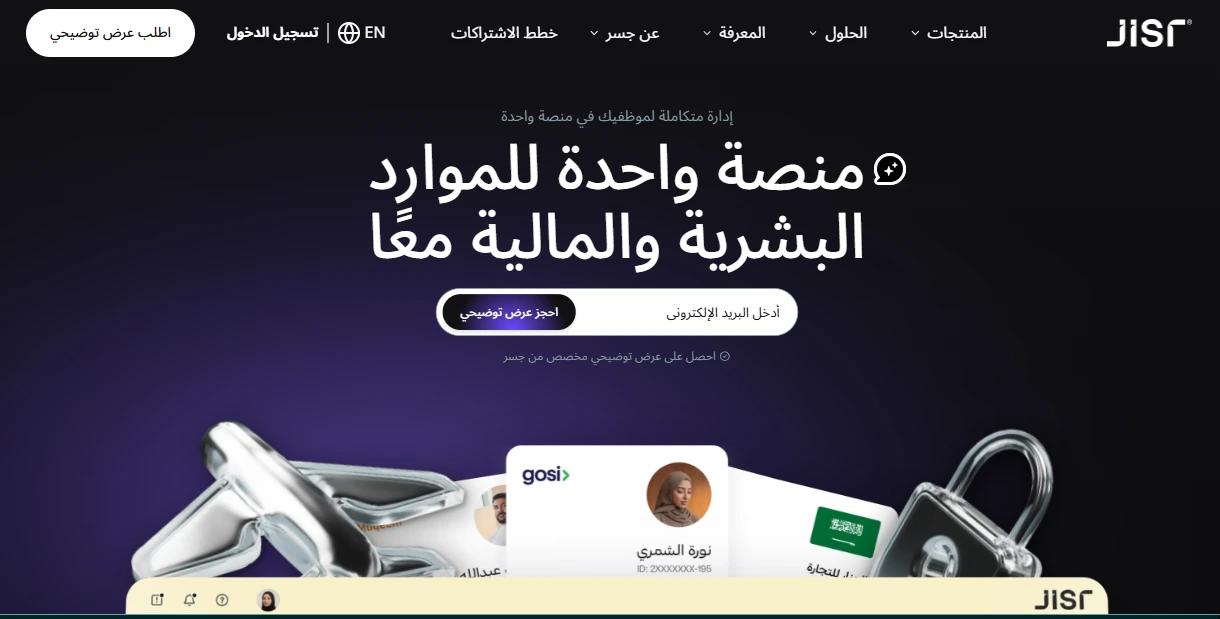
Jisr positions itself as a compliance automation layer for Saudi government systems, with direct integrations to Mudad, GOSI, Muqeem and Qiwa, and its ATS sits inside that. For a company operating entirely in the Kingdom, that is the shortest path from hire to documented contract. Its own material puts its target range at roughly 50 to 3,000 employees.
The limit is the other side of the same strength: it is built for Saudi Arabia, so it is a weaker fit if a meaningful share of your hiring happens elsewhere.
Best for: KSA-only employers who want portal work off their HR team's desk.
Pricing: quote-based.
3. Talentera - Best for Arabic-first enterprise and high-volume hiring
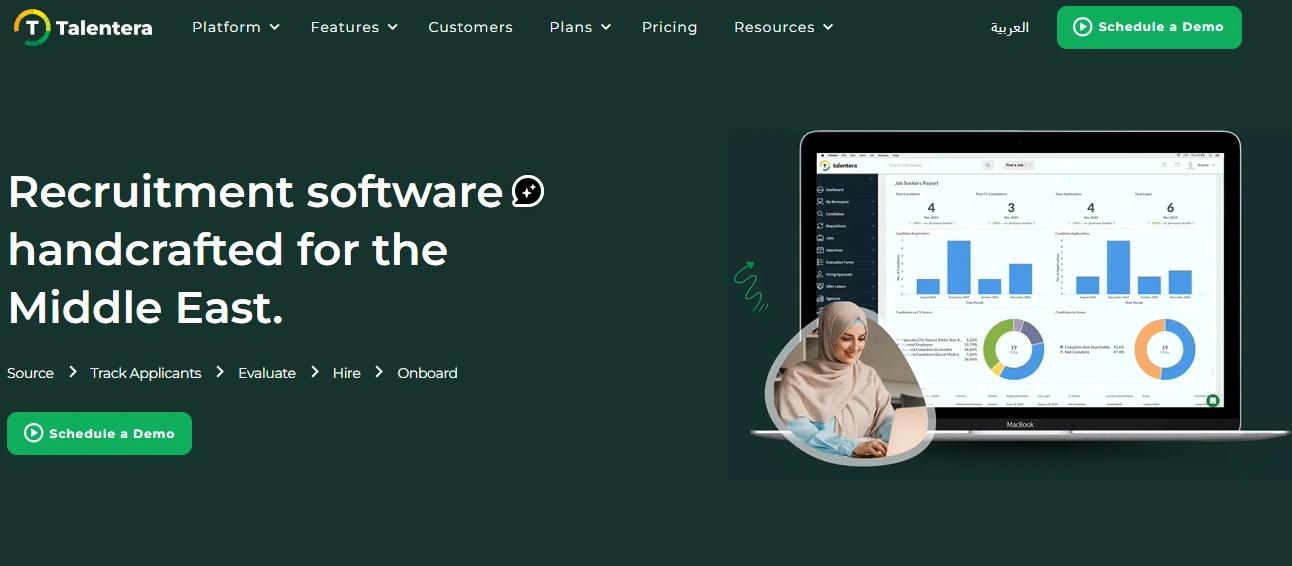
Talentera is an enterprise ATS built for the region rather than adapted to it, with Arabic-first architecture and in-Kingdom hosting. It is the strongest option for organisations processing very large applicant volumes where Arabic CV parsing and candidate filtering need to be reliable at scale, and for buyers with data sovereignty requirements.
It is a recruitment specialist, not an HR suite, so expect to integrate it with whatever runs your payroll.
Best for: large employers and government-adjacent organisations hiring at volume in Arabic.
Pricing: quote-based.
4. Elevatus - Best for AI screening and video assessment
Riyadh-headquartered and founded in 2019, Elevatus splits into EVA-REC for applicant tracking and EVA-SSESS for AI video assessment. The video assessment side is the differentiator: if your bottleneck is first-round screening across hundreds of applicants, this is the platform built for that problem.
Published pricing varies across third-party listings, so treat any figure you see as indicative and get a direct quote.
Best for: high-applicant-volume roles where screening, not tracking, is the constraint.
Pricing: tiered; confirm directly.
5. PalmHR - Best for small Saudi businesses on a budget
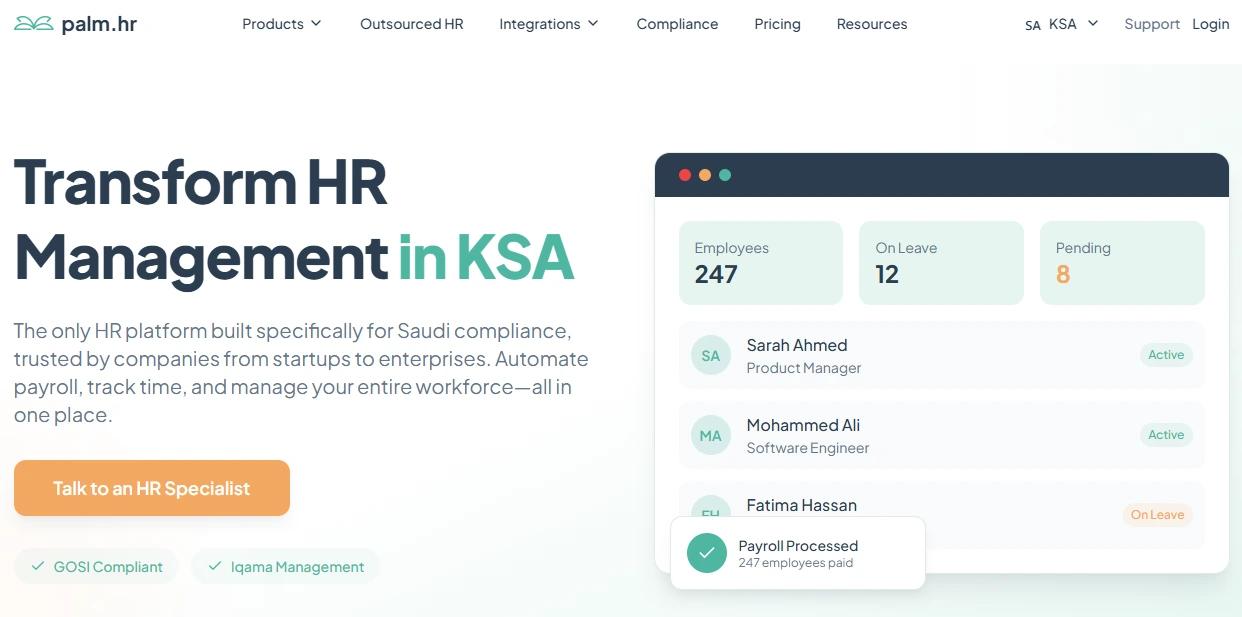
PalmHR is a Saudi-built HR platform aimed at SMBs, with an Arabic-first interface and coverage of the main government portals at entry-level pricing. For a company under 100 employees that wants local compliance without enterprise complexity, it is a practical starting point.
The trade-offs are depth and reach: limited AI capability, minimal multi-country support, and a smaller partner ecosystem than the larger regional players.
Best for: Saudi SMBs under roughly 100 employees.
Pricing: per employee per month, vendor-reported at the low end of the market; confirm current rate.
6. Bayzat - Best for UAE-anchored businesses with a Saudi entity
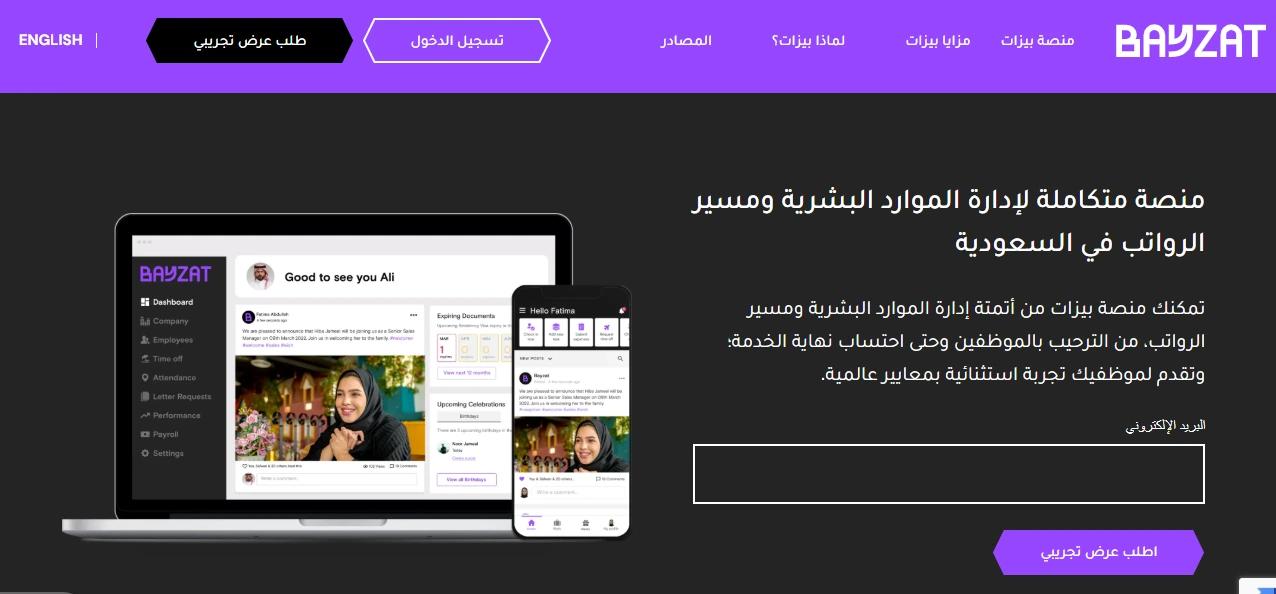
Bayzat built its position in the UAE and extended into Saudi Arabia, with native coverage of the Saudi government portals and transparent per-employee pricing. If your head office is in Dubai or Abu Dhabi and Saudi Arabia is your second market, it covers both from one platform with a short implementation.
For a Saudi-headquartered company with no UAE footprint, the KSA-native platforms are the more natural comparison.
Best for: UAE-first companies expanding into the Kingdom.
Pricing: per employee per month.
7. Hailaman - Best for Saudi SMEs wanting a locally built ATS
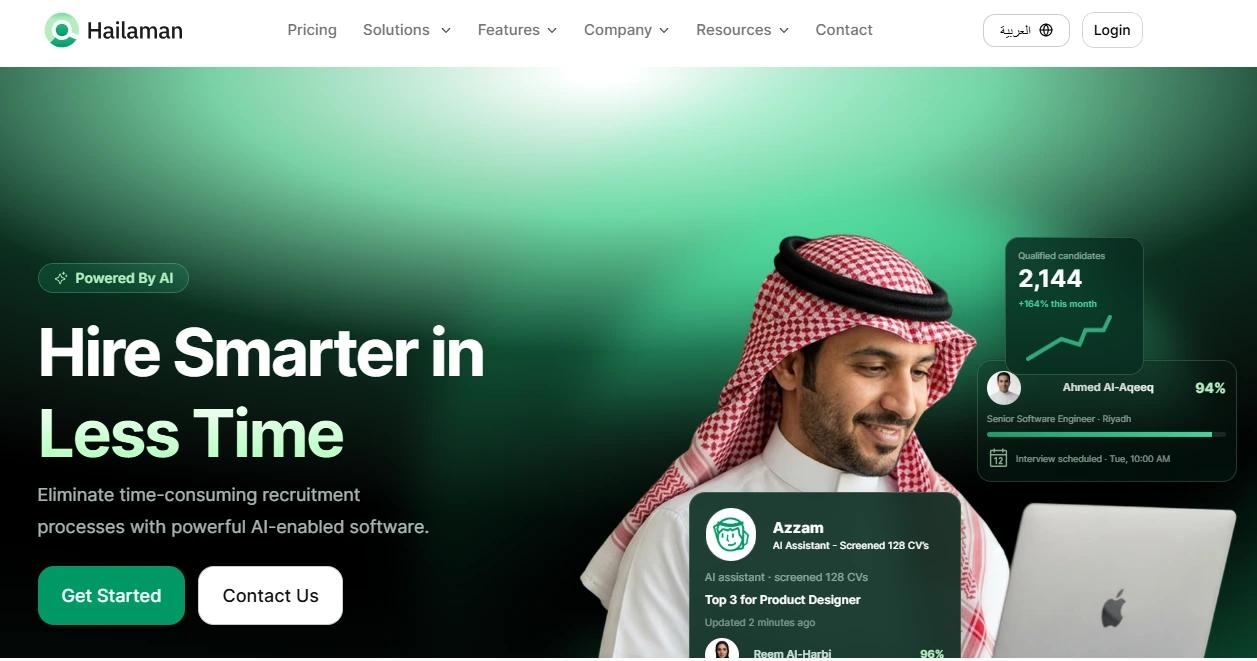
Hailaman is a Saudi ATS built specifically for small and medium businesses in the Kingdom, with an Arabic-native AI assistant for job ads and CV screening, direct Qiwa and Taqat integration, and contract generation aligned to Saudi Labour Law. Entry pricing is published rather than quote-gated, which is unusual in this category and useful if you are comparing before you talk to sales.
It is a younger product with a smaller customer base than the platforms above, so weigh support and roadmap accordingly.
Best for: Saudi SMEs that want local depth without an enterprise contract.
Pricing: published entry tier; confirm current rate.
8. ZenHR - Best for bilingual hiring across MENA
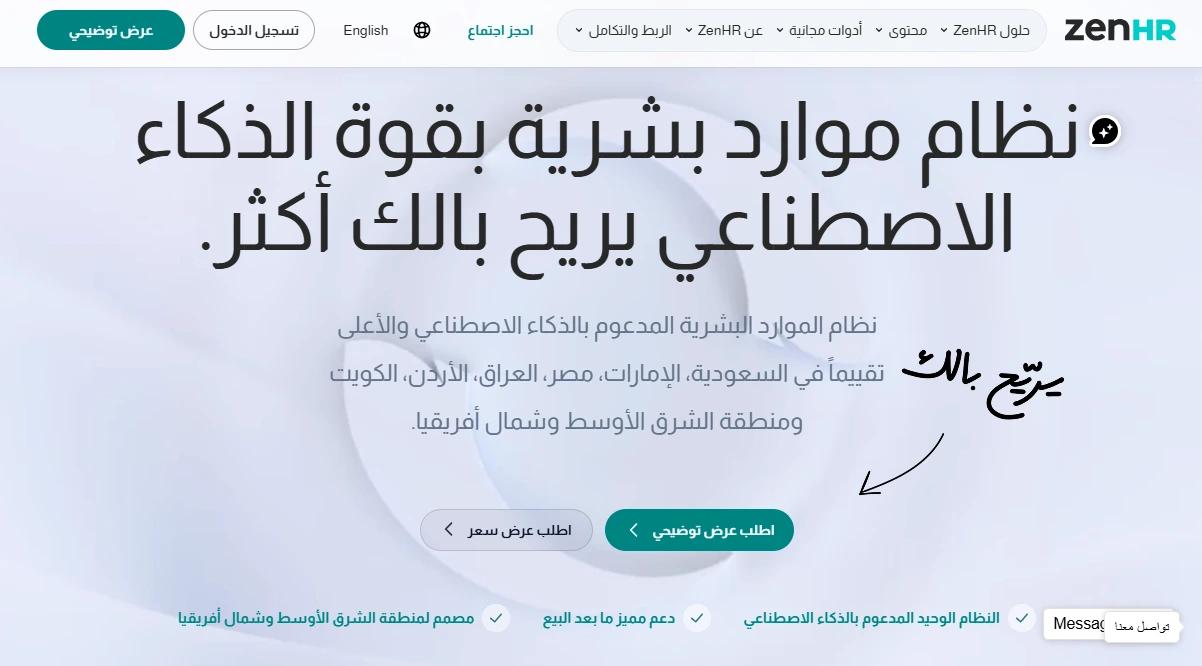
ZenHR pairs a bilingual HR platform with ZenATS, its applicant tracking module, across multiple MENA markets including Saudi Arabia. It suits companies whose hiring spans several Arab markets and who want one system and a one-language setup across all of them, with multi-country payroll behind it.
It is broader than it is deep on any single market, which is the usual trade-off for regional coverage.
Best for: MENA-wide employers hiring in Arabic and English.
Pricing: quote-based.
Also worth a look depending on your situation: Mawared, which offers on-premises deployment for organisations that cannot use cloud hosting, and MenaITech for long-established regional payroll and HR coverage.
How to Choose the Right Recruitment Software
Work from where your people are, not from the feature list.
- All your hiring is in Saudi Arabia, and government portal work is eating your HR team: start with Jisr, then PalmHR or Hailaman if you are smaller.
- You hire in Saudi Arabia and at least one other GCC market: start with Zimyo, or Bayzat if the UAE is your base.
- Your problem is applicant volume rather than compliance: start with Talentera for Arabic-first scale, or Elevatus if screening is the bottleneck.
- Whatever you shortlist, ask each vendor to show you the path from accepted offer to documented Qiwa contract on a live screen. The answer to that one question will separate the list faster than any feature comparison.
Frequently Asked Questions (FAQs)
What is the best recruitment software in Saudi Arabia?
It will all depend on where you employ. Zimyo is ideal for companies that employ employees across Saudi Arabia and other GCC countries in one package. Jisr is best for Saudi companies seeking to automate their government portal employment needs. Talentera will be perfect for enterprises looking to employ in Arabic first.
Does recruitment software need to integrate with Qiwa?
It does not need to, but the transfer needs to take place in some way or another. After 15 April 2026, a Saudi worker will not count for your Saudization score until the employment agreement is recorded electronically in the Qiwa system. Some vendors will make the transfer from their platform straight to Qiwa, whereas others will have an individual from your company make the transfer for them.
What happens if a Saudi employee's contract is not documented on Qiwa?
They do not contribute towards your Saudization percentage. Just registering with the GOSI will not do anything. This implies that your Nitaqat standing could be below where you stand based on your headcount.
What salary does a Saudi employee need to earn to count toward Nitaqat?
The general minimum increased to SAR 4,000 per month from SAR 3,000, with a higher salary ceiling quoted for specific professions such as engineering, dentistry, and marketing. Employees who earn less than the required ceiling will be calculated as 0.5 people.
What is the difference between an ATS and recruitment software?
The applicant tracking system handles applicants within a hiring pipeline. Recruitment software is the general term and encompasses recruiting, assessments, offer management, and onboarding. In reality, many of the Saudi buyers are having to choose between a specialized ATS or HR software with recruitment features.
Does recruitment software in Saudi Arabia need to support Arabic?
Yes, but for the vast majority of employers. The importance of Arabic CV parsing, Arabic job postings, and Arabic candidate communication is critical if your company is hiring Saudi nationals. Please note the difference between a platform being developed in Arabic versus one that has been translated into Arabic.