

If you run a small business in the UAE, HR is the job that quietly eats your week: payroll, leave approvals, the monthly WPS file, visa and Emirates ID expiries, and a compliance calendar that has grown considerably since 2024. Spreadsheets hold up until about thirty employees. After that, something slips.
This blog compares ten HR software platforms used by small and growing UAE businesses, sets out what UAE law actually requires of a company your size in 2026, explains what these systems cost, and gives you a five-step way to shortlist. If you want the wider market rather than the small-business segment, start with our guide to the best HR software in UAE instead.
Top 10 HR Software for Small Businesses in UAE: Comparison Table
Ten platforms, what each is genuinely best at, how UAE payroll is handled, and what G2 reviewers say. Ratings and pricing are shown only where they exist publicly.
| Platform | Best for | Native UAE WPS payroll | G2 rating | Published UAE pricing |
|---|---|---|---|---|
| Zimyo | Growing UAE teams wanting one GCC-compliant system | Yes | 4.5 / 5 | AED 10 / 20 / 30 per employee per month, min. 25 users |
| Bayzat | Teams that want HR and medical insurance in one place | Yes | 4.6 / 5, although review count is very low | Not publicly listed |
| gulfHR | Established firms needing deep payroll configuration | Yes | 4 / 5 | Not publicly listed |
| Yomly | Small GCC teams wanting fast, simple setup | Yes | No rating | Not publicly listed |
| Paylite HRMS | Small teams wanting straightforward core HR | Yes | No G2 profile | Not publicly listed |
| Humantiz | Sites relying on biometric attendance hardware | Yes | No G2 profile | Not publicly listed |
| Zoho People | Businesses already inside the Zoho ecosystem | Via Zoho Payroll UAE | 4.4 / 5 | Not publicly listed |
| peopleHum | Teams prioritising engagement and talent tooling | Limited | 4.6 / 5, review count is low | Not publicly listed |
| Darwinbox | Companies expecting to cross into mid-market soon | Yes | 4.3 / 5 | Not publicly listed |
| SAP SuccessFactors | Enterprises and multi-country groups | Via partner payroll | 4.1 / 5 | Not publicly listed |
Most vendors in this market quote rather than publish. Where a platform does not list a price, request a quote for your exact headcount, and ask specifically about minimum seat counts, which catch out a lot of small teams.
What UAE law requires of a small business in 2026
A lot of HR software content treats compliance as a feature bullet. It is worth being specific, because several of these obligations have thresholds that decide whether they apply to you at all.
| Obligation | Applies to | What it means in practice |
|---|---|---|
| WPS salary transfers | MOHRE-registered private companies | Salaries paid through the Wage Protection System, with a SIF file generated each pay run. This is the single feature to test hardest in a demo. |
| Employee health insurance | Employers in all seven emirates | Since 1 January 2025 employers must provide cover for private-sector employees as a condition of issuing or renewing a residence permit. The federal Basic Health Insurance package is priced at AED 320 per year. |
| ILOE unemployment insurance | Most private-sector employees | Paid by the employee, not the employer: AED 5 per month where basic salary is AED 16,000 or below, AED 10 above that. Non-subscription carries an AED 400 fine and can hold up work-permit transactions, so most employers fold it into onboarding. |
| Emiratisation | 50+ skilled employees; separately, 20-49 employees in 14 targeted sectors | Companies with 50 or more skilled employees must add one percentage point of Emirati representation in skilled roles by 30 June and another by 31 December, reaching 10% by the end of 2026. Shortfalls carry a monthly contribution per unfilled role. |
| Corporate tax | All UAE businesses | 9% applies above AED 375,000 of taxable income. Small Business Relief, for revenue of AED 3 million or less, was extended in 2026 and now covers tax periods ending on or before 31 December 2029, but it must be elected in your return each period, and registration, filing and record-keeping still apply. |
| Data protection | Any business handling UAE residents’ personal data | Federal Decree-Law No. 45 of 2021 has applied since 2 January 2022. In practice this means employee data held with encryption, role-based access, and a record of what you hold and why, all standard in cloud HR platforms, and difficult to evidence in a spreadsheet. |
The practical read for a small business: below 20 employees, your obligations are payroll, health insurance, and record-keeping. Between 20 and 49 in a targeted sector, Emiratisation enters the picture. At 50 and above, you are on the full quota track with half-yearly deadlines. Software will not make those decisions for you, but it is what turns them from a scramble into a calendar entry.
Key Features to Look For
Before comparing vendors, know which of these you will actually use. A small team pays for seats it does not need more often than it pays for missing features.
- WPS and SIF file generation. Non-negotiable. Ask to see a SIF file produced live in the demo, not described.
- Gratuity and end-of-service calculation. Should follow UAE rules automatically. If you want to sanity-check a figure yourself, use a gratuity calculator.
- Document expiry tracking. Visas, Emirates IDs, labour cards, insurance. Automated alerts here prevent the most expensive small-business HR mistakes.
- A single employee record. Payroll, attendance and leave read from one database rather than syncing between tools.
- Employee self-service. Payslips and leave requests without an HR middleman. This is where the time actually comes back.
- Arabic support. Matters more for some workforces than others. Check whether it covers the employee app or only the admin console.
- Attendance capture that fits your site. Biometric, geo-fenced mobile, or both. An office team and a site-based team need different things here.
- Transparent pricing and minimum seats. Ask what the minimum billable headcount is before you ask the per-employee rate.
The 10 Best HR Software Platforms for Small Businesses in UAE
1. Zimyo
Zimyo HRMS is built for GCC requirements rather than adapted to them, which shows in the areas small UAE businesses actually get stuck: WPS and SIF generation, gratuity under UAE rules, and an Arabic employee portal. It runs the full hire-to-retire cycle in one system - payroll, attendance, performance, and engagement- and with 60+ modules, the structure means a ten-person company is not paying for enterprise tooling it will not open. On G2, it holds 4.5 out of 5, and a good number of those reviewers are small-business users, which makes the rating unusually relevant if that is what you are.
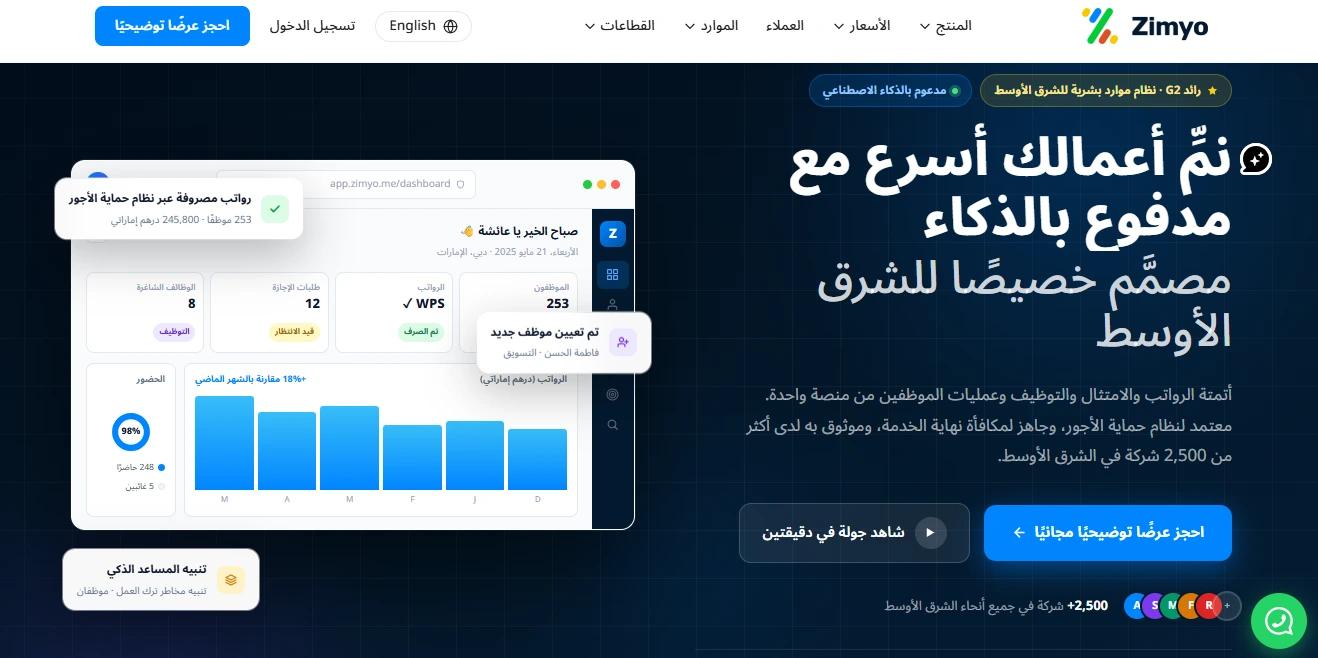
Key features: Core HR, payroll with WPS/SIF, leave and attendance, shift and roster management, OKRs and KPIs, employee documents, engagement, LMS, travel and expense
Pros
- Built for UAE and wider GCC labour law
- Published pricing in AED
- Arabic employee portal
- Scales from SME to enterprise without replatforming
Cons
- Minimum 25 users, so genuinely tiny teams are billed above headcount
- Advanced modules need a short onboarding
Best for: Growing UAE businesses that want one compliant system from the start
Note - Get complete pricing on Zimyo UAE pricing page.
2. Bayzat
A UAE-founded platform that combines HR and payroll with medical insurance administration, a genuine differentiator now that employee health cover is a legal condition of residence permits in every emirate. The employee app is well liked and noticeably reduces HR queries. Its G2 score is high but rests on a small number of reviews, so weigh it accordingly.
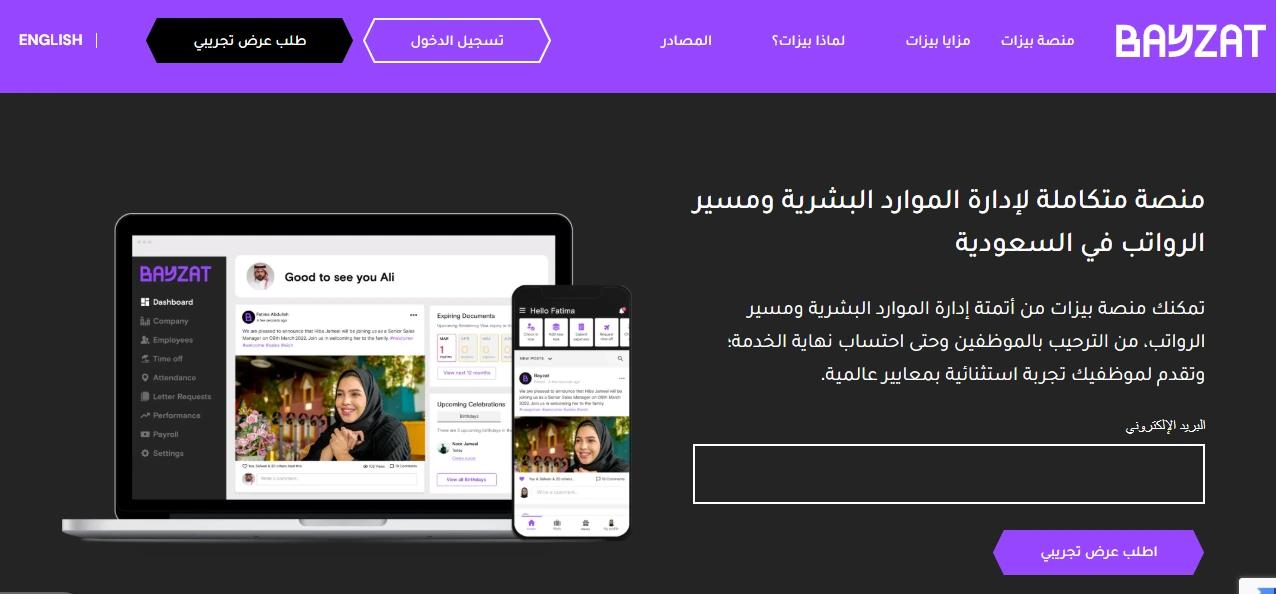
Key features: Payroll, attendance and leave, employee benefits and insurance, performance, recruitment, expense management, self-service app
Pros
- HR, payroll and insurance in one place
- UAE-specific by design
- Strong employee mobile experience
Cons
- Pricing not published
- Reviewers note cost can be steep for very small teams
- Less configurable than heavier platforms
Best for: Teams that want to stop managing insurance renewals in a separate system
3. gulfHR
One of the longest-established HR platforms in the region, with GCC payroll configuration that handles unusual allowance and deduction structures other systems struggle with. The interface is functional rather than modern, which is a fair trade if your payroll is complicated. No G2 profile, though it is reviewed on Capterra and GetApp.
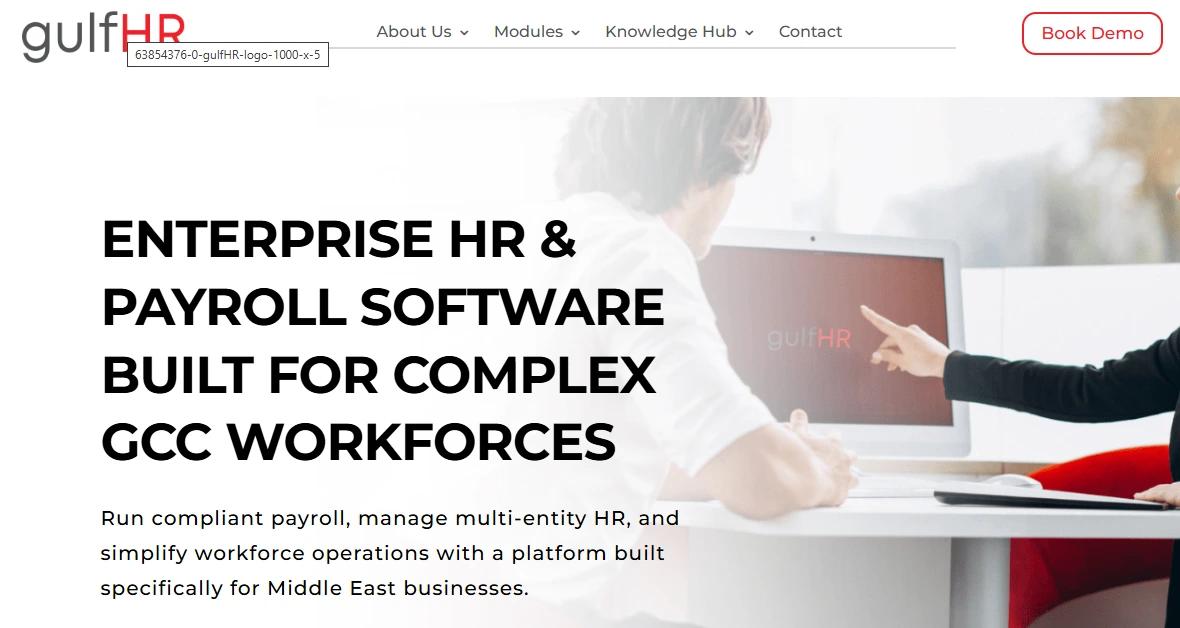
Key features: Core HR, payroll and attendance, approval workflows, self-service, recruitment, HR analytics, leave management.
Pros
- Deep regional payroll expertise
- Arabic interface
- Handles complex pay structures
- Cloud or on-premises deployment
Cons
- Interface feels dated
- Pricing not published
- Heavier than a very small team needs
Best for: Established UAE businesses with complicated payroll rules
4. Yomly
Purpose-built for smaller GCC teams, with a deliberately narrow feature set and a short implementation. If your requirement is payroll, leave, attendance, and a self-service app, and you want to be live in days rather than weeks, the simplicity is the point.
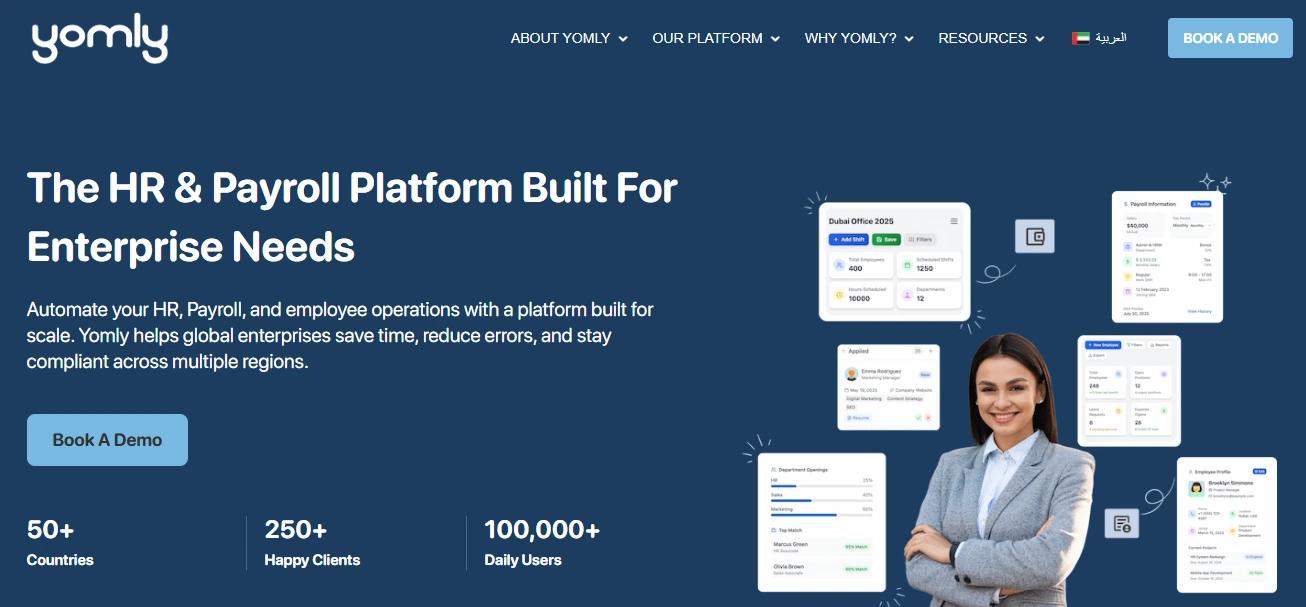
Key features: Payroll, attendance and leave, onboarding, performance, benefits, employee self-service
Pros
- Fast to implement
- GCC payroll compliant
- Arabic and English
Cons
- Limited depth in performance and analytics
- Fewer integrations
- No G2 presence to check reviews against
Best for: Small GCC teams that want core HR working quickly
5. Paylite HRMS
A long-standing regional option focused on core HR and payroll without additional layers. Arabic support and mobile access are included, and the administrative interface is straightforward enough that a non-specialist can run it.
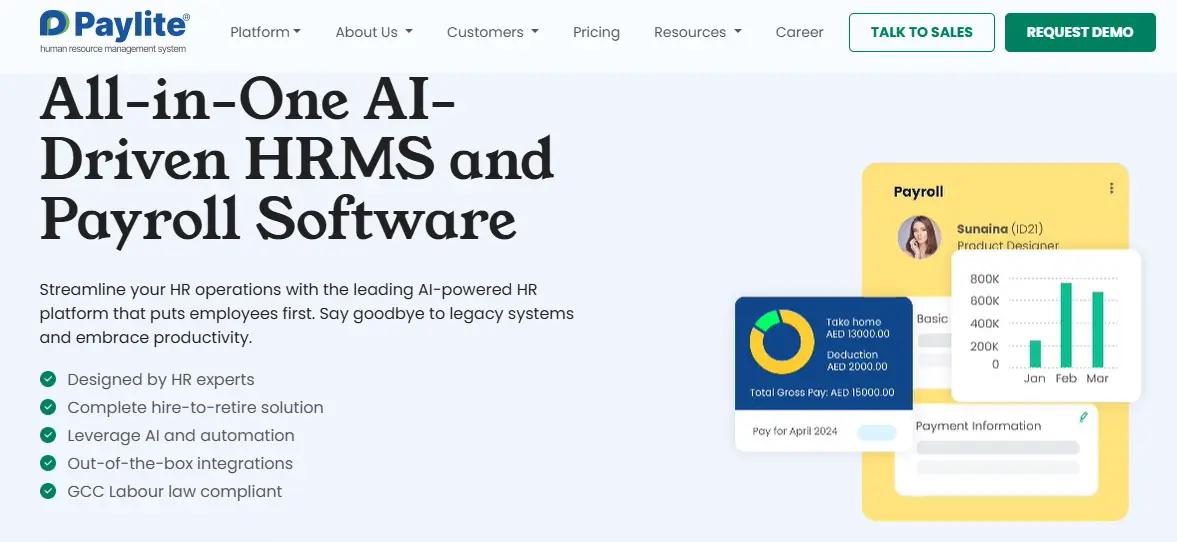
Key features: Payroll and attendance, leave, employee database, document management, Arabic support, mobile access, self-service
Pros
- Simple to learn and run
- Arabic support
- Established regional presence
Cons
- Dated design
- Basic reporting
- Limited performance tooling
Best for: Small teams that want core HR and payroll and nothing more
6. Humantiz
A GCC-focused HRMS whose strength is biometric device integration alongside payroll and attendance. Worth shortlisting if you already have attendance hardware on site and want the HR system to read from it rather than replace it.
Key features: Payroll and attendance, biometric integration, recruitment and onboarding, document management, performance, HR dashboards
Pros
- Strong biometric hardware compatibility
- GCC payroll compliance
- Reliable for attendance-heavy operations
Cons
- Smaller ecosystem
- Basic analytics
- Pricing not published
Best for: Site-based or shift-based teams with existing biometric devices
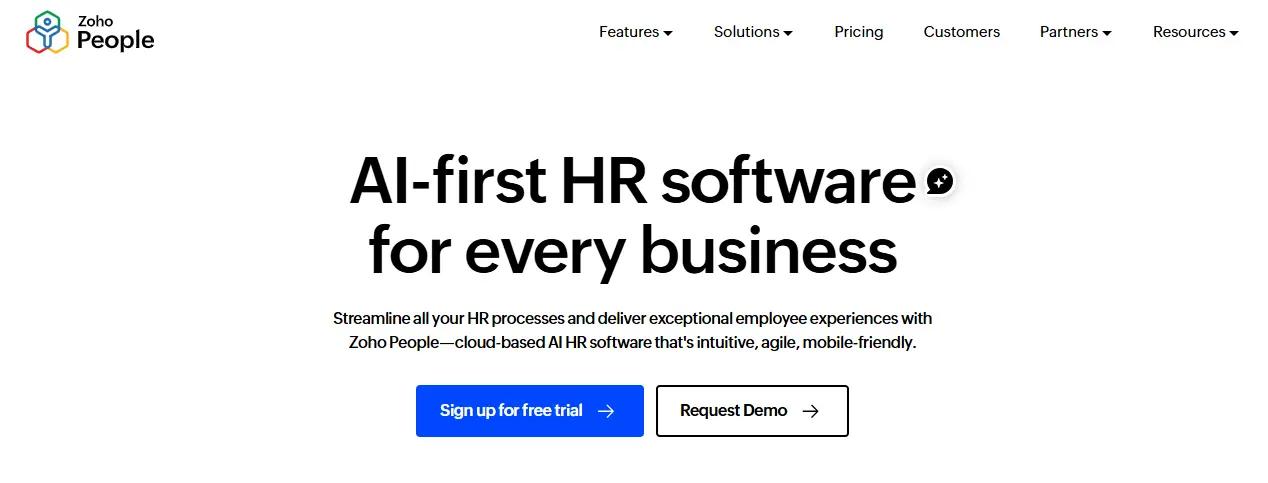
7. Zoho People
Sensible if you already run Zoho. Core HR, leave, attendance, and performance are solid, and the integration across Zoho apps is genuinely seamless. UAE payroll runs through Zoho Payroll’s UAE edition rather than Zoho People itself, so treat it as two products and price it accordingly. Its G2 rating rests on the largest review base of any mid-tier option here.
Key features: Digital onboarding, leave and attendance, performance appraisals, self-service, multi-language and multi-currency, workflow automation
Pros
- Deep integration with the Zoho suite
- Easy to adopt
- Large, consistent review base
- Low learning curve
Cons
- UAE payroll is a separate product
- Less GCC-specific than regional vendors
Best for: Businesses already standardised on Zoho
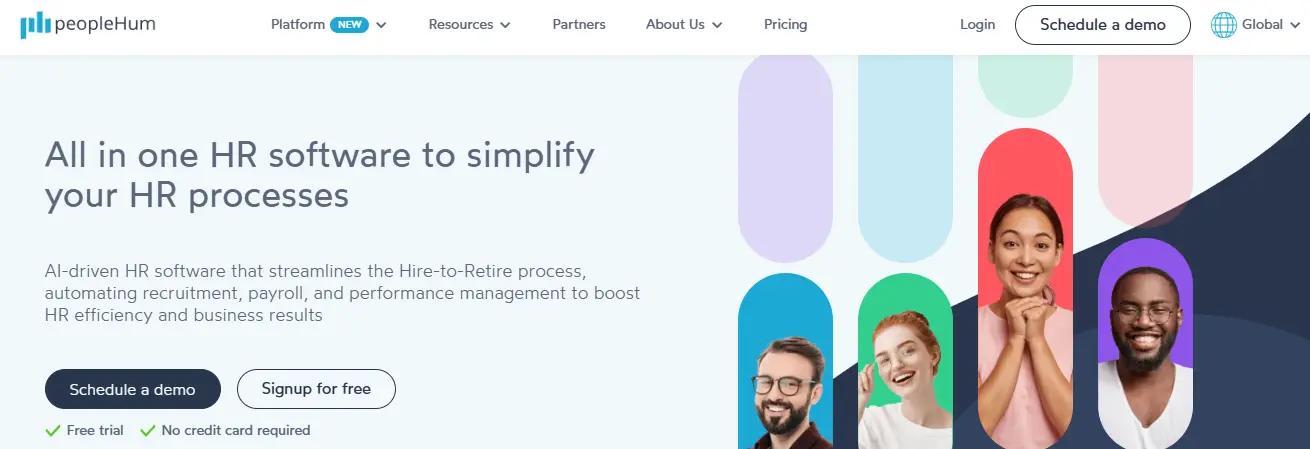
8. peopleHum
Strongest on the people side rather than the payroll side: engagement surveys, feedback, OKRs, recruitment and a well-designed interface. GCC payroll depth is lighter than the regional specialists, so it suits teams running payroll elsewhere. Reviewers rate it highly, though on a small sample.
Key features: Core HR, ATS and recruitment, talent management, engagement surveys, OKRs and goals, LMS, self-service
Pros
- Excellent engagement and feedback tooling
- Modern interface
- Good analytics
Cons
- Lighter on GCC payroll specifics
- Small review base
- More product than a very small team will use
Best for: Small teams building culture and performance practice early
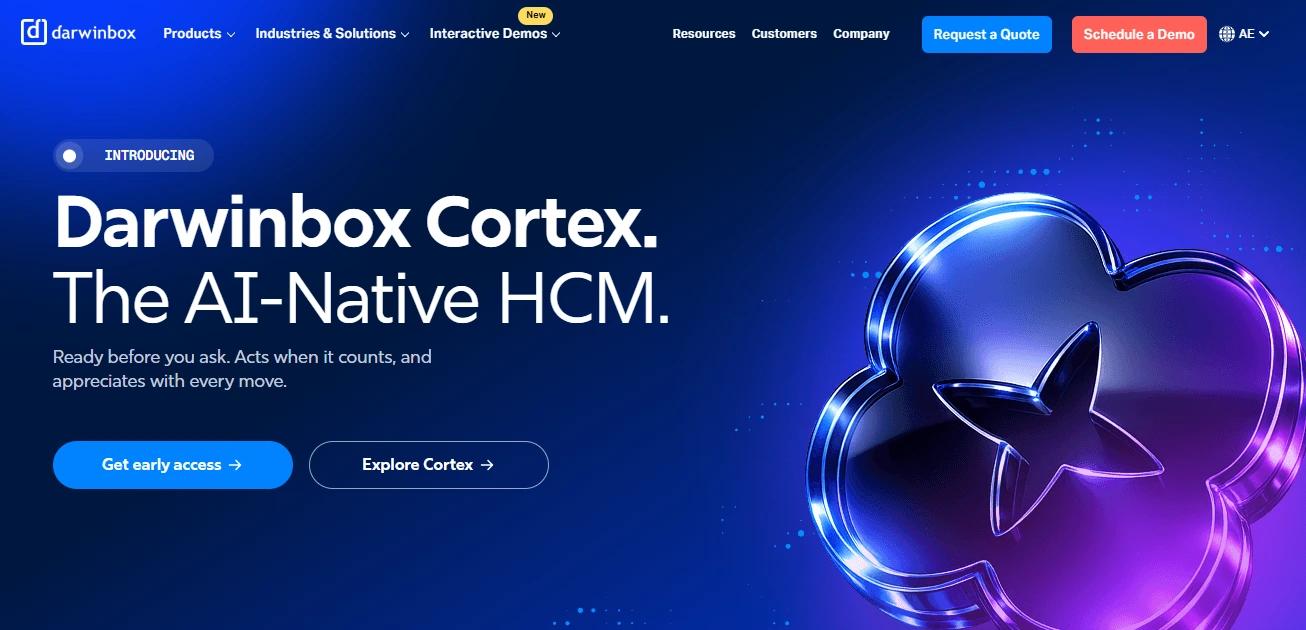
9. Darwinbox
A mid-market and enterprise HRMS with strong automation and talent analytics. For a small business, the relevant question is trajectory: if you expect to be several hundred people within two or three years, starting here avoids a migration later. If you do not, it is more platform than you need.
Key features: Core HR and payroll automation, attendance and leave, AI-driven insights, ATS, talent analytics, engagement surveys, performance, self-service
Pros
- Scales a long way
- Strong analytics and automation
- Full lifecycle coverage
Cons
- Implementation takes time
- Reviewers report slowdowns at peak usage
- Cost and complexity are high for small teams
Best for: Small companies on a clear path to mid-market
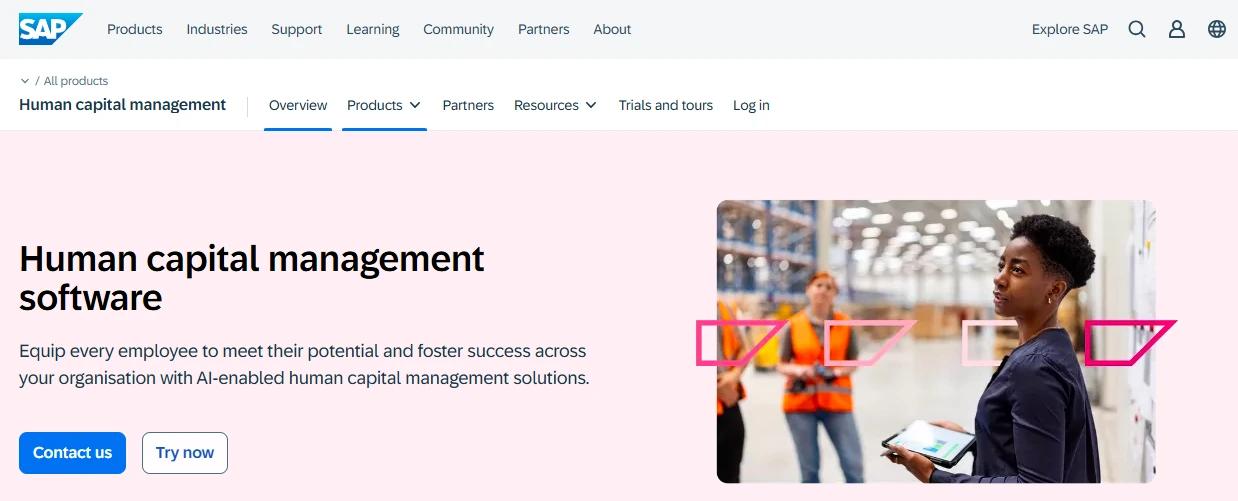
10. SAP SuccessFactors
Enterprise-grade and globally compliant, generally reached for by multi-country groups rather than single-market SMEs. Included here for completeness: if you are a UAE subsidiary of a group already running SAP, the decision is usually made above you. Its G2 score is the lowest in this list but rests on by far the largest sample, which makes it the most statistically reliable figure here.
Key features: Core HR, payroll, recruitment and ATS, talent management, LMS, performance, workforce analytics
Pros
- Global compliance coverage
- Very deep functionality
- Supports multi-country workforces
Cons
- High cost
- Long implementation
- Requires dedicated administration
Best for: Enterprises and UAE arms of global groups
What HR Software Costs in The UAE
UAE HR software is almost always priced per employee per month, and most vendors quote rather than publish. Two things decide your real cost more than the headline rate.
The first is the minimum seat count. A platform at AED 10 per employee with a 25-user minimum costs a ten-person company AED 250 a month, not AED 100. Always ask for the minimum before the rate.
The second is what sits in the base plan versus what is an add-on. Payroll, recruitment, and performance are bundled by some vendors and charged separately by others, which can double a quote you thought you understood.
Zimyo publishes UAE pricing in dirhams: AED 10 per employee per month for Basic, AED 20 for Standard, and AED 30 for Enterprise, billed monthly with a 25-user minimum on each tier. Full details are on the Zimyo UAE pricing page. Where a vendor in this list does not publish a figure, we have not estimated one — request a quote for your actual headcount.
How to Shortlist in Five Steps
- Fix your real headcount and your headcount in eighteen months. This decides whether minimum seat counts and scalability matter to you.
- Split requirements into must-have and nice-to-have. For nearly every UAE small business, the must-haves are WPS payroll, gratuity, leave, attendance, and document expiry alerts.
- Shortlist three platforms, not eight. Two regional specialists and one broader platform is a sensible spread.
- In each demo, ask them to generate a SIF file and calculate a gratuity figure live. Descriptions are easy; working output is not.
- Get written quotes including minimum seats, add-on modules, implementation, and support scope. Compare the totals, not the per-employee rates.
Choosing Your Platform
In the case of a small UAE business, the two considerations that typically matter are whether the platform supports WPS payroll and gratuity directly and whether it suits your headcount in reality after including the minimum number of seats required. All other features – analytics, engagement, learning, etc. – are useful, but they will not be the ones causing trouble for you after three months.
Zimyo natively supports all the UAE compliances, prices its plans in dirhams, and does not require a new replatforming as your business scales up. If this describes your business situation, please request a demo today.
Methodology: We selected the ten platforms in this guide for their active presence in the UAE market, native or partner support for UAE payroll and WPS, and suitability for companies with roughly 200 employees. G2 ratings are also included. Regulatory figures were checked against MOHRE, the UAE Ministry of Finance, and the ILOE scheme in September 2026. Pricing is shown only where the vendor publishes it; we do not estimate competitor pricing.
Frequently asked questions
What is the best HR software for small businesses in the UAE?
There may not be an obvious answer for all businesses, but for a UAE-based small business, the options will normally be Zimyo, Bayzat, Yomly, or Paylite HRMS. These four software applications support payroll processing for the UAE and WPS out of the box, which is a must-have to exclude other software applications. Make your choice based on the minimum number of seats and local language support.
How much does HR software cost for a small business in the UAE?
Pricing is charged on a per-employee-per-month basis. Zimyo charges AED 10, 20, and 30 per employee per month for their UAE packages, with 25 users as the minimum required. Remember to factor in the minimum headcount and modules when comparing the prices quoted by different providers.
Which HR software supports UAE labour law compliance?
Look out for the generation of native WPS and SIF files, automatic gratuity calculation in accordance with UAE regulations, and expiry of documents like visas and Emirates ID cards. Platforms that have these features include Zimyo, Bayzat, gulfHR, Yomly, and Paylite. Always request a demo where you can witness a SIF file being created.
Does a small business in the UAE have to meet Emiratisation targets?
This depends on size. Those firms that have 50 or more skilled workers will have to raise the participation rate of Emiratis in skilled occupations by 1% every 30 June and again every 31 December until they reach 10% by the end of 2026. Another rule for firms that employ between 20 and 49 skilled workers in 14 key sectors also exists.
Is health insurance mandatory for employees in the UAE?
Yes, since 1 January 2025, employers in all seven emirates have been obligated to ensure their employees get medical insurance as part of obtaining or renewing their residence permits. The cost of the Basic Health Insurance plan at the federal level is 320 AED annually.